Walleye Season & Limit in Minnesota
Trying to keep up with Minnesota's walleye regulations can feel like trying to land a lunker on a tiny ultralight rod – tricky, frustrating, and sometimes you just end up with a tangled mess. The rules seem to change every year, with special provisions for different lakes, border waters, and zones, leaving many anglers scratching their heads. This comprehensive guide will untangle the complexities of walleye season dates, bag limits, and those often-confusing slot limits, ensuring you're ready to hit the water legally and successfully in Minnesota.
Understanding Minnesota's Walleye Season
The excitement surrounding the walleye opener in Minnesota is practically a holiday, and for good reason! Knowing when you can legally target these prized fish is the first step to a successful outing. While there's a general statewide trend, it's crucial to understand that not all waters play by the exact same rules.
Statewide Walleye Season Opener
For the vast majority of inland waters in Minnesota, the walleye season kicks off simultaneously with the Northern Pike and Bass opener. This highly anticipated date typically falls on the Saturday two weeks prior to the Saturday of Memorial Day weekend. For 2026, mark your calendars: the walleye season opens on Saturday, May 9th. This is the day when anglers across the state descend upon their favorite lakes, hoping to be among the first to bring home a stringer of golden goodness. The season then generally runs continuously through the end of February of the following year, giving you plenty of time to enjoy the open water and even some ice fishing. Keep in mind that specific dates are always confirmed by the Minnesota Department of Natural Resources (DNR) annually, so it's always a good idea to double-check their official guide. You can find out exactly when is the Minnesota Walleye Opener 2026?
Continuous Seasons on Specific Waters
While the May opener is a hallmark for most of the state, a few unique bodies of water operate under different, more continuous seasons. The most notable example is Lake Superior and its tributaries. Here, walleye fishing is often open year-round, or with very minimal closures, primarily due to the unique fishery management and migratory patterns of the lake-dwelling walleye populations. Another exception might include certain portions of border waters, which we'll discuss next. These continuous seasons are a huge bonus for anglers who just can't get enough walleye action and want to fish outside the traditional opener window. Always consult the specific regulations for any major body of water you plan to fish, especially if it's a large lake or river.
Border Water Considerations
Fishing on waters that straddle Minnesota's state lines adds another layer of complexity. Border water fishing rules can be a real head-scratcher because you often have to contend with the regulations of two different states or even a country, as is the case with Ontario. For example, waters shared with Wisconsin, like the St. Croix River or Lake Pepin, often have reciprocal agreements where a license from either state is valid. However, the fishing regulations—like seasons and limits—might differ slightly, or a compromise regulation might be in place. The Rainy River and Lake of the Woods, which form a border with Ontario, have their own distinct sets of rules, negotiated between Minnesota and Canada. On Lake of the Woods, for instance, you'll find different possession limits and sometimes even different slot limits depending on whether you're fishing in Minnesota or Canadian waters. Always be acutely aware of which side of the imaginary line you're on, and carry the appropriate license and regulation knowledge for that specific area. Trying to navigate these areas without a clear understanding of Border Water Fishing Rules (Minnesota-Ontario, Wisconsin can lead to serious fines.
Decoding Walleye Possession and Bag Limits
Once you've got the season figured out, the next hurdle is understanding how many walleye you can keep and how those numbers are defined. It's not just about what you catch; it's also about what you possess.
General Statewide Bag Limit
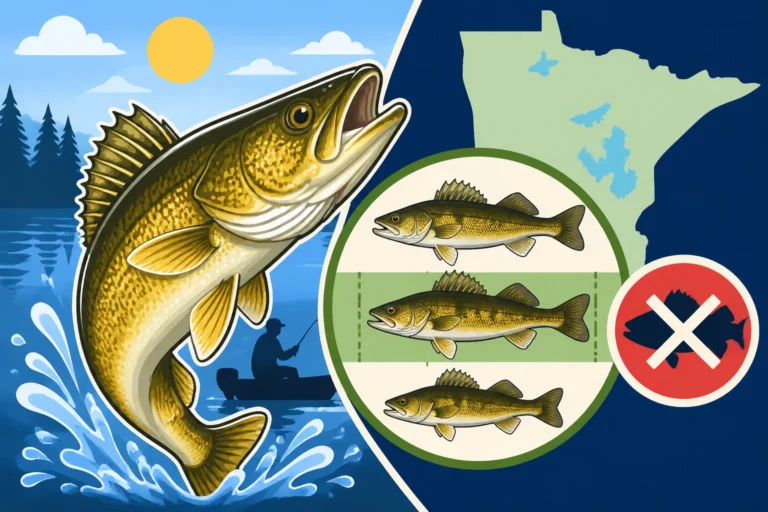
The standard daily bag limit for walleye across most of Minnesota's inland waters is six fish. This means you can keep up to six walleye per person per day. However, this isn't a simple "six fish" rule; there's usually a size restriction within that limit. Typically, only one of those six walleye can be over 20 inches in length. This regulation is a critical conservation measure, designed to protect the larger, sexually mature female walleye that are vital for spawning and maintaining healthy fish populations. So, while you might catch a bunch of dandy walleyes in the 14-18 inch range, if you land a true trophy at 26 inches, you know that's your one big fish for the day. Understanding What Is the Walleye Possession Limit in Minnesota? is crucial before heading out.
Understanding Possession Limits
The possession limit refers to the total number of fish you can have in your actual physical possession, whether that's in your livewell, cooler, freezer at home, or in your vehicle. For most fish species, including walleye, the possession limit is typically equal to one day's bag limit. So, if the daily bag limit is six walleye, your possession limit is also six. This means you can't fish for three days, keep six walleye each day, and then drive home with 18 fish. The intent is to ensure that anglers are not stockpiling fish beyond what is considered reasonable for a short trip or daily consumption. However, there are some exceptions on certain lakes, often those with specific management goals, where the possession limit might be higher than the daily bag limit to allow for multi-day trips. These exceptions are rare, so always assume the possession limit is the same as the daily bag unless explicitly stated otherwise in the regulations.
Special Regulations on Specific Lakes
This is where things get really interesting, and frankly, where a lot of anglers get confused. Minnesota manages its walleye fisheries on a lake-by-lake basis, leading to a patchwork of special regulations designed to optimize specific lake health and fishing opportunities. These can include reduced bag limits, increased possession limits, or—most commonly—slot limits.
For instance, iconic lakes like Mille Lacs Lake have seen highly dynamic regulations over the years, sometimes restricting anglers to only one walleye, or even catch-and-release only at certain times, all in an effort to manage the recovering population. Other popular destinations like Upper Red Lake have historically had very generous walleye limits, sometimes up to four or five fish, but with very strict slot limits to protect the breeding stock. Even lakes in the Brainerd Lakes Area, like Gull Lake, or those in the Alexandria Lakes Area, may have their own unique rules. It's not uncommon to find a lake with a four-walleye bag limit, with only one over 17 inches, or a possession limit of eight fish to accommodate anglers staying for a week. Always, and I mean always, check the current year's regulations for the specific body of water you plan to fish. You can find details like Mille Lacs Walleye Regulations (2026) or Upper Red Lake Walleye Limit & Slot directly from the DNR.
Here’s a quick overview of how some common walleye regulations might look:
| Regulation Type | Daily Bag Limit | Possession Limit | Size Restrictions | Common Application |
|---|---|---|---|---|
| Statewide General | 6 | 6 | Only 1 over 20 inches | Most inland lakes, default rule |
| Reduced Bag | 4 | 4 or 8 | Often with slot limits (e.g., 1 over 17 inches, or 2 over 20 inches) | Managed lakes with sensitive populations |
| Protective Slot | Varies | Varies | All fish between X and Y inches must be released | Lakes needing to protect specific size classes for spawning |
| Harvest Slot | Varies | Varies | All fish between X and Y inches must be kept; only 1 over Z inches | Lakes with overpopulation of smaller fish, aiming for harvest |
| Catch-and-Release Only | 0 | 0 | All walleye must be immediately released | Highly sensitive or recovering fisheries, specific seasons |
Navigating Slot Limits and Protected Lengths
Slot limits are probably the most misunderstood regulation, but they're incredibly effective tools for managing fish populations. They often dictate that fish within a certain size range must be immediately released, protecting key breeding stock or promoting the harvest of smaller, more abundant fish.
What Are Walleye Slot Limits?
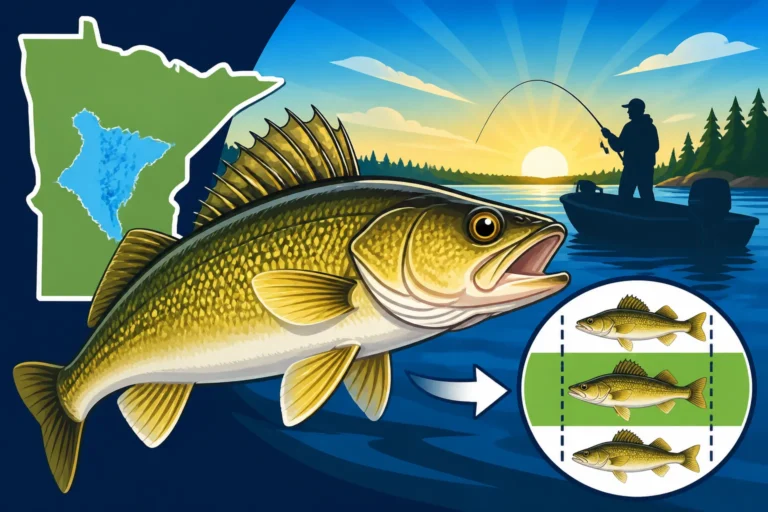
A walleye slot limit is a regulation that defines a specific length range, or "slot," of fish that must be immediately returned to the water. The primary purpose of a protected slot limit is to safeguard a particular segment of the fish population, usually the mature, reproducing adults. By releasing these fish, they can continue to spawn, ensuring future generations of walleye. On the flip side, some lakes employ a "harvest slot" where fish within a certain range must be kept, often to reduce pressure on larger fish or to thin out an overabundant smaller population. Without these regulations, anglers might disproportionately harvest the largest, most visible fish, inadvertently harming the long-term health of the fishery. Learning about Minnesota Slot Limits: Which Lakes & Why can greatly improve your understanding and success on the water.
Common Slot Limit Scenarios
Let's imagine a common scenario: a lake with a protected slot limit of 17-26 inches. This means any walleye you catch that measures between 17 and 26 inches must be released. You might be allowed to keep a certain number of fish under 17 inches, and perhaps one fish over 26 inches. So, if you catch a 15-inch walleye, you can keep it. If you then catch a 22-inch walleye, you must release it. If you finally catch a 27-inch walleye, you can keep it as your one "trophy" fish for the day, assuming you haven't kept any other fish over the designated length.
Another scenario could be on a lake like Leech Lake, which might have a different slot. For example, it could be a bag limit of four walleye, with all fish from 20-26 inches to be immediately released, and only one fish over 26 inches allowed in possession. These numbers can change based on the year's fish assessment and management goals, so relying on memory from last season isn't going to cut it. You might even encounter a harvest slot where all walleye between 13 and 17 inches must be kept, and you can only keep one over 17 inches. This helps manage populations where smaller walleye are overabundant and competing for food, thus stunting growth.
Tips for Fishing Slot Limit Waters
Fishing waters with slot limits requires a bit more intentionality. Here are a few tips:
- Measure Early, Measure Often: Always carry a reliable measuring device on your boat or in your tackle box. Don't eyeball it! Measure every walleye you catch, especially if it looks close to the slot limits. A simple bump board or a tape measure attached to your boat's gunnel works wonders.
- Handle Fish Carefully: When you're in a slot-limit lake, you'll be releasing a lot of fish. Practice good Catch and Release Best Practices in Minnesota to ensure those released fish survive and thrive. This means minimizing their time out of water, using wet hands or a rubberized net, and avoiding handling fish by the gill plates.
- Know Your Target Size: If you want to keep fish, focus your efforts on areas known to hold fish outside the slot. If you're targeting a specific size for harvest, choose your lures and techniques accordingly. For example, smaller jigs and minnows might appeal to eaters, while larger cranks could tempt the trophy you're allowed to keep.
- Check the Regulations Before Every Trip: Seriously, this can't be stressed enough. Regulations can change annually, and sometimes even mid-season if conditions warrant. The DNR website or the printed regulations booklet is your best friend.
Essential Tools for Staying Compliant
With so many specific regulations, it's easy to feel overwhelmed. Thankfully, the Minnesota DNR provides excellent resources to help anglers stay informed and compliant.
The Minnesota DNR Fishing Regulations Booklet
This little booklet is your Bible when it comes to Minnesota fishing. Every year, the DNR publishes a comprehensive guide that outlines all the seasons, bag limits, possession limits, and special regulations for individual lakes and rivers. You can pick up a physical copy wherever you buy your Minnesota Fishing License: Cost, Types & How to Buy (2026, like bait shops, sporting goods stores, or even some convenience stores. It's small enough to fit in your tackle box or boat compartment, and it's absolutely essential for any angler, new or seasoned. Flipping through this booklet, especially the section on special regulations by lake, should be part of your pre-trip ritual. It often includes helpful maps and diagrams for complicated border water rules as well.
Online Resources and Apps
In our digital age, staying informed is easier than ever. The Minnesota DNR website (mndnr.gov) is a treasure trove of information. You can access the full fishing regulations PDF, search for specific lake regulations, and find updates on rule changes. Beyond the official DNR site, there are also helpful fishing apps available, like Fishbrain or Navionics, that integrate regulation data, lake maps, and fishing reports. While these apps can be incredibly useful, always cross-reference critical information with the official DNR sources, as third-party apps might not always be instantly updated with the latest changes. Using these resources, you can quickly look up Lake of the Woods Fishing Regulations (2026) or Leech Lake Fishing Regulations (2026) on the go.
Local Knowledge and Bait Shops
Never underestimate the power of local knowledge! Before heading out on an unfamiliar lake, stop by a local bait shop. The folks working there are often lifelong anglers themselves and are usually up-to-date on the latest regulations, local fishing patterns, and any unwritten "rules" of the lake. They can provide invaluable tips on current slot limits, where to find fish that are legal to keep, and even current water conditions. Chatting with other anglers at the boat launch or campground can also offer great insights. Just remember to use these conversations as supplementary information; the official DNR regulations are the ultimate authority.
Disclaimer
Please note that fishing regulations in Minnesota are subject to change. While every effort has been made to provide accurate and up-to-date information, it is the angler's responsibility to consult the official Minnesota Department of Natural Resources (DNR) fishing regulations for the current year before fishing. Always verify specific rules for the body of water you intend to fish.