Best Tackle for Brown Trout in Minnesota
Trying to figure out the perfect tackle setup for Minnesota's famously wary brown trout can feel like navigating a maze. One day they're hitting everything, the next they're ignoring your most trusted offerings, leaving you scratching your head on the stream bank. This comprehensive guide will walk you through the essential rods, reels, lines, and lures you'll need to consistently fool those beautiful, hard-fighting brown trout in our state's diverse waters.
Understanding Brown Trout Behavior and Habitat in Minnesota
Before we even talk about specific gear, it's crucial to understand what makes brown trout tick in Minnesota. These fish are notorious for their wariness, sharp eyesight, and often nocturnal feeding habits, especially for the larger, more mature specimens. They thrive in a variety of environments, from the cold, clear spring-fed streams of the Driftless Area in southeastern Minnesota to the colder, deeper lakes and even Lake Superior tributaries. Knowing their preferred habitat and tendencies will directly influence your tackle choices.
Where Brown Trout Live and Hide
In Minnesota, you'll primarily find brown trout in two main types of habitats: streams and cold-water lakes. The streams, particularly in the southeastern "Driftless Area," are characterized by their limestone bedrock, cold groundwater springs, and often extensive overhead cover from trees and undercut banks. Here, browns seek refuge in deep pools, under logjams, and in areas with strong current breaks. They'll also patrol riffles and runs, especially during low-light conditions, looking for insect hatches or small baitfish.
In lakes, brown trout tend to inhabit the deeper, cooler zones, often near drop-offs, submerged structures, or areas where springs feed in. They are less common in lakes compared to streams but can grow to impressive sizes in these environments. Knowing these hiding spots means your presentations need to be precise, often requiring lighter lines and subtle baits to avoid spooking them. For more details on where these elusive fish thrive, check out our guide on Trout Fishing in Minnesota: Streams & Lakes.
Dietary Preferences and Feeding Habits
Brown trout are opportunistic feeders, and their diet can vary significantly depending on their environment and the time of year. In streams, insects are a primary food source – think caddisflies, mayflies, stoneflies, and their larval stages. They'll also readily consume small crustaceans, worms, leeches, and, importantly for lure selection, smaller fish like sculpins, dace, and even juvenile trout. Larger browns are especially predatory, often keying in on bigger meals.
Lake-dwelling brown trout will feed on a wider array of forage, including various baitfish, freshwater shrimp, and even terrestrial insects that fall into the water. Their feeding can be sporadic, but often peaks during dawn, dusk, or under cloudy conditions. Mimicking their natural food sources with your tackle is paramount to success.
Essential Rod and Reel Setups for Brown Trout
When targeting brown trout, precision and sensitivity are your best friends. These fish can have an incredibly light bite, and their powerful runs demand a rod and reel combo that offers control and smooth drag. Whether you're casting small spinners into a tight stream or drifting bait in a wider river, having the right setup makes all the difference.
Spinning Rod and Reel Combos
For most brown trout stream fishing in Minnesota, an ultralight or light action spinning setup is the go-to choice. These setups offer the sensitivity needed to detect subtle bites and the finesse required to cast small lures accurately into tight pockets of water.
- Rods: Look for a rod in the 5'6" to 6'6" range. Shorter rods (5'6"-6'0") are excellent for small, brushy streams where casting room is limited, allowing for accurate roll casts or short flicks. Longer rods (6'0"-6'6") provide better casting distance on wider streams or rivers and offer a bit more leverage when fighting a larger fish. The action should typically be "fast" or "moderate-fast," which means the rod bends mostly in the top third, providing sensitivity and quick hook-setting power. A good ultralight rod from brands like St. Croix, Fenwick, or Ugly Stik will serve you well. You can often find great options at your local Bass Pro Shops.
- Reels: Pair your ultralight rod with a matching ultralight spinning reel, typically in the 500 to 1000 series size. The most critical feature here is a smooth, reliable drag system. Brown trout can make surprising, powerful runs, and a sticky drag will lead to snapped lines and lost fish. Look for reels with several ball bearings for smooth operation. Brands like Shimano, Daiwa, or Pflueger offer excellent value and performance in this category. You can browse a huge selection of these reels on Amazon.
- Balancing Your Setup: The rod and reel should feel balanced in your hand, allowing for comfortable all-day casting without fatigue. A well-balanced setup will also enhance your feel for light bites and the action of your lure.
Fly Fishing Setups
While spinning gear is highly effective, fly fishing remains an incredibly popular and often productive method for brown trout, especially in the Driftless Area. This technique excels at presenting natural insect imitations.
- Rods: A 7'6" to 9'0" fly rod in a 3-weight or 4-weight size is ideal for most Minnesota brown trout streams. The lighter weight allows for delicate presentations of small dry flies and nymphs, crucial for wary fish. A medium-fast or fast action rod offers a good balance of finesse and casting power.
- Reels: A simple, reliable click-and-pawl or disc drag fly reel that balances your rod is sufficient. For trout, the reel primarily serves as a line holder; the fight is mostly handled by the rod.
- Line: Match your fly line weight to your rod weight (e.g., a 4-weight line for a 4-weight rod). A weight-forward (WF) floating line is the most versatile choice for stream fishing, allowing for both delicate dry fly presentations and nymphing.
Choosing the Right Line and Leaders
Line choice is critical when targeting brown trout. They are highly visual predators, and a thick, brightly colored line can easily spook them, especially in clear water. Stealth and strength in a small diameter are what you're after.
Main Line Selection
For spinning setups, monofilament, fluorocarbon, or a thin braided line with a fluorocarbon leader are your primary options.
- Monofilament: A classic choice, 2-4 lb test monofilament is forgiving, has some stretch, and is generally easy to cast. Its slight stretch can be an advantage when a brown trout makes a sudden lunge. Brands like Berkley Trilene XL or Stren Original are popular and effective.
- Fluorocarbon: Often preferred for its low visibility underwater and excellent abrasion resistance. It sinks faster than mono, which can be an advantage when fishing jigs or small crankbaits. A 2-4 lb test fluorocarbon mainline is a fantastic choice, though it can be a bit stiffer and harder to manage on ultralight reels. Seaguar InvizX or Vanish are good options.
- Braided Line with Fluorocarbon Leader: Many experienced anglers use 4-6 lb test braided line (like PowerPro or Sufix 832) for its incredible sensitivity and casting distance, paired with a 2-4 lb test fluorocarbon leader (typically 3-6 feet long). The braid gives you maximum feel for subtle bites, while the fluorocarbon leader maintains stealth near the lure. Learning a good knot to connect braid to fluorocarbon, like the Albright or FG knot, is essential.
Leader and Tippet for Fly Fishing
For fly fishing, a tapered leader and tippet are indispensable for delicate presentations.
- Tapered Leader: A 7.5 to 9-foot tapered leader, typically 4X, 5X, or 6X, helps transfer casting energy smoothly, allowing your fly to land softly.
- Tippet: You'll attach tippet material to the end of your leader. Keep a spool of 4X, 5X, and 6X fluorocarbon or monofilament tippet handy. Fluorocarbon is excellent for nymphs due to its sink rate and invisibility, while monofilament can be preferred for dry flies due to its buoyancy. When you're fishing spooky fish, a longer, thinner leader can be a game-changer. Our article on How to Catch Stream Trout: Nymphs & Dries provides more insights into specific techniques.
Top Lures and Baits for Minnesota Brown Trout
This is where the fun begins! Brown trout respond to a wide array of artificial lures and natural baits. Having a varied selection in your tackle box will prepare you for different water conditions, light levels, and fish moods.
Spinners
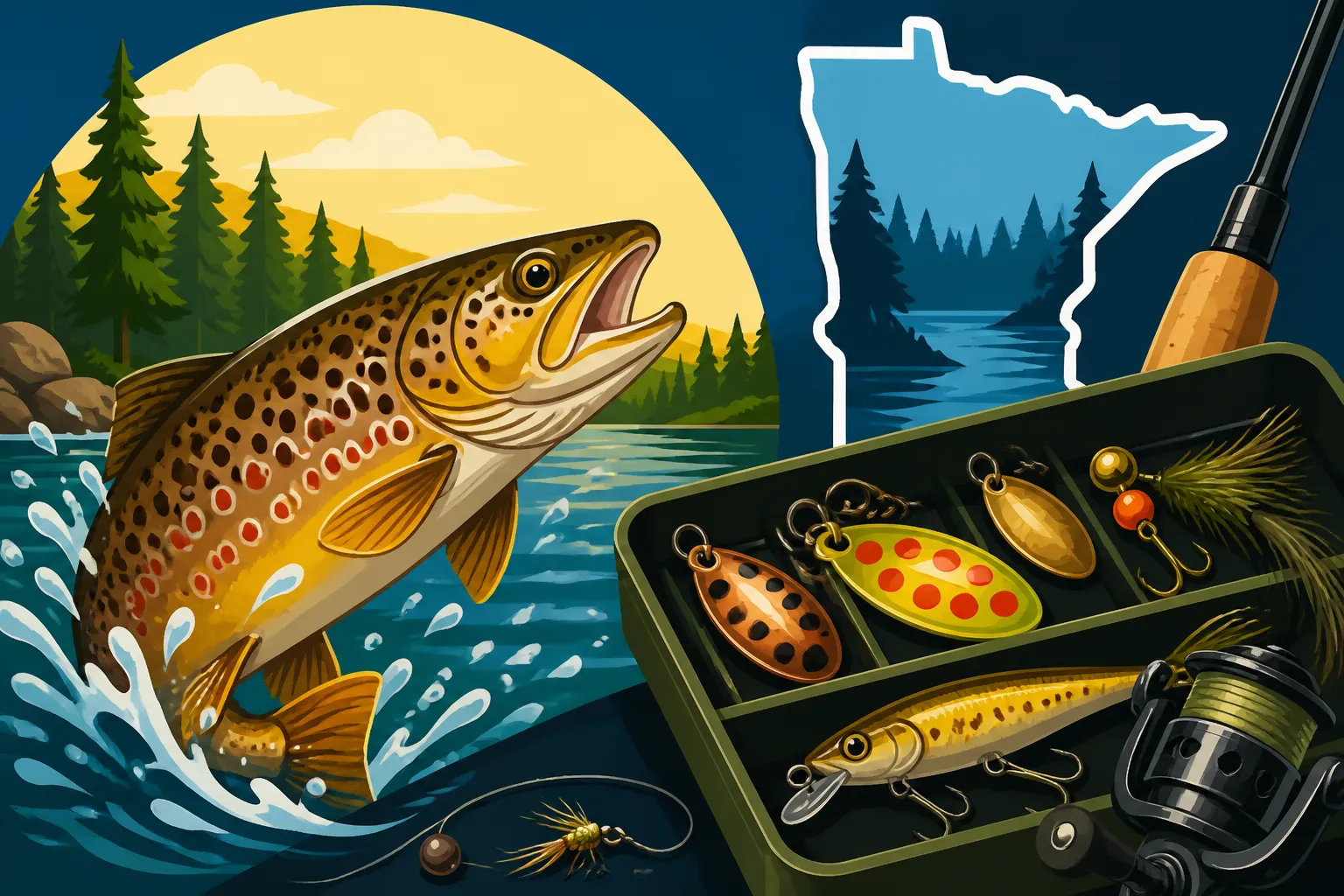
Spinners are arguably one of the most effective and popular lures for brown trout in streams. Their flashing blades and vibrating action mimic small baitfish or even fleeing insects, triggering aggressive strikes.
- Sizes: 1/16 oz to 1/8 oz are the most common sizes for stream browns. Larger browns might hit 1/4 oz spinners.
- Colors: Silver, gold, copper, and black are classic blade colors. Dressings can be black, white, brown, or chartreuse. Mepps Aglia, Panther Martin, and Blue Fox Vibrax are legendary for a reason. Carry a variety of colors and sizes.
- Technique: Cast upstream or slightly upstream-and-across, allowing the spinner to tumble and flash naturally as it drifts downstream. Maintain a slow retrieve, just fast enough to keep the blade spinning. Focus on eddies, current seams, and around submerged structures.
Small Crankbaits and Stickbaits
These lures are fantastic for mimicking minnows and often entice larger, more aggressive brown trout. They can be incredibly effective in deeper pools or larger river sections.
- Sizes: 1" to 2.5" models are usually ideal.
- Types: Look for both shallow-diving and suspending models. Shallow divers are great for covering water in moderate depths, while suspending models can be paused in the strike zone, especially when fish are hesitant.
- Colors: Natural baitfish patterns (perch, shiner, trout patterns) are excellent. Firetiger or hot pink can also be surprisingly effective in stained water or on overcast days. Rapala's Ultra Light Minnow or CD series, or Rebel's Wee-Crawfish are excellent starting points.
- Technique: Cast upstream or across and retrieve with a twitch-pause retrieve, letting the lure dart and suspend. Experiment with retrieve speeds and pauses.
Jigs
Small jigs, often tipped with a piece of bait or a small plastic trailer, can be deadly for brown trout, especially when they're holding deep or in slower currents.
- Sizes: 1/32 oz to 1/8 oz are standard.
- Types: Marabou jigs, bucktail jigs, or soft plastic micro-jigs (e.g., tube jigs, tiny grubs) are all excellent choices.
- Colors: Black, olive, brown, white, and chartreuse are reliable.
- Technique: Fish jigs with a slow, erratic retrieve close to the bottom. Let them drift naturally with the current, occasionally twitching the rod tip to impart action. Tipping a jig with a tiny piece of worm or a wax worm can make it irresistible.
Natural Baits
Sometimes, nothing beats the real thing. Natural baits are consistently effective, especially for hesitant or larger browns.
- Worms: Small pieces of nightcrawlers or garden worms are a universal brown trout bait. Rig them on a small hook (size 8-12) with a split shot or two, allowing them to drift naturally through pools and runs.
- Minnows: Live minnows (check local regulations for size and species restrictions) can be deadly for bigger browns. Hook them lightly through the lip or back and drift them in likely holding areas.
- Insects: Grasshoppers, crickets, and wax worms can be incredibly effective, especially during late summer and fall. Fish them under a small bobber or drift them naturally.
| Lure Type | Best Use Case | Key Features | Preferred Sizes | Top Brands/Examples |
|---|---|---|---|---|
| Spinners | Covering water, active fish, varied conditions | Flashing blade, vibration, mimics baitfish/insects | 1/16 oz – 1/8 oz | Mepps Aglia, Panther Martin, Blue Fox Vibrax |
| Crankbaits | Targeting larger fish, deeper pools, minnow imitations | Realistic profile, diving lip, suspending options | 1" – 2.5" | Rapala Ultra Light Minnow, Rebel Wee-Crawfish |
| Jigs | Deeper water, slow currents, finicky fish | Subtle presentation, can be tipped with bait | 1/32 oz – 1/8 oz | Marabou Jigs, Micro Grubs |
| Natural Baits | Highly effective for wary fish, all conditions | Natural scent and movement, universal appeal | Small pieces of worm, 1-2" minnows | Nightcrawlers, Wax Worms, Live Minnows |
Seasonal Considerations for Tackle Selection
Minnesota's fishing seasons are distinct, and brown trout tackle choices can vary throughout the year to match their behavior. Understanding these seasonal shifts will help you refine your approach. If you want to know more about when trout season opens, check out Minnesota Trout Season Dates & Streams.
Spring: Post-Spawn and Emerging Insects
After the ice melts and streams open up, brown trout are often recovering from the spawn and can be quite hungry. Water levels might be higher and colder, and clarity can vary.
- Tackle Focus: In spring, bigger browns might be more aggressive. Small crankbaits and larger spinners (1/8 oz) can be very effective as they target hungry fish looking for a substantial meal. As the water warms and insect hatches begin, switching to smaller spinners, jigs, or even delicate fly presentations (especially nymphs and emerging patterns) becomes crucial. You might need slightly heavier split shot with natural baits to get them down in higher flows.
Summer: Low, Clear Water and Terrestrial Bites
Summer often brings lower, clearer water conditions, especially in streams. This is when brown trout can be at their wariest. Bright sunlight and warm temperatures push them into shaded, oxygenated holding lies.
- Tackle Focus: Stealth is paramount. Ultra-light lines (2 lb test fluorocarbon or fluorocarbon leaders) are essential. Small spinners (1/16 oz), micro-jigs, and natural baits fished very lightly are best. Fly anglers will have success with dry flies mimicking terrestrials like grasshoppers, ants, and beetles, especially during midday heat. Early morning and late evening fishing often yields the best results with small crankbaits or even mice imitations for trophy browns at night.
Fall: Aggressive Feeding and Spawning Colors
Fall is a fantastic time for brown trout fishing as they become incredibly active, feeding heavily in preparation for the winter and the upcoming spawn. Water temperatures cool, and they often become more aggressive.
- Tackle Focus: This is when you can often get away with slightly larger and more aggressive presentations. Larger spinners (1/8-1/4 oz) and crankbaits in brighter or more pronounced colors can trigger territorial strikes. Natural baitfish patterns are excellent as browns will be actively preying on smaller fish. Fly anglers will find streamers and large nymphs particularly effective. Always remember to handle spawning fish with care and minimize disturbance to their redds (spawning beds).
Practical Tips for Brown Trout Anglers
Beyond the specific tackle, a few general tips can significantly improve your success rate when targeting brown trout in Minnesota.
Approach with Stealth
Brown trout have excellent eyesight and are incredibly sensitive to vibrations. Walk softly on stream banks, keep a low profile, and avoid casting shadows over the water. Wear natural colors to blend in with your surroundings. A careful approach can mean the difference between hooking a fish and sending it darting for cover. This is especially true in the clear, pristine waters of the Driftless Area.
Read the Water
Learning to identify prime brown trout lies is a skill that develops with experience. Look for deep pools, undercut banks, submerged logs, rock structures, and current seams where slow water meets fast water. These are the places brown trout feel safe and where food is likely to be delivered to them. Vary your casting angles and retrieve paths to thoroughly cover these areas.
Practice Catch and Release
Brown trout are a precious resource in Minnesota, and practicing responsible catch and release helps maintain healthy populations. Use barbless hooks, handle fish minimally and with wet hands, and release them quickly and gently. If you intend to keep fish, always be aware of the Minnesota Fishing Limits: Bag & Possession (2026) for trout, which can vary by stream or lake.
Disclaimer
Fishing regulations, seasons, and limits can change. Always consult the most current Minnesota Department of Natural Resources (DNR) fishing regulations before heading out on the water. This guide is for informational purposes only and does not supersede state regulations.