Best Tackle for Smallmouth Bass in Minnesota
Fishing for smallmouth bass in Minnesota can be an exhilarating experience, but let's be real – these feisty bronzebacks can be incredibly challenging. They're often found in clear, rocky waters, and they've seen every trick in the book. If you've ever felt like your tackle isn't quite cutting it, or you're just overwhelmed by the sheer number of options out there, you're not alone. This comprehensive guide is here to simplify your choices, offering practical advice on the best rods, reels, lines, and lures to help you consistently land more smallmouth bass in the diverse waters of Minnesota.
Selecting the Right Rods and Reels for Smallmouth Bass
When it comes to smallmouth bass, your rod and reel setup isn't just a preference; it's a critical tool. These fish are known for their powerful runs, acrobatic jumps, and relentless fighting spirit, often using their surroundings to their advantage. Having the right combination allows you to detect subtle bites, make precise casts, and, most importantly, control and land these hard-fighting fish. Skimping here can lead to frustrating break-offs and lost fish.
Spinning versus Baitcasting Setups
The choice between a spinning and baitcasting setup largely depends on the techniques you plan to employ and the weight of your lures. Both have their place in a smallmouth angler's arsenal, but they excel in different scenarios. Many seasoned anglers carry both, ready to switch as conditions or fish preferences dictate.
A spinning setup is often the go-to for lighter presentations and finesse techniques. Think about those times when smallmouth are being finicky, maybe suspended over deep water or holding tight to cover, and you need to present a small jig or a soft plastic on light line. A medium-light to medium power spinning rod, typically 6'6" to 7'2" in length, paired with a 2000 or 2500 series spinning reel, provides the sensitivity to feel those subtle taps and the casting distance for lighter baits. This setup shines when you're working finesse jigs, Ned rigs, or small soft plastics like a tube bait that might only weigh 1/8 to 1/4 ounce. It's incredibly forgiving for beginners and allows for accurate casts with minimal effort, especially when battling a headwind on a big lake like Lake Vermilion.
On the other hand, baitcasting gear is invaluable for throwing heavier lures and fishing in denser cover, or when you need more power to muscle a big smallmouth away from snags. If you're slinging larger jerkbaits, heavy football jigs, spinnerbaits, or topwater frogs near lily pads, a medium-heavy baitcasting rod, often 6'8" to 7'6" long, matched with a reel boasting a faster gear ratio, is your best bet. A higher gear ratio (e.g., 7.1:1 or 8.1:1) helps you quickly pick up slack line after a cast or during a fish's run, which is crucial for staying connected to a jumping smallmouth. This power setup is excellent for punching through weeds or ripping crankbaits through rocky points. For anglers looking to expand their capabilities, understanding the nuances of how to catch smallmouth bass in Minnesota (Step by Step) often includes mastering both types of setups.
Rod Power, Action, and Length
Understanding rod power, action, and length is fundamental to matching your tackle to your target species and fishing style. These characteristics dictate how the rod performs under different loads and how it transmits sensitivity to your hands. A rod that's too stiff might rip a hook out, while one that's too soft won't give you the leverage to control a strong fish.
Rod power refers to the lifting strength of the rod, ranging from ultra-light to heavy. For smallmouth bass, most anglers gravitate towards medium-light to medium-heavy power rods. A medium-light rod offers excellent sensitivity for light bites and allows for longer casts with small baits, which is great for subtle presentations. A medium-power rod is versatile, handling a wide range of lures and offering a good balance of sensitivity and backbone. For those situations where you need to throw heavier baits, like larger topwater plugs or deep-diving crankbaits, or if you're targeting trophy smallmouth on places like Mille Lacs Lake, a medium-heavy rod provides the necessary power to cast effectively and extract fish from heavy cover. It's about finding that sweet spot for the lure weight you're using.
Action describes where the rod bends when pressure is applied. Fast action rods bend mostly in the tip, providing maximum sensitivity and quick hook sets, which is ideal for single-hook baits like jigs and soft plastics where you need instant feedback. Moderate-fast action rods bend further down the blank, offering a good compromise between sensitivity and casting distance, and are often preferred for treble hook baits like crankbaits and jerkbaits, as the slightly slower action helps prevent tearing hooks out of a fish's mouth during a fight. Slow action rods are rarely used for smallmouth as they lack the necessary power and sensitivity. The length of the rod influences casting distance and accuracy. A longer rod (7 feet or more) generally offers longer casts and more leverage for fighting fish, which is beneficial on open water or when making long casts to reach distant structure. Shorter rods (under 6'6") provide more accuracy in tight quarters and are easier to maneuver, though less common for smallmouth. For specific recommendations, many find excellent options for the best bass rod and reel for Minnesota lakes at retailers like Bass Pro Shops.
Reel Size and Gear Ratio
The reel is just as important as the rod, especially when considering the smooth operation, drag performance, and retrieval speed necessary for smallmouth fishing. Choosing the correct size and gear ratio can significantly impact your efficiency and success on the water.
For spinning reels, sizes typically range from 1000 to 4000, with the 2000 to 3000 series being the sweet spot for smallmouth. A 2000 or 2500 series reel is perfectly balanced with most medium-light to medium spinning rods, offering ample line capacity for the lighter lines often used (6-10 lb test). These reels are usually lighter themselves, reducing fatigue during a long day of casting. A smooth, reliable drag system is paramount, as smallmouth can make blistering runs, and a sticky drag will lead to broken lines. Many anglers swear by brands like Shimano and Daiwa for their consistently smooth drags and robust construction. You can often find a great selection of these on Amazon.
Baitcasting reels offer a wider range of gear ratios, influencing how fast you can retrieve your lure. Common ratios include 6.4:1, 7.1:1, and 8.1:1. A 6.4:1 ratio is considered a slower retrieve, often preferred for slower presentations like deep cranking or dragging jigs where a steady, methodical retrieve is key. The 7.1:1 ratio is a versatile workhorse, suitable for most smallmouth applications, including jerkbaits, spinnerbaits, and lighter jigs, allowing for quick lure adjustments and efficient retrieves. When you need maximum speed, perhaps for working topwater lures that require quick rod tip movements or for rapidly taking up line when a fish charges the boat, an 8.1:1 or higher gear ratio reel is ideal. The choice often comes down to personal preference and the specific technique you're employing, but having a reel with a smooth retrieve and a strong, consistent drag is non-negotiable for battling Minnesota's smallmouth.
Line Choices for Smallmouth Success
Your fishing line is the ultimate connection between you and the fish, yet it's often an overlooked component of the tackle system. Smallmouth bass waters in Minnesota are typically clear, demanding lines that are both strong and subtle. The right line enhances sensitivity, casting distance, and ultimately, your ability to land fish.
Monofilament Line Applications
Monofilament (mono) line, made from a single strand of nylon, has been a staple in fishing for decades, and for good reason. It's incredibly versatile and offers several advantages, especially when fishing for smallmouth in certain situations. The primary benefits of mono are its stretch, buoyancy, and affordability.
The inherent stretch in monofilament acts as a shock absorber, which can be a huge advantage when fishing with baits that have treble hooks, such as crankbaits and jerkbaits. When a smallmouth strikes aggressively, the stretch helps prevent the hooks from tearing out of the fish's mouth, especially during those spectacular aerial acrobatics. Mono's buoyancy also makes it an excellent choice for topwater presentations. It keeps your poppers, walk-the-dogs, and prop baits riding high on the surface, allowing for optimal action. While not as sensitive as fluorocarbon or braid, a good quality mono still provides enough feel for most reaction-strike baits. However, in extremely clear water or for very wary fish, its visibility might be a slight drawback, though many anglers attest to its effectiveness regardless. For learning more about topwater presentations, refer to our guide on Topwater Bass Fishing in Minnesota.
Fluorocarbon Line Advantages
Fluorocarbon (fluoro) line has revolutionized finesse fishing and is arguably the most popular choice for serious smallmouth anglers due to its unique properties. It’s made from a dense polymer that gives it several key advantages over monofilament.
The biggest strength of fluorocarbon is its near-invisibility underwater. With a refractive index very close to that of water, it virtually disappears, which is absolutely crucial in the clear, often gin-clear, waters where smallmouth bass thrive in Minnesota. This subtlety is a game-changer when fish are pressured or incredibly wary. Furthermore, fluorocarbon has very low stretch, translating to exceptional sensitivity. You can feel the slightest tap, the subtle tick of your bait hitting a rock, or the faintest changes in bottom composition, giving you a distinct advantage when fishing jigs, tube baits, or drop-shots. It also sinks faster than mono, which is beneficial for getting baits down to depth quickly and maintaining contact with bottom-hugging lures. Its abrasion resistance is another huge plus, especially when fishing around rocky structures, zebra mussels, or submerged timber, which are common smallmouth habitats. While typically more expensive than mono, the benefits of fluorocarbon often outweigh the cost for serious smallmouth enthusiasts. When using techniques like Drop-Shot for Smallmouth Bass, fluoro is almost always the preferred choice.
Braided Line and Leaders
Braided line offers incredible strength, zero stretch, and fantastic casting distance, making it another essential tool in the smallmouth angler's box, though it's typically used in conjunction with a leader.
The lack of stretch in braided line provides unparalleled sensitivity, allowing you to feel everything your lure is doing and every subtle bite. Its extreme strength-to-diameter ratio means you can use a much thinner line for its breaking strength, leading to longer casts and less water resistance. This is particularly advantageous when fishing large expanses of water or when dealing with windy conditions. However, braid is highly visible underwater, which can spook wary smallmouth, and it has no stretch, which can lead to pulled hooks if not managed carefully. This is why it's almost always paired with a fluorocarbon leader. A leader of 6 to 10 feet of fluorocarbon, tied to the braid with a strong knot like an FG knot or an Albright knot, provides the stealth and abrasion resistance needed at the business end, while the braid provides the main line strength and sensitivity. This braid-to-fluoro setup is incredibly versatile and is ideal for jigging, throwing topwater (where visibility isn't as critical near the lure), and situations where you need to make long casts with soft plastics or small crankbaits. It's a fantastic combination for many of the methods described in our guide on Best Seasonal Pattern for Smallmouth Bass in Minnesota.
Here's a quick comparison of common fishing line types for smallmouth bass:
| Line Type | Key Characteristics | Best Applications | Pros | Cons |
|---|---|---|---|---|
| Monofilament | Stretchy, buoyant, moderate abrasion resistance | Topwater lures, crankbaits, jerkbaits, general-purpose | Forgiving stretch, excellent knot strength, floats | Visible, moderate sensitivity, less abrasion resistant |
| Fluorocarbon | Low stretch, sinks, high abrasion resistance, nearly invisible | Jigs, soft plastics, drop-shot, clear water finesse, leaders | High sensitivity, invisible, sinks, abrasion resistant | Stiffer, more expensive, can have memory |
| Braided Line | No stretch, high strength-to-diameter, floats | Jigging, heavy cover, long casts, paired with leaders, topwater (mainline) | Ultimate sensitivity, strong, casts far, no memory | Visible, no stretch (can pull hooks), cuts easily |
Top Lures and Baits for Minnesota Smallies
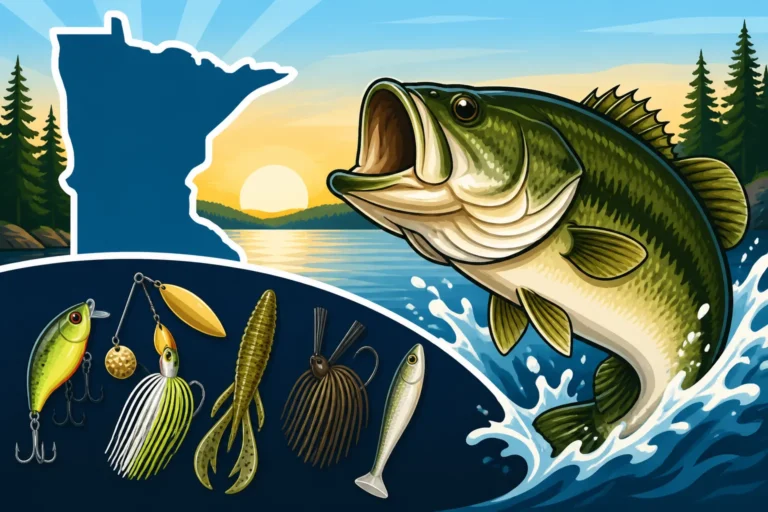
Smallmouth bass are opportunistic predators, but they can also be incredibly selective, especially in heavily fished waters. Having a diverse selection of proven lures and baits is crucial for adapting to their mood, the forage base, and the specific lake or river conditions. Minnesota offers a huge variety of smallmouth habitats, from rocky shorelines to deep offshore reefs, and your lure selection needs to reflect that diversity.
Soft Plastics and Jigs
Soft plastics and jigs are absolute staples for smallmouth bass, especially in Minnesota's clear waters. They offer subtle presentations that often mimic the natural forage of crayfish, minnows, and gobies. A simple tube jig, for instance, perfectly imitates a scurrying crayfish when hopped along the bottom.
Tube Baits: These hollow, cylindrical soft plastics with tentacled skirts are legendary for smallmouth. Rigged on an internal jig head, they mimic crayfish trying to hide in the rocks or struggling baitfish. For clear lakes like Lake Superior's North Shore or parts of Leech Lake, colors like green pumpkin, watermelon, or smoke with glitter are incredibly effective. A common technique is to drag or hop them along rocky bottoms or drop-offs, especially in 10-25 feet of water. The subtle glide and spiraling fall of a tube are often irresistible.
Creature Baits & Senkos: When smallmouth are holding tight to cover or feeling a bit more aggressive, creature baits like craws or small beaver-style baits, rigged on a Texas rig or a small jig head, can be deadly. Their bulkier profile and flapping appendages create more disturbance. For those times when the fish are suspended or finicky, a weightless wacky-rigged Senko or stick bait falling slowly can be absolute magic. Its subtle shimmy on the fall often triggers bites from lethargic fish.
Ned Rigs & Hair Jigs: For ultra-finesse, especially in cold water or when fish are super finicky, the Ned Rig is a tiny, mushroom-shaped jig head paired with a small, buoyant soft plastic. It stands upright on the bottom, presenting a tantalizing, easy meal. Hair jigs, especially small marabou jigs, are also phenomenal in cold water or during early spring, imitating small minnows or invertebrates with a natural, subtle pulse. These light presentations are often how you find success on How to Catch Smallmouth Bass on a River.
Crankbaits and Jerkbaits
When smallmouth are actively feeding and chasing baitfish, crankbaits and jerkbaits are powerhouse lures that can cover water quickly and elicit aggressive strikes. They excel at imitating injured baitfish or actively fleeing prey.
Crankbaits: These lipped lures dive to various depths depending on their bill design. Shallow-diving crankbaits (diving 0-5 feet) are excellent for fishing rocky flats, points, and along shorelines in early morning or low light conditions. Medium-diving crankbaits (5-15 feet) are workhorses for reaching deeper points, humps, and submerged rock piles. Deep-diving crankbaits (15+ feet) are crucial for targeting smallmouth holding on offshore structure or deep breaks, common on larger lakes like Lake of the Woods. Colors often mimic baitfish like perch, shad, or smelt, but crayfish patterns can also be incredibly effective, especially on rocky bottoms. Varying your retrieve speed and occasionally pausing the retrieve can trigger reaction strikes.
Jerkbaits: These slender, minnow-shaped lures are designed to be "ripped" or "jercked" on a slack line, creating an erratic, darting action that perfectly imitates a wounded baitfish. They are particularly effective in colder water temperatures, often in spring or fall, when smallmouth are less willing to chase fast-moving baits. Suspending jerkbaits, which hover at a specific depth during pauses, are especially potent, allowing a smallmouth to commit to the lure without it sinking or floating away. Popular jerkbait brands like Rapala and Lucky Craft offer excellent options. For advice on specific lure choices, consult our guide on Best Bass Lures for Minnesota Lakes.
Topwater and Spinnerbaits
Nothing beats the thrill of a smallmouth blowing up on a topwater lure. When conditions are right, these surface baits provide some of the most exciting fishing experiences. Spinnerbaits, on the other hand, are incredibly versatile search baits.
Topwater Lures: Poppers, walkers (like the Heddon Super Spook or Zara Spook), and prop baits are all fantastic topwater options. Poppers create a "bloopy" sound and splash, mimicking a struggling baitfish or insect. Walkers are designed to be retrieved with a "walk-the-dog" action, zigzagging across the surface. Prop baits create commotion with spinning blades. Topwater fishing is generally best in low light conditions (early morning, late evening) or on overcast days when smallmouth are actively feeding near the surface. Clearer, calmer waters often yield the best topwater bites. The key is to be patient, let the lure sit, and then work it erratically.
Spinnerbaits: While often associated with largemouth, spinnerbaits can be incredibly effective for smallmouth, especially when they are aggressive and feeding on baitfish. They create a lot of flash and vibration, making them excellent search baits for covering water quickly along weed lines, rocky points, or around submerged timber. Tandem willow blade combinations in silver or gold are often a good starting point, mimicking shad or shiners. Colors like white, chartreuse, or even a natural green pumpkin skirt can be very productive. They are particularly useful in situations where the water has a bit more stain or chop, as the vibration helps fish locate them.
Essential Accessories for Smallmouth Anglers
Having the right primary tackle is crucial, but don't overlook the importance of essential accessories. These small but mighty tools can make your day on the water more efficient, safer, and ultimately more enjoyable. Being prepared means you can focus on fishing, not fumbling for forgotten items.
Landing Nets and Fish Handling Tools
Landing a feisty smallmouth, especially a big one, often involves chaos at the boat. A proper landing net and fish handling tools are not just convenient; they are essential for both angler and fish safety, promoting ethical catch and release practices.
A landing net is paramount. Trying to boat flip a 4-pound smallmouth can result in lost fish, broken rods, or even injury to yourself from a flailing fish with sharp fins. A net with a rubberized, knotless mesh is ideal. Rubber nets are gentler on the fish's slime coat (which protects them from disease) and prevent hooks from getting tangled, making for a quicker release. Look for a net with a reasonably wide hoop and a long enough handle to reach the fish comfortably. Brands like Frabill or Ego S2 Slider offer great options for extending handles.
Beyond the net, a good pair of needle-nose pliers or hemostats is indispensable for quickly and safely removing hooks, especially when a smallmouth has swallowed a bait deep or the hooks are awkwardly placed. This minimizes stress on the fish and reduces the risk of you getting poked by a thrashing fish or lure. A hook remover tool can also be a lifesaver for deep-hooked fish. Finally, for those trophy catches you want to photograph, a fish friendly measuring board and digital scale are important for accurate measurements without harming the fish. Always handle smallmouth gently, supporting their weight horizontally, especially larger fish, to prevent internal organ damage. These practices align with broader Catch and Release Best Practices in Minnesota.
Line Cutters, Pliers, and Knot Tying Tools
Smallmouth fishing involves constant re-tying, changing lures, and dealing with tangled lines. Having the right tools for these tasks organized and accessible can save you a lot of frustration and valuable fishing time.
A sharp pair of line cutters is a non-negotiable. Small, sharp scissors or dedicated line clippers specifically designed for fishing line will give you clean cuts, which are crucial for strong knots, especially with fluorocarbon and braided lines. Trying to bite through braid or fray mono with dull cutters will lead to weak points in your line. Many multi-tools designed for fishing include integrated line cutters.
As mentioned earlier, a sturdy pair of pliers is essential. Beyond hook removal, they are great for crimping split shot, tuning crankbait bills, or cutting heavy wire. Look for models made from corrosion-resistant materials, as they will inevitably get wet. Investing in a good pair from a brand like Leatherman or Gerber that also features strong cutters for heavy braided line can be a great choice. For those who find knot tying challenging, especially on the water, a knot tying tool can simplify the process, helping you tie consistent, strong knots every time. This is particularly helpful for tying complex knots like the FG knot when connecting braid to a fluorocarbon leader. These small items, easily stashed in a vest or tackle box, dramatically improve your efficiency.
Tackle Storage and Organization
Keeping your tackle organized isn't just about neatness; it's about efficiency. When the bite is hot or conditions change rapidly, you need to find the right lure or bait quickly. A well-organized tackle system minimizes downtime and maximizes your time fishing.
Tackle Boxes & Bags: From traditional hard-sided tackle boxes to soft-sided bags, the options are vast. For smallmouth, many anglers prefer modular systems using clear plastic utility boxes (like those from Plano or Bass Pro Shops) that fit inside a larger bag. These clear boxes allow you to see their contents at a glance, making it easy to grab the right size jig or color of soft plastic without rummaging. Dedicate boxes to specific lure types (e.g., one for jerkbaits, one for jigs, one for soft plastics).
Specialized Storage: Consider specialized storage for soft plastics. Keeping them in their original bags or in dedicated soft plastic binders prevents them from drying out or reacting with other plastics, which can cause them to melt or deform. Worm binders or small, zippered pouches are excellent for this. For terminal tackle like hooks, weights, and swivels, small compartment boxes are perfect. Keeping everything categorized and neatly stored means you spend less time searching and more time with your line in the water, giving you an edge when you're exploring any of the Best Fishing Lakes in Minnesota.
Disclaimer
Fishing regulations, seasons, and limits can change. Always consult the latest Minnesota Department of Natural Resources (DNR) regulations before heading out on the water. This guide is for informational purposes only and does not supersede state or local fishing laws. Stay safe and fish responsibly.