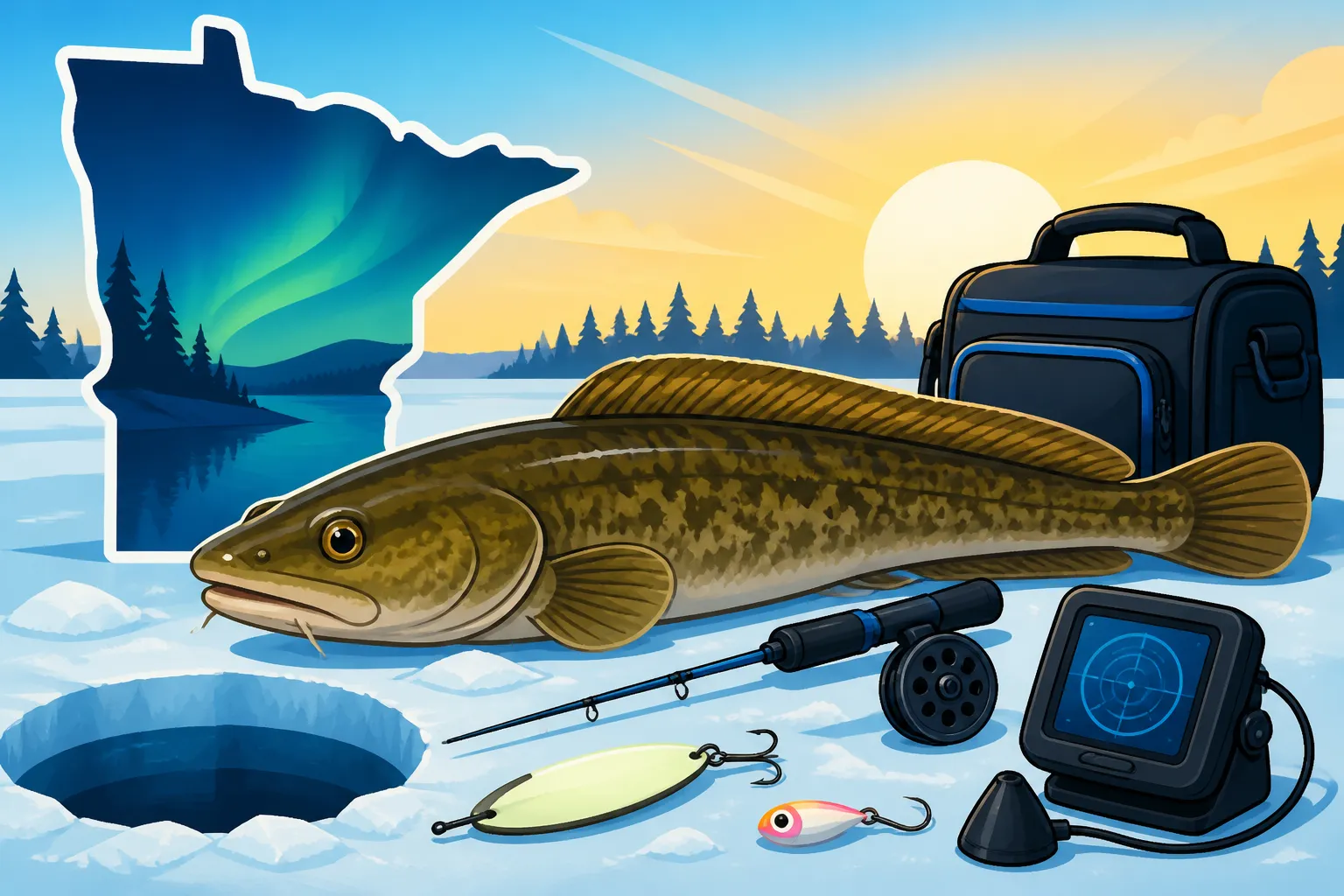
Best Gear for Ice Fishing Burbot in Minnesota
The pursuit of burbot through the ice can be one of Minnesota's most rewarding, yet often perplexing, winter fishing experiences. Many anglers find themselves wondering why their usual walleye or panfish setups just aren't cutting it for these unique, eel-like bottom dwellers. This guide is designed to cut through that frustration, equipping you with the specialized gear and knowledge needed to consistently target and land burbot, turning those cold nights on the ice into memorable triumphs.
Understanding Burbot and Their Habits
Before we dive into the specific gear, it's vital to understand the creature you're after. Burbot, often affectionately (or not-so-affectionately) called eelpout, are unlike most other game fish in Minnesota, requiring a slightly different approach. Knowing their preferences helps you choose the right tools for the job.
Burbot Behavior and Habitat Preferences
Burbot are fascinating fish. They are the only freshwater member of the cod family, and their preference for cold, deep water sets them apart. While other species might be sluggish in the winter, burbot thrive in frigid conditions, becoming more active as water temperatures drop. You won't find them suspending high in the water column or chasing baitfish in open water. Instead, they are classic bottom dwellers, preferring soft, mucky bottoms, rock rubble, or deep structure where they can ambush prey.
These fish are primarily nocturnal feeders, meaning your best bites will often come after dark, making them a fantastic target for extended evening ice fishing excursions. They rely heavily on their sense of smell and their barbels (the single whisker-like appendage on their chin) to locate food in low light and murky conditions. Their diet primarily consists of smaller fish like ciscoes, minnows, and even other burbot, along with various invertebrates found on the lakebed. Understanding this preference for scent and bottom-dwelling behavior directly informs the best bait and lure choices.
Best Time and Places for Burbot in Minnesota
The prime time for burbot fishing in Minnesota aligns perfectly with the deep freeze of mid-winter, typically from late December through February. This is when they are most active, often congregating in deeper basins or near prominent structural features like drop-offs, underwater points, and humps that offer access to soft bottom. Lakes with abundant forage like tullibees (ciscoes) are often excellent burbot fisheries.
Some of Minnesota's top burbot lakes include Lake of the Woods, which is renowned for its sheer numbers, and various deep, clear lakes in northern Minnesota like Lake Superior, Lake Vermilion, and Leech Lake. Even some lakes in central Minnesota like Mille Lacs, despite its walleye fame, hold respectable populations in their deeper areas. When you're scouting a new lake, look for those deep holes, often 40-80 feet, especially where soft bottom meets harder structure. A good contour map can be your best friend in identifying these prime locations before you even drill a hole. For specific regulations, always check the current Burbot Season & Limit in Minnesota to ensure you're fishing legally.
Essential Rods, Reels, and Line for Burbot
When it comes to outfitting yourself for burbot, you can't just grab your lightest panfish setup. These fish fight surprisingly hard, with a powerful, rolling, head-shaking action that can quickly overwhelm inadequate gear. You need a robust combination that can handle the cold, the depth, and the fight.
Rod Selection: Power and Action for Big Fights
For burbot, think heavy. You’re typically fishing in deep water, often with heavier lures and baits, and when a burbot hits, it’s not subtle. A medium-heavy to heavy power ice fishing rod is ideal. This power allows you to effectively jig heavier baits and, more importantly, provides the backbone needed to pull a struggling burbot up from the depths without wearing out the rod or your arms. A fast to extra-fast action tip is also crucial. This responsive tip allows you to feel subtle bites, which burbot sometimes deliver even when actively feeding, and quickly transfer power to set the hook firmly in their often tough mouths.
Look for rods in the 30-40 inch range for maneuverability inside an ice shelter, but if you're fishing outside or in a larger portable house, a 40-48 inch rod can offer a bit more leverage. Brands like St. Croix, Fenwick, and Clam offer excellent options. For instance, a St. Croix Legend Silver Ice rod in a medium-heavy power is a fantastic choice, offering both sensitivity and brute strength. While you might use Best Ice Fishing Rods for Walleye & Panfish for lighter pursuits, burbot demand something more substantial.
Reel Choice: Durability and Smooth Drag
Matching your heavy rod with an equally capable reel is non-negotiable. A spinning reel in the 2000-3000 series is generally perfect for burbot. The most critical feature here is a smooth, reliable drag system. Burbot are known for their powerful initial runs and persistent tugs, especially when they get near the hole. A jerky or inconsistent drag will lead to snapped lines or pulled hooks. Look for reels with a decent retrieve rate (around 5.2:1 or 6.0:1) to help you bring up line quickly from deep water, but don't compromise drag quality for speed.
Durability is also a significant factor, as you'll be fishing in freezing conditions. Choose a reel from reputable brands like Shimano, Daiwa, or Pflueger that are known for their robust internal components and cold-weather performance. Ensure the reel foot sits snugly on the rod, and the bail mechanism operates smoothly even when your fingers are cold. You can find many suitable reels at retailers like Bass Pro Shops, where you can feel them in hand before committing.
Line Considerations: Strength and Sensitivity
Your choice of fishing line can make or break a burbot outing. Given the deep water, potential for heavy lures, and the fish's fighting prowess, a strong, low-stretch line is paramount.
Here are the common choices:
- Braided Line: Many experienced burbot anglers swear by braided line, typically in 20-30 pound test. Its near-zero stretch provides unparalleled sensitivity, allowing you to detect light bites even in 70 feet of water. It also offers incredible strength for pulling up big fish and resisting abrasion against the ice edge. However, braid can absorb water and freeze, so always use a fluorocarbon leader (8-15 lb test) tied with a reliable knot like an Alberto or FG knot. The leader also makes your presentation less visible to the fish.
- Fluorocarbon Line: A direct fluorocarbon main line in 10-15 pound test is another excellent option. It has less stretch than monofilament, is highly abrasion-resistant, and becomes virtually invisible underwater. It also sinks faster, which can be an advantage with heavier baits. Its main drawback compared to braid is slightly less knot strength and more memory in cold conditions.
- Monofilament Line: While some anglers use heavier monofilament (12-17 lb test) for its shock-absorbing qualities and ease of handling in the cold, its stretch can make bite detection difficult in deep water and reduce hook-setting power. It's generally less preferred for dedicated burbot pursuits unless you're fishing shallower water.
No matter your choice, always use fresh line at the start of the season. The abuse from cold weather and heavy loads can quickly degrade line quality.
Lures and Bait That Burbot Can't Resist
Burbot are opportunistic feeders, but they are also driven heavily by scent and vibration. This means your lure and bait choices should cater to these primary senses. Forget tiny jigs; we're talking about more substantial offerings.
Jigging Lures and Spoons
Heavy jigging lures are the workhorses for burbot. You need something weighty enough to get down to 40-80 feet quickly and present a good profile.
- Jigging Spoons: These are probably the most popular choice. Look for spoons in the 1/2 oz to 1 oz range. Their flashy, erratic action on the drop mimics struggling baitfish, while their weight gets them into the strike zone fast. Crucially, they should be tipped with bait. Favorites include the Northland Forage Minnow Spoon, Clam Leech Flutter Spoon, or a classic Swedish Pimple. Many anglers prefer spoons that have some glow properties, as burbot often feed in low-light conditions.
- Lipless Crankbaits/Jigging Raps: Heavier lipless crankbaits or jigging Rapala-style lures can also be very effective. Their tight wobble and vibration attract fish from a distance. The Rapala Jigging Rap in larger sizes (W7, W9) is a classic for a reason. Again, tipping with a piece of cut bait is key.
- Heavier Jigs: If you prefer jigs, think big. 1/2 oz to 1 oz ball head or bullet jigs paired with larger plastic grub tails or paddle tails work well, especially when heavily scented. The added bulk and vibration of a larger soft plastic can be attractive.
- Glow and UV: Since burbot are often active at night or in deep, dark water, lures with strong glow-in-the-dark or UV reflective properties can significantly increase your success rate. Charge them frequently with a strong light source. You can find a wide array of these at tackle shops or on Amazon.
Natural Baits: The Key Attractor
While lures provide action and flash, it's the natural bait that brings in the burbot with its irresistible scent. You almost never fish for burbot without tipping your lure.
- Cut Bait: This is the king of burbot baits. Oily fish like ciscoes (tulibees), smelt, or suckers cut into strips or chunks are perfect. The scent trail they release in the water is a powerful attractant. Many anglers will also use the belly meat of a previously caught burbot! A 1-2 inch strip is usually sufficient.
- Minnows: Large shiner minnows or chub minnows, either dead or live, are also excellent. Hook them through the back near the dorsal fin (for live bait) or through the head (for dead bait) on a jigging spoon or a dedicated deadstick rig.
- Whole Small Fish: For truly aggressive burbot, a whole smaller dead fish like a smelt or tullibee, rigged on a large single hook or a quick-strike rig, can be deadly, especially on a deadstick setup.
Remember, fresh bait is always best. Keep your bait cold, but not frozen solid, to maintain its scent and texture. The goal is to create a scent plume that calls burbot from afar, much like you would use Best Live Bait for Walleye (Leeches, Minnows, Crawlers) for their cousin species.
Crucial Ice Fishing Electronics and Accessories
Ice fishing for burbot isn't just about rods and lures; it's also about leveraging technology and having the right creature comforts to make those deep-water, often nocturnal, expeditions successful and enjoyable.
Fish Finders and Flashers
In deep water, a good fish finder or flasher is practically non-negotiable for burbot. These devices help you precisely locate the bottom, identify subtle changes in depth and structure where burbot might be holding, and even see fish hovering near the bottom.
- Flashers (Vexilar, Marcum, Humminbird): Traditional flashers like the Best Ice Fishing Flashers: Vexilar vs Humminbird vs Garmin are excellent for burbot. They provide real-time updates on what's directly beneath your hole, allowing you to see your lure and any fish approaching it. This feedback loop is invaluable for understanding how fish are reacting to your presentation. Look for models with good depth penetration and target separation.
- LCD Fish Finders (Humminbird Ice Helix, Garmin Striker): These units offer more detailed sonar returns, often with mapping capabilities. They can display historical data, allowing you to see if fish have passed through recently, and often feature GPS, which is great for marking productive spots on a large lake. Some units even offer advanced features like side imaging or forward-facing sonar, though these are less critical for bottom-oriented burbot than for other species.
Regardless of the type, learn to read your unit. Understanding how to interpret those signals will significantly increase your efficiency in finding and catching burbot. When you are looking to find fish while ice fishing, these tools are your eyes underwater.
Essential Ice Fishing Accessories
Beyond the core tackle, a few key accessories will make your burbot fishing trip safer, more comfortable, and more successful.
- Shelter: Since burbot fishing often means long hours, often after dark, a comfortable ice shelter is a must. Whether it's a portable flip-over from brands like Clam or Otter, or a hub-style shelter, it provides protection from the elements. A good shelter makes the experience much more enjoyable. Check out guides on Best Ice Shelters: Clam vs Otter (Flip vs Hub) to pick the right one for you.
- Heater: To stay warm in your shelter, especially on those frigid Minnesota nights, a reliable ice fishing heater is critical. Propane heaters like those from Mr. Heater are popular and effective. Just remember to ensure proper ventilation! You can find tips for picking the right one in our guide to the Best Ice Fishing Heater for a Shelter.
- Lighting: Since burbot are nocturnal, good lighting is essential. A powerful headlamp with a red-light option (to preserve night vision) is a must for rigging baits, tying knots, and moving around the ice. Lanterns for inside the shelter provide ambient light.
- Glow Charger: For your glow lures, a strong glow charger or a camera flash unit will keep them illuminated. This is a small but mighty accessory that can greatly improve your lure's visibility in deep or dark water.
- Heavy-Duty Pliers/Forceps: Burbot can swallow baits deeply, and their slimy, often squirming bodies can make hook removal tricky. Long-nosed pliers or forceps are essential for safe and efficient unhooking.
- Ice Scoop: Keep your holes free of slush and ice buildup, especially when fishing deep and reeling up line frequently.
- Bucket/Sled: For hauling gear, a sturdy sled is invaluable. A five-gallon bucket can double as a seat and storage for smaller items.
Setting Up for Success: Burbot Rigs and Techniques
Having the right gear is only half the battle; knowing how to put it all together and present your offerings effectively is where the true success lies. Burbot fishing isn't overly complex, but a few key rigging and technique strategies will significantly boost your catch rate.
Burbot Rigging Strategies
Simplicity often reigns supreme when rigging for burbot, especially given the deep water and potential for tangles.
- Vertical Jigging Rig: This is your primary setup. Tie your chosen jigging spoon or lipless crankbait directly to your fluorocarbon leader. The key is to tip the hook with a generous piece of cut bait or a whole minnow. You can use a single, sharp treble hook on the spoon, or some anglers prefer to replace the treble with a large, strong single hook for easier hook removal.
- Deadstick Rig: A deadstick is a secondary rod that sits passively in a rod holder, acting as a setline. This is incredibly effective for burbot, as they are often attracted by scent and will slowly investigate. For a deadstick, use a heavy lead sinker (1/2 oz to 1 oz or more, depending on current) at the bottom, with a snelled hook (size 1/0 to 4/0, octopus or circle hook) tied on a short leader (6-12 inches) above it. The bait of choice here is usually a whole dead minnow, a large chunk of cut bait, or even a smaller whole smelt, laid right on the bottom. The rod should be in a sturdy holder, and you might consider a rattle reel if fishing in a dark house. This setup allows the scent to disperse and the fish to find the bait at its leisure.
- Quick-Strike Rigs: For larger baits or targeting bigger burbot, quick-strike rigs designed for pike can be adapted. These rigs use two or three hooks to ensure a solid hook-up when a fish takes the entire bait. This setup can be used on a deadstick rod.
Always ensure your knots are strong and that your hooks are razor-sharp. Dull hooks lose fish, especially when dealing with tough-mouthed burbot.
Active Jigging vs. Deadsticking
The most successful burbot anglers often employ a combination of active jigging and deadsticking, maximizing their chances by covering both sensory appeals.
- Active Jigging: With your jigging rod, present your spoon or lipless crankbait tipped with bait. The action doesn't need to be frantic. A common cadence involves lifting the rod 1-3 feet, letting the lure fall and flutter back to the bottom, then pausing for 5-15 seconds. Experiment with how aggressively you lift and how long you pause. Often, the bite comes on the pause or just as the lure settles. Sometimes, simply pounding the bottom with your lure to kick up sediment can draw attention. Keep your lure within a foot or two of the bottom, as this is where burbot will be cruising.
- Deadsticking: This technique leverages the burbot's incredible sense of smell. Set up your deadstick rod with a scent-rich bait on the bottom. The rod should be left unattended, perhaps with a bell or an alarm clip to signal a bite. Many times, while you're actively jigging with one rod, your deadstick will get hit. The key is patience; let the scent work its magic. When the flag flies or the bell rings, pick up the rod, feel for the fish, and set the hook.
Combining these two approaches provides both visual and scent attraction, making your presentation much more effective. It's a fundamental strategy when learning How to Catch Burbot Through the Ice in Minnesota. Remember, consistency and patience are your best friends in the world of burbot fishing.
Summary of Key Burbot Gear
To help you get organized, here's a quick reference for the essential burbot ice fishing gear.
| Gear Category | Recommended Specifications | Key Considerations |
|---|---|---|
| Rod | Medium-Heavy to Heavy Power, Fast/Extra-Fast Action | 30-48 inches, strong backbone for deep fish, sensitive tip for bites. |
| Reel | 2000-3000 Series Spinning Reel | Smooth, reliable drag is crucial; durable for cold weather. |
| Main Line | 20-30 lb Braided (with leader) or 10-15 lb Fluorocarbon | Low stretch for sensitivity in deep water, abrasion resistance. |
| Leader | 8-15 lb Fluorocarbon | Visibility for braided main line, added abrasion protection. |
| Lures | 1/2 oz – 1 oz Jigging Spoons, Lipless Crankbaits, Heavy Jigs | Glow/UV properties, significant profile, designed for tipping with bait. |
| Bait | Cut Bait (cisco, smelt, sucker), Large Minnows (dead/live) | Scent is paramount; fresh bait always performs best. |
| Electronics | Flasher (Vexilar, Humminbird) or LCD Fish Finder | Real-time bottom tracking, fish detection, depth identification. |
| Shelter | Portable Flip-Over or Hub Style | Protection from elements, warmth for comfort, space for gear. |
| Heater | Propane Heater (e.g., Mr. Heater) | Essential for warmth, ensure proper ventilation. |
| Lighting | Headlamp (with red light option), Lantern | Navigating ice, rigging baits, ambient light in shelter. |
| Accessories | Glow Charger, Pliers, Ice Scoop, Sled, Rod Holders | Practical tools for safety, efficiency, and convenience. |
Equipping yourself properly for burbot fishing ensures you're ready for the unique challenges and rewards these bottom-dwelling brutes offer. It's a different kind of ice fishing, and with the right setup, you'll find yourself eagerly anticipating those deep-winter nights.
Disclaimer
Fishing conditions and regulations in Minnesota can change. Always consult the latest Minnesota Department of Natural Resources (DNR) regulations before heading out on the ice. The information provided in this guide is for general informational purposes only and should not be considered legal advice. Stay safe and be aware of ice conditions.