Best Gear for Ice Fishing Largemouth Bass in Minnesota
Many anglers in Minnesota mistakenly believe that largemouth bass disappear once the lakes freeze over, turning their attention solely to walleye, crappie, and northern pike. But let me tell you, that couldn't be further from the truth! While they might act a bit differently, largemouth bass are absolutely catchable through the ice, offering a thrilling challenge and a hefty tug on your line when most folks aren't even thinking about them. This guide is all about equipping you with the right gear to confidently target and land some feisty bucketmouths on the hardwater.
The Unique Challenge of Ice Fishing for Largemouth Bass
Ice fishing for largemouth bass is often an overlooked pursuit, which is a shame because it can be incredibly rewarding. Unlike their summer behavior, winter bass don't usually chase down baits with the same aggressive abandon. Understanding their cold-water personality is key to unlocking success.
Why Largemouth Bass are Different Under the Ice
When water temperatures plummet, largemouth bass, like most cold-blooded fish, experience a significant slowdown in their metabolism. They become more lethargic, conserving energy and not expending it on long, furious chases. This means they tend to hug tighter to cover, become less inclined to travel far for food, and often require a more subtle presentation. Instead of suspending actively or roaming open flats, you'll find them hunkered down in distinct areas where they can ambush prey with minimal effort. Think dense weed beds, brush piles, or sharp breaks near deeper water.
Their feeding windows can also be much shorter and less frequent. While you might catch them all day in summer, winter bass might only bite during specific periods, often correlating with changes in light or subtle movements of baitfish. They’re still apex predators, but they’re operating in slow motion, demanding patience and precision from the angler.
Debunking Myths: Largemouth Aren't Just Summer Fish
The biggest myth surrounding largemouth bass is that they simply go dormant in winter. While they certainly slow down, they don't stop feeding entirely. They still need to eat to survive, even if it's just a few easy meals. Many anglers shy away from targeting them, believing it's too difficult or that they won't bite. This misconception actually works in your favor, as it often means less pressure on winter bass populations.
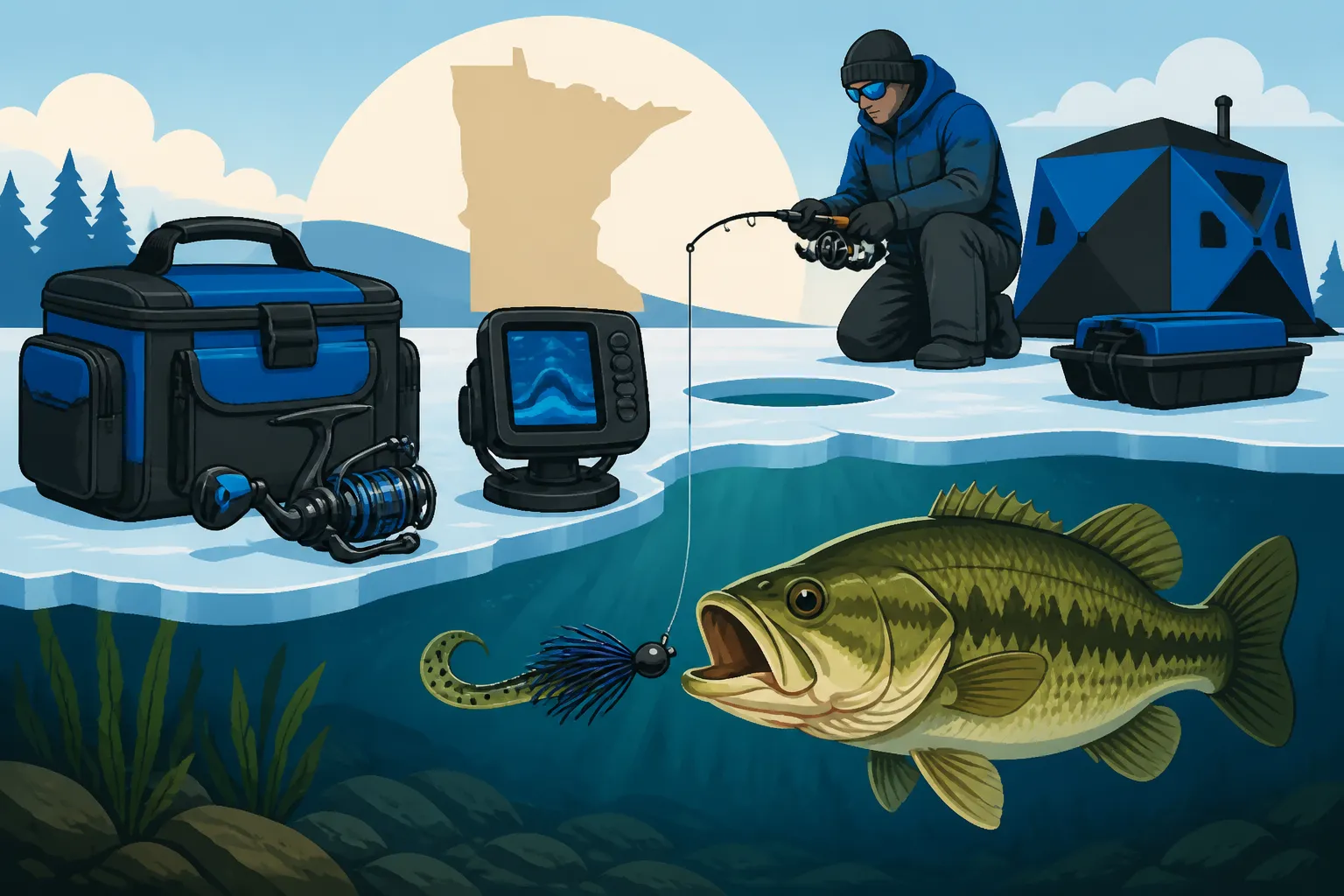
In reality, ice fishing for largemouth can be incredibly exciting. Imagine pulling a chunky, olive-green bass through a small hole in the ice – it’s a powerful fight, and they look absolutely stunning against the white snow. The key is adjusting your tactics, bait choices, and gear to match their winter temperament. Don't be fooled; these fish are out there, and they're waiting for the right presentation.
Essential Rod and Reel Setups for Ice Bass
Having the right rod and reel makes all the difference when you're trying to coax a finicky largemouth into biting and then fight it through a small hole. You need sensitivity for the subtle takes and backbone for the fight.
Medium-Light to Medium Power Rods
For ice fishing largemouth bass, you'll want to move away from the ultra-light panfish rods and opt for something with a bit more backbone. A medium-light to medium power rod, typically in the 28 to 36-inch range, is ideal. The extra length compared to traditional panfish rods gives you better leverage and shock absorption, which is crucial when a powerful bass makes a run. The tip action should be fast or extra-fast to detect those soft winter bites, while the blank itself should transition quickly into a good taper for fighting strength.
Rods made from graphite or a composite blend will offer the best sensitivity, allowing you to feel every bump, tic, and subtle weight change that indicates a bite. Brands like Fenwick, St. Croix, and Tuned Up Custom Rods offer excellent options specifically designed for finesse and power on the ice. A longer rod, say 36 inches, also helps keep your line away from the edge of the ice hole, reducing abrasion. For more general advice, check out our guide on Best Ice Fishing Rods for Walleye & Panfish, which can easily be adapted for bass with a slight increase in power.
Reliable Spinning Reels
Pair your rod with a high-quality spinning reel in a 1000 to 2000 size. Don't skimp here; a smooth drag system is paramount when a big bass decides to spool you. Look for reels with at least 5-7 ball bearings for a silky-smooth retrieve, even in freezing temperatures. The reel should be lightweight but robust enough to handle the fight. Cold weather can be tough on gear, so ensure the reel's components are built to withstand the elements.
A comfortable handle is also important, as you'll be constantly jigging and retrieving. Many anglers prefer reels from trusted brands like Shimano, Daiwa, or Pflueger for their reliability. When you’re browsing at Bass Pro Shops or looking for deals online, prioritize a reel that feels solid and has a consistently smooth drag. The ability to fine-tune your drag quickly can prevent break-offs when a largemouth makes a sudden dash back into the weeds.
Line Choices for Hardwater Bass Anglers
Line choice might seem like a small detail, but it's one of the most critical elements for success in ice fishing, especially for finicky bass. You need a line that balances strength, sensitivity, and invisibility.
Fluorocarbon for Stealth and Sensitivity
For targeting largemouth through the ice, a straight fluorocarbon line in 6 to 10-pound test is an excellent choice. Fluorocarbon has several key advantages:
- Invisibility: Its refractive index is very close to that of water, making it virtually invisible underwater. This is huge for wary winter bass who have plenty of time to scrutinize your offering.
- Sensitivity: While not as sensitive as braided line, fluorocarbon transmits subtle bites well.
- Abrasion Resistance: It holds up well against sharp ice edges and the abrasive nature of weeds or wood structure where bass hide.
However, fluorocarbon can be prone to memory and can stiffen in extreme cold, potentially leading to coils. To mitigate this, spool your reel carefully and try to use a quality, supple fluorocarbon like Seaguar InvizX or Berkley Trilene 100% Fluorocarbon. It’s also wise to check your line frequently for nicks or abrasions, especially after fighting a fish or getting snagged.
Braided Line with Fluorocarbon Leader
Another highly effective option, especially if you want maximum sensitivity and hook-setting power, is to use a braided main line with a fluorocarbon leader. A 10 to 15-pound test braided line (like PowerPro or Sufix 832) as your main line offers zero stretch for unparalleled sensitivity, allowing you to feel even the most delicate tap. The brighter colors of braid are also easier to see above the ice, helping you detect bites visually.
Attach a 6 to 10-pound fluorocarbon leader, typically 3 to 6 feet long, using a reliable knot like an Alberto knot or an FG knot. This gives you the stealth of fluorocarbon at the business end while leveraging the sensitivity and strength of braid for the main line. The lack of stretch in braid also means more solid hooksets, which can be crucial when a bass lightly mouths your bait. Make sure to regularly check your leader knot, as it’s the weakest link in this setup.
Top Lures and Baits for Ice Fishing Largemouth Bass
Winter largemouth bass are generally looking for an easy meal, so your lure selection should reflect that. Presentation is everything, and matching the hatch or simply offering something irresistible can be the game-changer.
Jigging Raps and Blade Baits
These lures are fantastic for aggressive presentations and covering water, especially if you're marking fish on your flasher.
- Jigging Raps (or similar swimming lures like Northland Puppet Minnows): These baits mimic dying or injured baitfish with a unique swimming action on the drop. The key is to jig them aggressively to draw attention, then pause for several seconds, allowing them to glide and settle. Most bites will occur on the pause or as the lure sinks. Sizes 5 and 7 are great starting points, and natural colors like perch, smelt, or shiner are often effective. Sometimes, a bright firetiger can trigger a reaction strike, especially in stained water.
- Blade Baits (e.g., Johnson ThinFisher, Rapala Rippin' Rap): Blade baits produce a lot of vibration and flash, which can be irresistible to bass, even when they're lethargic. A sharp rip followed by a controlled fall allows the bait to flutter and vibrate, imitating a struggling baitfish. These are particularly good for pulling fish out of thick cover. Again, experiment with sizes (1/4 to 1/2 oz) and colors. You can find a wide variety of these options at any well-stocked tackle shop or online through Amazon.
Tungsten Jigs with Plastics or Live Bait
When bass are truly finicky, finesse presentations become essential. Tungsten jigs offer superior sensitivity and a faster fall rate than lead, allowing you to get down to the fish quickly and feel those light bites.
- Small Tungsten Jigs with Plastics: Pair a 1/8 to 1/4 ounce tungsten jig with small soft plastics like 2-3 inch tube jigs, grubs, or small creature baits. The key here is subtle action. Just barely jiggle the rod tip to make the plastic quiver. Natural colors like black, green pumpkin, or brown often work best, mimicking crawfish or small baitfish. You might need to experiment with different profiles until you find what the bass prefer that day.
- Tungsten Jigs with Live Bait: Sometimes, nothing beats the real thing. Tip your tungsten jig with a small to medium-sized shiner minnow, fathead, or a piece of a nightcrawler. Hook the minnow lightly through the back or lips. The natural scent and subtle movements of live bait can entice even the most inactive bass. Jig it gently, just enough to make the minnow twitch, and keep it suspended near the bottom or in the weed tops.
Spoons and Vibrating Lures
Spoons have been an ice fishing staple for generations, and for good reason – they work! Vibrating lures add another dimension to your presentation.
- Spoons: Gold, silver, and glow-in-the-dark spoons (like Northland Buck-Shot Rattle Spoons or Swedish Pimples) are excellent for attracting attention. A vigorous jig and flutter, followed by a long pause, can trigger strikes. The flash and fall of a spoon often mimic dying baitfish perfectly. Tip them with a minnow head or a maggot for added scent and visual appeal. Vary your retrieve, sometimes a fast snap and fall, other times a slower, more deliberate lift and drop.
- Vibrating Lures: These are similar to blade baits but might have a slightly different profile or vibration. Think of lures like the Rapala Rippin' Rap or other lipless crankbaits that have a tight wobble. They are effective when bass are slightly more active and you need to cover a bit more area under the ice. Their loud rattles can also call in fish from a distance. Experiment with different colors and sizes until you find what the bass are reacting to. For broader lure advice, our guide on Best Walleye Lures: Jigs, Cranks & Spinners offers some crossover tips that can apply to bass.
Critical Electronics and Tools for Success
In the clear, cold water of a Minnesota winter, electronics aren't just a luxury; they're practically a necessity for locating and staying on active bass. They give you a distinct advantage over simply drilling random holes.
Flashers for Locating Fish and Structure
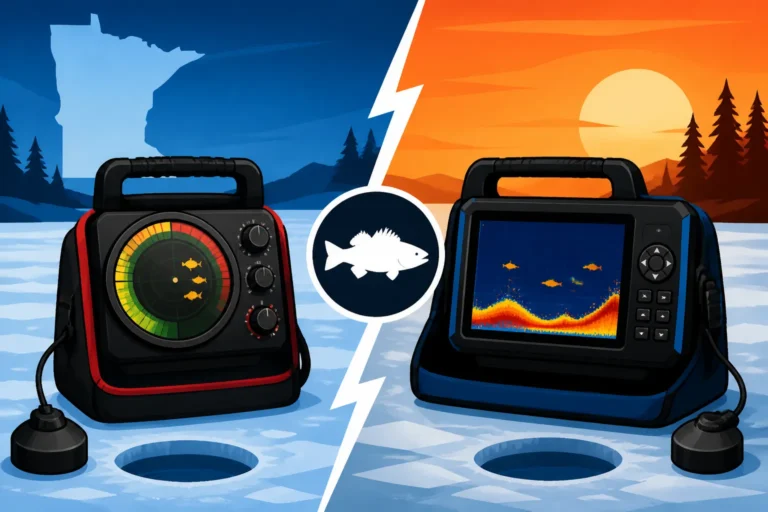
A quality flasher is your best friend when ice fishing for largemouth bass. Brands like Vexilar, Humminbird, and Garmin offer excellent units that provide real-time feedback on what's directly beneath your hole.
- Finding the Fish: A flasher helps you see your lure, any fish that come into its cone, and how they react to your presentation. You can tell if a bass is inspecting your bait, rising to it, or ignoring it entirely. This immediate feedback allows you to adjust your jigging cadence or lure choice on the fly.
- Identifying Structure: Bass love structure. Flashers allow you to pinpoint weed lines, brush piles, rock formations, and depth changes – all prime bass territory. You can hover your bait right above the cover or present it right in their face. This precision is invaluable, especially when bass are tightly associated with specific features. Consider reading our detailed comparison of Best Ice Fishing Flashers: Vexilar vs Humminbird vs Garmin to help you choose the right model.
Underwater Cameras for Real-Time Action
While not as essential as a flasher, an underwater camera like an Aqua-Vu or MarCum can be an incredibly insightful tool for targeting bass.
- Species Confirmation: Ever wonder if that mark on your flasher is a bass, a pike, or just a carp? An underwater camera gives you visual confirmation. This saves time and ensures you're targeting the right species.
- Observing Behavior: You can actually watch how bass react to your lure. Are they approaching cautiously? Are they swiping at it without committing? Do they prefer a slower or faster retrieve? This visual feedback helps you fine-tune your technique and presentation in ways a flasher alone cannot. It’s like having an underwater anthropologist studying bass behavior right before your eyes.
Quality Ice Auger and Shelter
You can't effectively fish for bass if you can't get to them, and being comfortable on the ice is key to staying out long enough to find them.
- Ice Auger: Largemouth bass often require a "run and gun" approach, meaning you'll be drilling many holes to find active fish. A reliable and efficient ice auger is crucial. Electric augers like the StrikeMaster Lithium 40V or ION are fantastic for their quiet operation and ease of use, making them perfect for quickly punching holes without disturbing nearby fish. Gas augers are also powerful, but can be heavier and noisier. Our guide on Best Ice Augers for Minnesota: Electric vs Gas offers a comprehensive breakdown to help you pick.
- Ice Shelter: While some anglers brave the elements without one, a good ice shelter—whether a portable flip-over or a hub-style—provides warmth and comfort, allowing you to focus on fishing rather than fighting the cold. This is especially important when targeting bass, as it can require patience and extended periods on the ice. A shelter from Clam or Otter can make a long day much more enjoyable, as discussed in Best Ice Shelters: Clam vs Otter (Flip vs Hub).
Must-Have Accessories for the Largemouth Bass Ice Angler
Beyond the main gear, a few essential accessories can significantly improve your comfort, safety, and overall success when pursuing largemouth bass through the ice. Don't overlook these critical items!
Warm Gear and Safety Equipment
Staying warm and safe is paramount, especially during the often brutal Minnesota winters.
- Layering: Dress in layers with good moisture-wicking base layers, insulating mid-layers (like fleece or down), and a waterproof/windproof outer shell. A quality float suit, like those from Striker Ice or Clam, not only provides warmth but also offers buoyancy in case of an accidental plunge. This safety aspect cannot be overstated.
- Headwear and Handwear: A warm hat that covers your ears and insulated gloves or mittens are non-negotiable. Consider fingerless gloves for dexterity when tying knots, with over-mitts for warmth.
- Footwear: Insulated, waterproof boots are crucial. Look for boots with high ratings for extreme cold.
- Ice Safety: Always carry ice picks around your neck and a spud bar or chisel to test ice thickness as you move. A length of rope and a charged cell phone are also vital safety items. Remember, no fish is worth risking your life. Our article on Best Ice Fishing Suits & Bibs (Float Suits) dives deeper into protective apparel.
Tackle Management and Pliers
Efficient tackle management saves time and frustration, especially when your fingers are cold.
- Tackle Box/Bag: A well-organized tackle box or soft-sided bag designed for ice fishing will keep your jigs, spoons, plastics, and leaders neatly organized and easily accessible. Look for options with clear compartments or multiple trays.
- Forceps/Pliers: Largemouth bass have powerful jaws and often swallow baits deeply. A good pair of long-nosed pliers or fishing forceps is essential for safely removing hooks without harming the fish or your fingers. A pair with a built-in line cutter is a bonus.
- Line Clippers: Small, sharp line clippers or scissors are invaluable for quick and clean knot tying.
- Bait Pail/Container: If you’re using live minnows, a good insulated bait pail with an aerator will keep them lively, which is crucial for enticing cold-water bass.
Here's a quick overview of the recommended gear for ice fishing largemouth bass:
| Gear Category | Recommended Item / Feature | Key Considerations |
|---|---|---|
| Rod | Medium-light to Medium Power (28-36 inches) | Fast/Extra-fast tip, graphite for sensitivity, good backbone |
| Reel | 1000-2000 size Spinning Reel | Smooth drag, 5-7+ ball bearings, cold-weather resistant |
| Main Line | 6-10 lb Fluorocarbon | Invisible, sensitive, abrasion resistant |
| Alternative Line | 10-15 lb Braid + 6-10 lb Fluorocarbon Leader | Max sensitivity, strong hooksets, leader for stealth |
| Lures | Jigging Raps (size 5-7), Blade Baits | Mimic baitfish, aggressive jigging, pause for bites |
| Finesse Lures | 1/8-1/4 oz Tungsten Jigs + Plastics | Subtle action, natural colors, slow retrieve |
| Live Bait | Shiner or Fathead Minnows | Natural scent/movement, hook lightly |
| Electronics | Flasher (Vexilar, Humminbird, Garmin) | Real-time fish/lure/structure feedback, precise depth |
| Optional Elec. | Underwater Camera (Aqua-Vu, MarCum) | Species confirmation, observe fish reaction to bait |
| Auger | Electric or Gas Auger | Efficient hole drilling, run-and-gun capability |
| Shelter | Portable Flip-over or Hub Shelter | Warmth, comfort, focus on fishing |
| Safety Gear | Float Suit, Ice Picks, Spud Bar | Layered clothing, insulated boots, personal safety |
| Tools | Long-nose Pliers, Line Clippers | Hook removal, knot tying, tackle organization |
Disclaimer
Fishing regulations, seasons, and limits can change frequently. Always consult the latest Minnesota Department of Natural Resources (DNR) fishing regulations before heading out on the ice. This guide is for informational purposes only and does not constitute legal advice.