Best Line for Ice Fishing (Walleye & Panfish)
There's nothing quite like the sting of a snapped line or a missed bite when you're out on the ice, especially when it feels like your fishing line is battling the cold more than the fish itself. The right line for ice fishing in Minnesota can truly make all the difference, transforming a frustrating day into a rewarding one on the frozen water. This guide will dive deep into choosing the optimal fishing line for targeting both elusive walleye and feisty panfish, ensuring your gear is perfectly suited for the frosty challenge ahead.
Understanding Ice Fishing Line Needs
Ice fishing presents a unique set of challenges that conventional open-water fishing line often just can't handle. The extreme cold, the smaller holes, the need for heightened sensitivity, and the often lighter bites from lethargic winter fish all demand a specialized approach to your line choice. Simply spooling up with whatever's left from summer often leads to disappointment and broken hearts (and lines).
The Cold Hard Truth: Why Regular Line Fails
You might be wondering why your go-to monofilament from summer isn't cutting it on the ice. The primary culprit is temperature. Standard fishing lines, especially many monofilaments, become stiff, brittle, and develop excessive memory in sub-freezing conditions. This means your line might coil up stubbornly off the spool, making it difficult to detect subtle bites or achieve a natural lure presentation. It can also lead to more tangles, frustrating twists, and ultimately, snapped lines when you set the hook on a decent fish. No one wants to lose a trophy walleye because their line became a frozen noodle.
Another issue is water absorption. Some lines can absorb water, which then freezes, causing the line to become even more rigid and prone to breakage. This can also lead to icing up of your guides, which is a constant battle during a cold Minnesota winter day. Furthermore, the constant friction against the edge of the ice hole can weaken inadequate lines much faster than you'd expect. Investing in line specifically designed for ice fishing is not just a luxury; it’s a necessity for consistent success and fewer headaches.
Key Characteristics of Good Ice Line
When you're standing on a frozen lake, perhaps chasing some jumbo perch or patiently waiting for a walleye to bite, you need a line that possesses certain critical characteristics. First and foremost, low memory is crucial. You want a line that comes off the spool straight and smooth, allowing your tiny jig or spoon to fall naturally and your rod tip to transmit every bump and tick. This is where many traditional lines falter, curling like a pig's tail as soon as they hit the air.
Sensitivity is another non-negotiable trait. Winter fish often bite incredibly lightly, sometimes just "breathing" on your bait. A good ice fishing line should have minimal stretch to effectively telegraph these subtle takes up your rod and into your hands. This direct connection is vital for converting light bites into hooksets. Finally, good knot strength and abrasion resistance are always important, but even more so when your line is constantly rubbing against ice, potentially sharp edges from an auger hole, or the rough mouth of a walleye. Finding a balance of these qualities is the key to maximizing your time on the ice.
Top Line Types for Walleye Ice Fishing
Walleye are one of Minnesota's most sought-after ice fishing species, and they often require a balance of stealth, strength, and sensitivity. Your line choice here can directly impact your success rate, especially when fishing in clear water or for pressured fish. Anglers often debate the merits of different line types, but each has its place depending on the presentation and conditions.
Monofilament: The Classic Choice
Good old monofilament, or "mono," has been a staple for ice anglers for decades, and for good reason. Modern ice-specific monofilaments are formulated to remain supple in freezing temperatures, significantly reducing memory issues that plague standard mono. Brands like Berkley Trilene Micro Ice or Sufix Ice Line are popular choices among anglers who appreciate its properties. Mono offers a certain amount of stretch, which can be a double-edged sword: it acts as a shock absorber when a big walleye makes a sudden run, preventing hooks from tearing out, but it also reduces sensitivity for those light bites.
For walleye, typical monofilament test strengths range from 4 to 8 pounds. Lighter lines (4-6 lb test) are great for smaller jigs and spoons, providing a more natural presentation and faster drop rate, especially when fish are finicky. Heavier lines (6-8 lb test) are better suited for larger baits, heavier jigging spoons, or when fishing in areas with more snags or bigger fish. Mono is also generally less visible in the water compared to braid, which can be an advantage in clear lakes. It's affordable and easy to tie knots with, making it a fantastic all-around option, especially for beginners or those who prefer a simpler setup.
Fluorocarbon: The Invisible Edge
If stealth is your top priority, fluorocarbon is your best friend. This line material has a refractive index very close to that of water, making it nearly invisible beneath the surface. This is a massive advantage when targeting pressured walleye in crystal-clear Minnesota lakes, as it reduces line shyness. Beyond its invisibility, fluorocarbon offers excellent abrasion resistance – a huge plus when your line might be rubbing against ice or structure. Its low stretch properties also translate to superior sensitivity, allowing you to feel even the most subtle taps.
For walleye, dedicated ice fluorocarbon lines in 4 to 8-pound test are ideal. Brands like Seaguar InvizX or P-Line Floroice are renowned for their performance in cold conditions. While fluorocarbon can be a bit stiffer than monofilament and sometimes retains more memory, especially if not spooled correctly, its benefits often outweigh these minor drawbacks for serious walleye anglers. Many anglers use fluorocarbon as a leader material paired with braided main line, combining the best of both worlds. This setup is particularly effective when you're using sensitive electronics like a flasher to pinpoint fish and want to present your lure as naturally as possible. You can find excellent leader material at any Bass Pro Shops or online at Amazon.
Braided Line: Sensitivity and Strength
Braided line has revolutionized open-water fishing, and it's increasingly popular on the ice, too. The main advantage of braid is its zero stretch, which provides incredible sensitivity. You'll feel everything – every wobble of your lure, every bump on the bottom, and most importantly, every single subtle bite. This direct connection is a game-changer when walleye are just barely mouthing the bait, giving you precious seconds to react. Braided lines also boast phenomenal strength-to-diameter ratios, meaning you can use a much thinner line for its given breaking strength, which can help with lure action and reduce resistance in the water.
However, braid isn't perfect for ice fishing on its own. Its main drawback is that it absorbs water, which can freeze, causing your line to become stiff, impacting lure action, and making it prone to icing up your rod guides or even freezing to itself on the spool. This is why it's almost universally recommended to use a fluorocarbon leader with braided main line when ice fishing. A 2-4 foot leader of 6-10 lb fluorocarbon tied to 8-15 lb braided main line (like PowerPro Ice-Tec or Sufix 832 Advanced Ice Braid) gives you the sensitivity and strength of braid, combined with the invisibility and abrasion resistance of fluorocarbon at the business end. This setup is particularly effective when jigging for walleye with spoons or vertical jigs. For more on specific tactics, check out our guide on Ice Fishing for Walleye: Tactics & Setups.
Optimal Line Choices for Panfish Ice Fishing
Panfish – your crappies, sunfish, and perch – are a staple of Minnesota ice fishing, offering fast action and delicious meals. While they might not be as tackle-busting as walleye, they demand even finer line choices due to their smaller mouths and often incredibly subtle bites. Using line that's too heavy can significantly reduce your catch rate.
Ultralight Monofilament and Fluorocarbon
When it comes to panfish, finesse is the name of the game. Ultralight monofilament in 2 to 4-pound test is an excellent starting point. It's incredibly forgiving, easy to work with, and the slight stretch can be beneficial for delicate panfish mouths, preventing hooks from tearing out. Brands like Stren Microfuse Ice or P-Line Micro-Ice are popular for their suppleness and low memory in cold water. This light mono allows your tiny tungsten jigs or micro spoons to fall unimpeded, giving them the most natural action possible. It’s also very budget-friendly, which is a bonus if you're outfitting multiple panfish rods.
Similarly, ultralight fluorocarbon in 2 to 4-pound test offers all the stealth benefits for spooky panfish in clear water. If you find bluegills or crappies are looking at your lure but not committing, switching to fluorocarbon could be the solution. Its minimal stretch also helps detect those almost imperceptible "lift" bites common with panfish. Some anglers find dedicated ice fluorocarbon in these light tests can be a bit finicky to knot perfectly, so practice your knots before hitting the ice. For specific panfish tactics, be sure to read our guide on Ice Fishing for Crappie & Panfish.
Tiny Braids and Micro Leaders
For the ultimate in panfish sensitivity, especially when using a sensitive rod or fishing in deeper water, tiny braided lines with micro-fluorocarbon leaders are an unbeatable combination. Picture this: you're watching your flasher screen, seeing a school of crappies suspend mid-water, and you need to detect the lightest tap from a shy fish. A 2-4 lb test micro-braid (like Sufix NanoBraid or PowerPro Micro Braid) as your main line, paired with an 18-36 inch leader of 2-4 lb fluorocarbon, will give you an unparalleled feel.
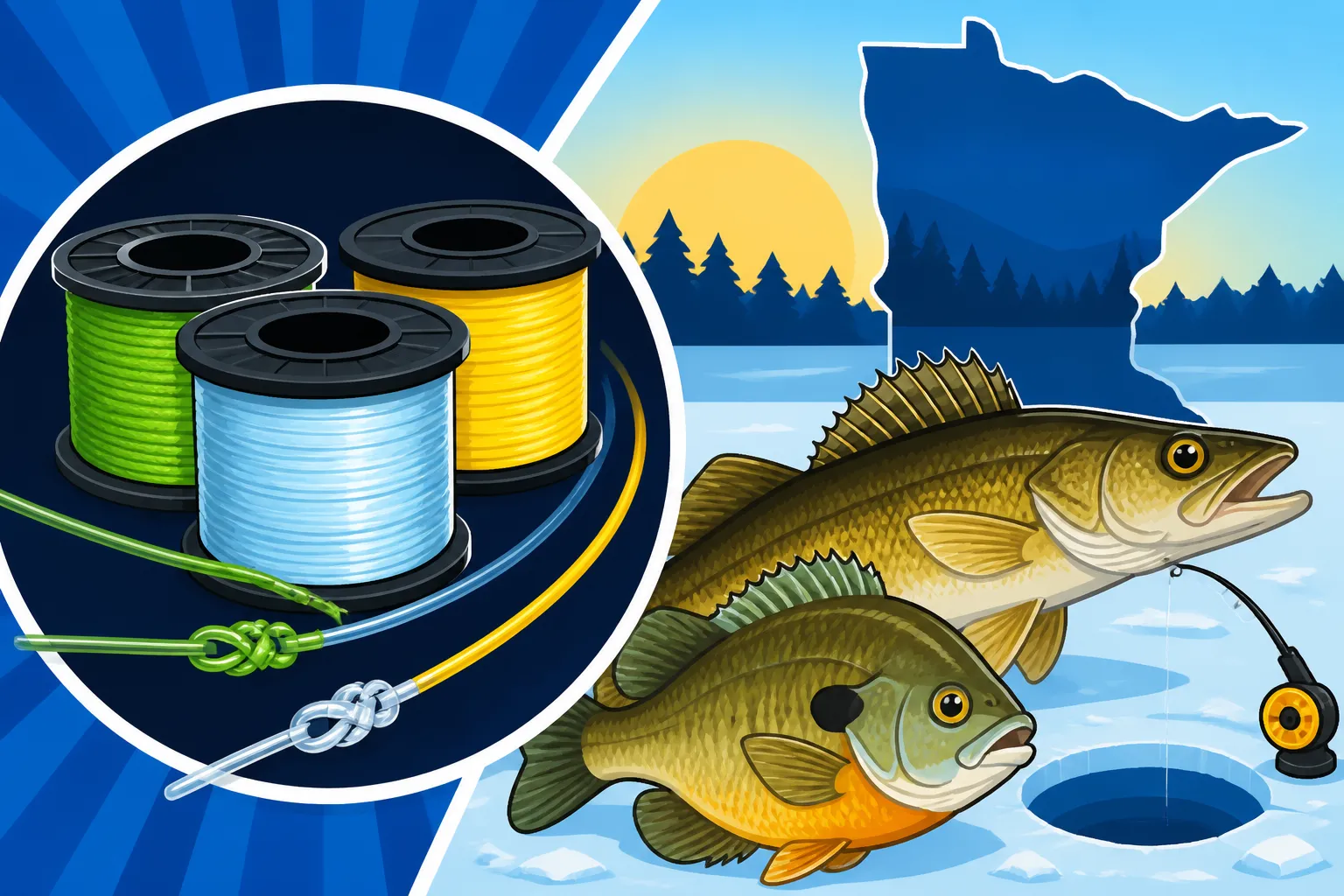
This setup minimizes line diameter for faster drop rates and less water resistance, crucial for smaller jigs. The braid's zero stretch instantly transmits every twitch and gulp, while the fluorocarbon leader maintains the invisibility needed to trick wary fish. It's a slightly more advanced setup, requiring good knot-tying skills for the braid-to-fluorocarbon connection (like a Uni-to-Uni or FG knot), but the increase in bites can be dramatic. Remember, panfish have incredibly soft mouths, so a smooth drag setting on your reel is crucial to prevent snapping these delicate lines. For optimal lure choices, consult our article on Best Tungsten Jigs for Panfish.
Here's a quick comparison of popular ice fishing line types:
| Line Type | Visibility in Water | Stretch | Sensitivity | Abrasion Resistance | Ideal Use Cases |
|---|---|---|---|---|---|
| Monofilament | Medium | Moderate | Good | Good | All-around, forgiving, shock absorption, easy to use |
| Fluorocarbon | Very Low (Invisible) | Low | Excellent | Excellent | Clear water, spooky fish, leaders, vertical jigging |
| Braided (Main) | High | Zero | Superior | Very Good | Deep water, light bites, high sensitivity (with leader) |
Spooling, Knots, and Maintenance Tips
Even the best fishing line won't perform optimally if it's not spooled correctly, tied with reliable knots, or properly maintained. These often-overlooked details are especially critical in the harsh conditions of Minnesota's ice fishing season.
Proper Spooling Techniques for Cold Weather
Getting your line onto the reel correctly is the first step to trouble-free fishing. When spooling any line, but especially monofilament or fluorocarbon, it's crucial to prevent line twist. This means making sure the line comes off the filler spool in the same direction it goes onto your reel spool. Many anglers place the filler spool on the floor with the label facing up, allowing the line to uncoil naturally. Alternatively, some use a pencil through the spool held by a friend, allowing it to spin freely. Fill your spool only to about 1/8 inch from the lip to prevent excessive tangles and line coming off too freely.
For braided lines, especially lighter tests, it's a good idea to put a small amount of mono backing on the spool first. This prevents the braid from slipping on the bare arbor and gives you something to tie your braid to. Always wet your line with a little water as you spool it, as this helps it lay down smoothly under consistent tension, preventing loops and uneven winding. This careful spooling minimizes memory issues and reduces the chance of snarls when you're out on the ice. Consider pairing your chosen line with one of the Best Ice Fishing Rods for Walleye & Panfish for optimal performance.
Essential Knots for Ice Fishing
The last thing you want is a knot failure when you've finally got a big fish on. For tying monofilament and fluorocarbon directly to lures or swivels, the Improved Clinch Knot or the Palomar Knot are incredibly reliable and relatively easy to tie, even with cold fingers. The Palomar Knot is particularly strong but requires passing the lure through a loop, which can be tricky with larger baits. Practice these knots at home until you can tie them quickly and confidently.
When connecting braided line to a fluorocarbon leader, a strong, low-profile knot is essential. The Uni-to-Uni knot is a classic choice, and many anglers swear by it. For a more streamlined connection, the FG knot is incredibly strong and passes through guides smoothly, but it has a steeper learning curve. Whichever knot you choose, always moisten the line before cinching it down to prevent friction heat, which can weaken the line. After tying, always test the knot by pulling firmly to ensure it holds. It's also wise to regularly check your knots for fraying or weakening throughout your fishing session, especially after catching a fish or getting snagged. Also, remember that in Minnesota, you can only use a certain number of lines while ice fishing, so make each one count by ensuring your knots are solid. You can learn more about this in our article on How Many Lines Can You Use Ice Fishing in Minnesota?.
Winterizing Your Line for Longevity
Proper care extends the life of your fishing line and ensures it performs when you need it most. After each outing, especially if fishing in slushy conditions, it's a good habit to wipe down your line to remove any ice buildup or debris. Periodically, you can apply a line conditioner (like KVD Line & Lure Conditioner) to monofilament and fluorocarbon. These conditioners keep the line supple, reduce memory, and can help prevent ice buildup on the line itself. While braid isn't usually "conditioned," ensuring it's dry before storage is important to prevent mildew or freezing.
Store your ice fishing reels in a cool, dry place away from direct sunlight and extreme heat. UV light can degrade fishing lines over time. For serious anglers, it's a good idea to re-spool your main ice fishing lines once or twice a season, or at the very least, before the start of each season. This is particularly true for lines used for hard-fighting walleye or frequently in abrasive conditions. Fresh line gives you maximum confidence, and confidence catches more fish! For a full breakdown of essential gear, check out our guide on Best Lures for Ice Fishing Walleye and Best Bait for Ice Fishing Walleye.
Disclaimer
The information provided in this guide is for general informational purposes only and is not intended as legal advice. Fishing regulations, license requirements, and best practices can change frequently. Always consult the latest Minnesota Department of Natural Resources (DNR) regulations before heading out on the ice.