Best Gear for Largemouth Bass Fishing in Minnesota
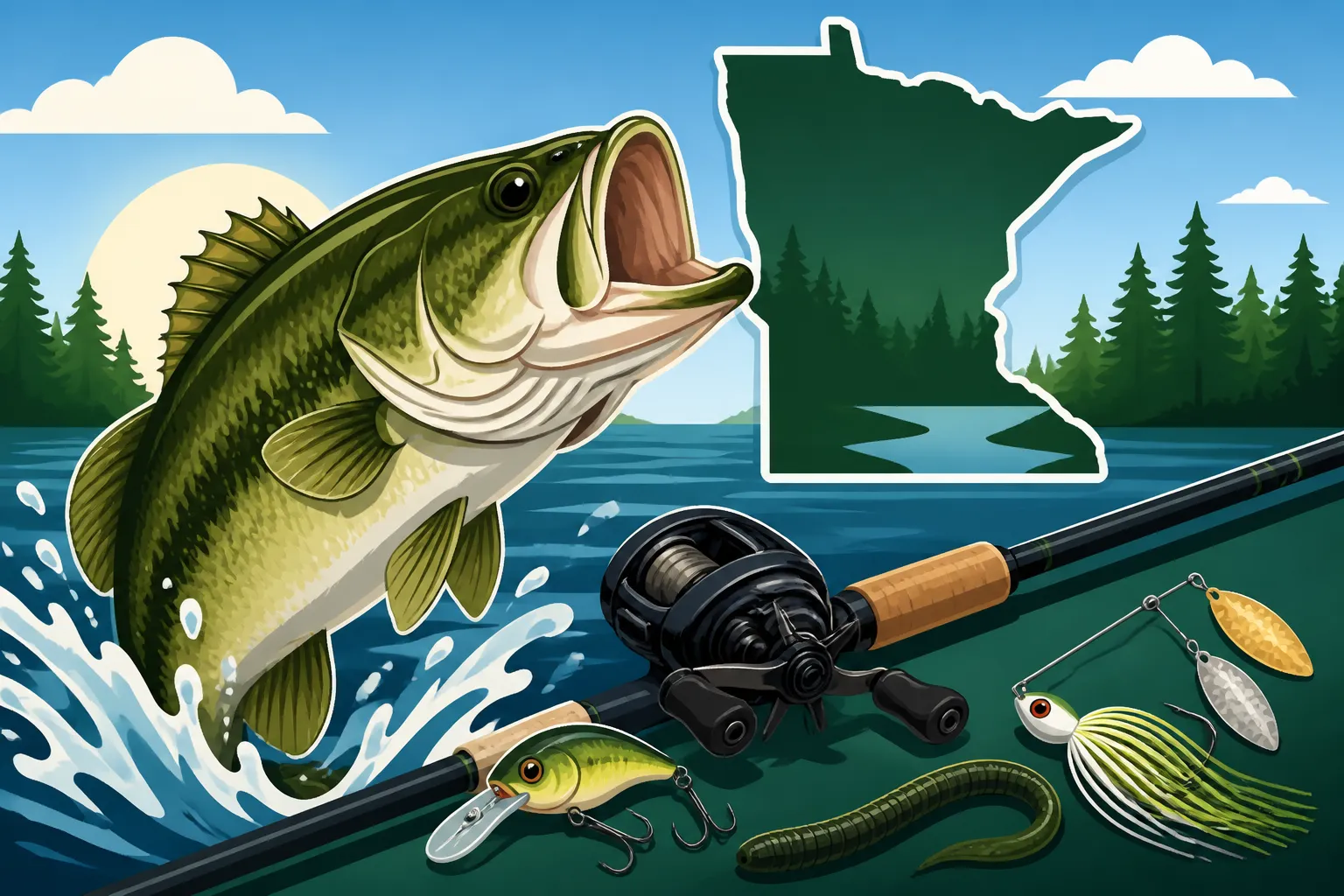
Fishing for largemouth bass in Minnesota can be an exhilarating challenge, especially with our diverse waters ranging from clear, shallow lakes to vast, weedy expanses. It’s easy to feel overwhelmed by the sheer volume of gear available, wondering if you're truly equipped to tackle those stubborn bucketmouths hidden in thick cover or cruising open water. This guide will walk you through the essential gear you need to confidently target and catch largemouth bass across Minnesota’s unique aquatic landscapes, ensuring your tackle box is ready for action.
Understanding Largemouth Bass Behavior in Minnesota
Before we dive into the gear, it's really helpful to understand why certain equipment is preferred for largemouth bass. These fish are ambush predators, often found lurking in dense cover, and they're known for their aggressive strikes and powerful fights. Minnesota's bass fishing is distinct because of our abundant aquatic vegetation, varying depths, and often cooler water temperatures compared to southern states. This means your gear needs to be versatile and capable of handling tough conditions.
Typical Largemouth Habitat and Their Seasonal Shifts
Largemouth bass absolutely love structure and cover. Think about those dense lily pad fields in late summer, the intricate network of submerged timber, rocky points, or even man-made structures like docks and boat lifts. In Minnesota, vegetation is king. Coontail, milfoil, and wild rice beds are prime real estate for bass looking to ambush prey. Knowing where they hide helps you choose the right lures to penetrate or glide over that cover, and the right rod to pull them out of it.
Their behavior shifts significantly throughout the year. In the spring, after ice-out and as waters warm, bass move to shallower, protected bays for spawning. They become more aggressive defending their nests. Summer sees them scatter, some staying shallow in dense weeds, others moving to deeper weed lines or main lake structure as the water heats up. Fall is often a feeding frenzy as they pack on weight for winter, pushing them back to baitfish-rich areas, often shallower again or transitioning points. Each of these seasonal patterns influences the types of lures and presentations that will be most effective, directly impacting your gear choices.
Essential Rods and Reels for Minnesota Bass
Having the right rod and reel setup is foundational to successful largemouth bass fishing. It’s not about owning the most expensive gear, but rather understanding how different specifications empower specific techniques. Many anglers find themselves with a single "all-around" combo that struggles with finesse presentations or wrenching a big bass out of heavy weeds. Let's break down what works best.
Choosing the Right Rod Action and Power
Rod power refers to the strength of the rod and its ability to lift weight. For largemouth bass, you'll generally be looking at medium-heavy (MH) or heavy (H) power rods.
- Medium-Heavy (MH) Power rods are your workhorses. They’re excellent for a wide range of techniques, from throwing spinnerbaits and chatterbaits to jigging and Texas-rigging lighter soft plastics in moderate cover. They offer enough backbone to set the hook firmly and control a fighting bass without being overly stiff.
- Heavy (H) Power rods are for the heavy lifting. If you're flipping or pitching into dense cattails, punching through matted vegetation with heavy weights, or throwing large swimbaits, a heavy power rod provides the leverage and force needed. These rods allow you to extract a bass from thick cover before it can wrap your line around obstacles.
Rod action describes where the rod bends when pressure is applied.
- Fast Action rods bend mostly in the tip section. This provides sensitivity for detecting subtle bites and allows for quick, powerful hooksets, which is crucial when fishing with single hooks (like jigs or Texas rigs). Most bass rods will have a fast or extra-fast action.
- Moderate-Fast Action rods bend further down the blank, offering a bit more flex. These are excellent for treble hook baits like crankbaits and jerkbaits, as the slightly slower action acts as a shock absorber, helping to keep fish hooked during violent head shakes and preventing hooks from tearing out.
For a good starting point, a 6'8" to 7'2" medium-heavy, fast action rod is incredibly versatile for Minnesota bass fishing. You can find excellent options from brands like St. Croix, which has a strong presence in Minnesota, or even reliable choices from retailers like Bass Pro Shops.
Spinning vs. Baitcasting Setups
This is often where new anglers get stuck. Both have their place in a bass angler’s arsenal.
- Baitcasting Rods and Reels: These are typically paired with medium-heavy to heavy power rods and are the preferred choice for most experienced bass anglers. Baitcasting reels excel at accuracy, especially for pitching and flipping into tight spots. They handle heavier lines and lures better, making them ideal for power fishing techniques where you need to muscle fish out of cover. The learning curve for casting can be a bit steeper due to "backlashes," but once mastered, they offer superior control and power.
- Spinning Rods and Reels: Spinning setups are fantastic for lighter lures, finesse techniques, and beginners. They cast light baits effortlessly and are less prone to backlashing. They are perfect for wacky rigs, drop-shotting, small jigs, or any time you need to make long, accurate casts with lighter presentations. A 6'6" to 7'0" medium power, fast action spinning rod paired with a 2500-3000 series spinning reel is a superb choice for many applications. This is often an ideal Best Rod and Reel Combo for Beginners to get started.
Most serious bass anglers will have several setups: perhaps a heavy baitcaster for flipping, a medium-heavy baitcaster for moving baits, and a medium spinning rod for finesse applications.
Top Lures and Baits for Minnesota Largemouth
Minnesota's largemouth bass are opportunistic feeders, and having a diverse selection of lures that mimic their natural prey or trigger a reaction strike is key. Don’t fall into the trap of buying every new lure you see; focus on versatility and proven effectiveness. For more in-depth strategies, check out Bass Fishing Techniques for Minnesota Lakes.
Soft Plastics: Worms, Jigs, and Creature Baits
Soft plastics are arguably the most versatile and productive category of bass lures. They can be rigged in countless ways to adapt to any situation.
- Plastic Worms: Classic and still highly effective. Senko-style worms (like the Gary Yamamoto Senko or its many imitators) are deadly on a wacky rig or Texas rig, especially around docks and weed edges. Curl-tail worms and ribbon-tail worms are great for Texas rigging and fishing through cover. Experiment with colors like green pumpkin, black and blue, or junebug.
- Jigs: Bass jigs, especially skirted jigs, are fantastic for mimicking crawfish or baitfish. Football jigs are great for fishing rocky bottoms, while arkie-style or flipping jigs excel in heavy cover. Pair them with a soft plastic trailer (like a craw or grub) to add bulk and action. Black and blue, green pumpkin, and brown are staple colors.
- Creature Baits: These oddly shaped plastics (think beaver baits, lizards, or craws) offer a lot of bulk and appendages that move enticingly in the water. They are primarily used for Texas rigging, flipping, and pitching into heavy cover, offering a larger profile and more water displacement to attract aggressive bass.
When fishing soft plastics in Minnesota's often weedy lakes, a weedless Texas rig is your best friend. This involves threading the hook point back into the plastic body, making it incredibly snag-resistant.
Hard Baits: Crankbaits, Jerkbaits, and Topwater
These lures are fantastic for covering water quickly and eliciting reaction strikes.
- Crankbaits: These lipped lures dive to various depths depending on their design. Square bill crankbaits are excellent for deflecting off shallow cover like rocks and stumps. Medium-diving crankbaits work well along weed lines, while deep divers can reach bass on offshore humps and points. Color choice often depends on water clarity and forage; crawfish patterns are great in stained water, while chrome/blue or natural shad patterns excel in clearer lakes.
- Jerkbaits: Designed to be fished with a "rip-pause" retrieve, jerkbaits imitate an injured baitfish. They are particularly effective in colder water temperatures (spring and fall) or when bass are suspended. Transparent or natural baitfish colors are usually the most productive. The Rapala Shadow Rap and Megabass Vision 110 are popular models known for their darting action.
- Topwater Lures: There's nothing quite like a bass blowing up on a topwater lure! Poppers, walking baits (like a Heddon Super Spook), and hollow-body frogs are incredible when bass are shallow and feeding on the surface, especially over matted vegetation. Early mornings, late evenings, and overcast days are prime topwater times. Frogs, in particular, are a must-have for fishing lily pads and thick slop.
Spinnerbaits and Chatterbaits
These "reaction baits" are excellent for covering water and fishing through various types of cover.
- Spinnerbaits: Featuring one or two spinning blades, spinnerbaits create flash and vibration that bass find irresistible. They are incredibly weedless and can be retrieved at different speeds or slow-rolled along the bottom. White and chartreuse are classic skirt colors, often with willow leaf or Colorado blades depending on desired flash and vibration. They shine in dingy water or when bass are aggressive.
- Chatterbaits (Bladed Jigs): Combining the flash of a spinnerbait with the vibration of a crankbait and the profile of a jig, chatterbaits are extremely effective, especially around grass and wood. The vibrating blade imparts a unique, erratic action to the skirt and trailer. Green pumpkin, black and blue, and white are go-to colors. They can be fished similarly to spinnerbaits but often have a more pronounced thumping action that bass respond to.
You'll find a massive selection of all these options at places like Bass Pro Shops or readily available online through Amazon. Having a good mix of these categories in your tackle box will prepare you for almost any situation you encounter on Minnesota's lakes. When selecting specific models, consider what works well on your Best Bass Lakes in Minnesota.
Crucial Terminal Tackle and Supporting Accessories
Beyond the main rods, reels, and lures, a successful bass angler knows the importance of the smaller, yet equally critical, components of their tackle. Don't overlook these details!
Line Choices: Braided, Fluorocarbon, Monofilament
The fishing line is your direct connection to the fish, so choosing the right type and strength is paramount.
- Braided Line: Made from woven synthetic fibers, braided line is incredibly strong for its diameter, has virtually no stretch, and is very sensitive. It’s excellent for fishing in heavy cover (flipping, pitching, frog fishing) because it cuts through weeds and offers superior abrasion resistance against wood or rocks. Its lack of stretch provides powerful hooksets and excellent feel. Typically, 30-65 lb test braid is used for heavy cover, often with a fluorocarbon leader in clearer water.
- Fluorocarbon Line: This line is nearly invisible underwater due to its refractive index, making it ideal for clear water and pressured fish. It has low stretch, offering good sensitivity and solid hooksets, and is quite abrasion-resistant. Fluorocarbon sinks, which can be advantageous for certain presentations like Carolina rigs or deep jigging. Common strengths for bass range from 10-20 lb test.
- Monofilament Line (Mono): Mono is the most economical and forgiving line. It has significant stretch, which can be a pro or a con depending on the technique. The stretch acts as a shock absorber, helping to keep fish hooked on treble hook baits (like crankbaits and jerkbaits). It also floats, which is useful for topwater lures. It’s less sensitive and less abrasion-resistant than braid or fluoro. 8-15 lb test mono is common for bass.
Many anglers use a combination, such as braided mainline with a fluorocarbon leader for spinning gear, or straight fluorocarbon or braid for baitcasting. For tips on how to choose the right line, you might also find insights in articles discussing specific line types.
Hooks, Weights, and Swivels
These small components make a huge difference in how your lures perform and how many fish you land.
- Hooks: For soft plastics, Extra Wide Gap (EWG) hooks are popular for Texas rigging as they provide excellent hookup ratios with bulky baits. Straight shank hooks are often preferred for flipping and punching for maximum penetration. Wacky rig hooks (o-rings are crucial to save plastics!) are specialized for wacky and Neko rigging. Always carry a variety of sizes (3/0, 4/0, 5/0 are common).
- Weights: Tungsten bullet weights are highly favored over lead due to their smaller profile (less snagging), increased sensitivity, and environmental friendliness. Carry a range of sizes from 1/8 oz for finesse applications up to 1 oz or more for punching through heavy mats. Drop shot weights are another specific type, designed to be easily adjustable on the line.
- Swivels: While not always necessary for bass, barrel swivels or ball bearing swivels can be useful for preventing line twist, especially with lures that spin or when using a Carolina rig setup.
Other Must-Have Gear
Beyond the core tackle, a few accessories will make your bass fishing experience much smoother.
- Pliers/Forceps: Essential for safely removing hooks from fish. Long-nose pliers are great for deeper hooked fish, while braid scissors or line clippers are necessary for braided line.
- Measuring Board/Scale: If you enjoy tracking your catches or participating in tournaments, a reliable measuring board and a digital scale (like those from Rapala or Berkley) are indispensable. Remember, some tournaments are catch-photo-release, making these tools critical.
- Tackle Management: A good tackle box or a series of clear utility boxes within a larger tackle bag helps organize your vast array of lures and terminal tackle. This makes it easy to find what you need quickly, which is critical when the bite is on. Brands like Plano offer excellent customizable storage solutions that you can easily find on Amazon.
- Landing Net: While many bass can be lip-landed, a large, rubberized landing net is invaluable for bigger fish, especially when fishing from a boat. The rubber coating protects the fish's slime coat and prevents hooks from tangling.
Optimizing Your Bass Fishing Setup for Success
Now that we’ve covered the individual components, let’s talk about putting it all together for maximum effectiveness on Minnesota’s bass fisheries. Having a thoughtfully organized setup means less fumbling and more fishing.
Matching Your Gear to Specific Techniques
This is where the magic happens. Having a dedicated setup for specific techniques not only makes you more efficient but also dramatically improves your success rate. For instance, you wouldn't use a heavy flipping stick for a lightweight drop shot presentation.
- Flipping & Punching (Heavy Cover):
- Rod: Heavy (H) power, fast action baitcasting rod (7'4" to 8'0")
- Reel: High-speed baitcasting reel (7.1:1 or higher gear ratio)
- Line: 50-65 lb braided line
- Lures: Heavy jigs, creature baits with heavy tungsten weights (3/4 oz to 1.5 oz)
- Crankbaits & Jerkbaits (Moving Baits):
- Rod: Medium-Heavy (MH) power, moderate-fast action baitcasting rod (6'8" to 7'4")
- Reel: Mid-speed baitcasting reel (6.3:1 or 7.1:1 gear ratio)
- Line: 12-17 lb fluorocarbon or monofilament line
- Lures: Square bills, lipless crankbaits, diving crankbaits, jerkbaits
- Jigs & Texas Rigs (Versatile Bottom Contact):
- Rod: Medium-Heavy (MH) power, fast action baitcasting rod (6'10" to 7'2")
- Reel: High-speed baitcasting reel (7.1:1 or higher)
- Line: 15-20 lb fluorocarbon or 30 lb braid with a fluorocarbon leader
- Lures: Football jigs, casting jigs, plastic worms, creature baits
- Finesse Techniques (Wacky Rig, Drop Shot):
- Rod: Medium (M) power, fast action spinning rod (6'8" to 7'2")
- Reel: 2500-3000 series spinning reel
- Line: 8-10 lb braided line with an 8-12 lb fluorocarbon leader
- Lures: Senkos (wacky rigged), small worms, drop shot baits
This table summarizes some common setups for largemouth bass fishing:
| Technique | Rod Power/Action | Reel Type/Gear Ratio | Recommended Line Type/Test | Primary Lures/Baits |
|---|---|---|---|---|
| Flipping/Punching | Heavy/Fast Baitcasting | Baitcaster (7.1:1+) | Braid (50-65 lb) | Jigs, Creature Baits w/ Heavy Weight |
| Crankbaits/Jerkbaits | MH/Mod-Fast Baitcasting | Baitcaster (6.3:1-7.1:1) | Fluorocarbon/Mono (12-17 lb) | Crankbaits, Jerkbaits |
| Spinnerbaits/Chatterbaits | MH/Fast Baitcasting | Baitcaster (7.1:1) | Fluorocarbon/Mono (15-20 lb) | Spinnerbaits, Chatterbaits |
| Texas Rigs/Jigs | MH/Fast Baitcasting | Baitcaster (7.1:1+) | Fluorocarbon (15-20 lb) / Braid | Plastic Worms, Jigs, Creature Baits |
| Topwater (Poppers/Walkers) | MH/Fast Baitcasting | Baitcaster (7.1:1) | Monofilament (15-20 lb) / Braid | Poppers, Walkers, Buzzbaits |
| Finesse (Wacky/Dropshot) | Medium/Fast Spinning | Spinning (2500-3000) | Braid (8-10 lb) w/ Fluoro Leader | Senkos, Small Worms, Drop Shot Baits |
| Frogging | Heavy/Fast Baitcasting | Baitcaster (7.1:1+) | Braid (50-65 lb) | Hollow-Body Frogs |
The Importance of Good Hooks and Sharpening
Even with the perfect rod and reel, a dull hook can cost you a fish. Always check your hooks for sharpness, especially after fishing around rocks or wood. A small hook file is a great tool to keep in your tackle bag. Consider upgrading the treble hooks on some factory lures (especially crankbaits and jerkbaits) to sharper, stronger models like those from Gamakatsu or VMC, which are widely available at fishing specialty stores or online. Sharp hooks are non-negotiable for consistent hooksets.
Staying Updated with Conditions and Technology
Minnesota's fishing conditions can change rapidly. Staying informed about current water temperatures, clarity, and recent fishing reports will help you dial in your presentations. Apps like Fishbrain or Navionics are invaluable resources for mapping lake contours, finding good spots, and seeing what others are catching. These Best Fishing Apps for Minnesota (Fishbrain, Navionics) can give you a significant edge.
While you don't need a boat full of electronics to catch bass, understanding how technologies like side imaging or forward-facing sonar can help locate schools of fish or define structure is beneficial for serious anglers. Even a basic fish finder on your kayak or small boat can greatly improve your efficiency in finding those prime bass holding areas. Whether you’re targeting smallmouth or Smallmouth & Largemouth Bass in Minnesota, being well-equipped and informed makes all the difference.
Practice Makes Perfect
Ultimately, the best gear in the world won't catch fish if you're not comfortable using it. Practice your casting, learn how to tie different knots, and spend time on the water experimenting with different lures and techniques. The more confident you are with your equipment, the more effectively you'll fish. Good luck out there, and tight lines!
Disclaimer
Fishing regulations, seasons, and limits can change. Always consult the official Minnesota Department of Natural Resources (DNR) regulations before heading out on the water. This guide is for informational purposes only and does not supersede state fishing laws.