Best Ice Fishing Gear for Minnesota (2027 Guide)
There’s nothing quite like the crisp, silent beauty of a Minnesota winter day out on the ice, but let's be real: trying to enjoy ice fishing with inadequate gear can turn that serene experience into a miserable, numb-fingered ordeal. From shivering in a flimsy shelter to struggling with a dull hand auger in three feet of ice, the wrong equipment can quickly send you packing. This comprehensive guide is here to ensure that doesn't happen, meticulously breaking down the essential ice fishing gear for Minnesota, guaranteeing you're prepared, comfortable, and ready to reel in those winter catches in 2026 and beyond.
Ice Shelters Your Mobile Fortress Against the Elements
When you're out on the vast, frozen expanse of a Minnesota lake, your ice shelter isn't just a convenience; it's your lifeline against the biting wind, swirling snow, and frigid temperatures. Choosing the right one can make the difference between a quick trip and an all-day comfortable adventure.
Flip-Over Shelters for Portability and Quick Set-Up
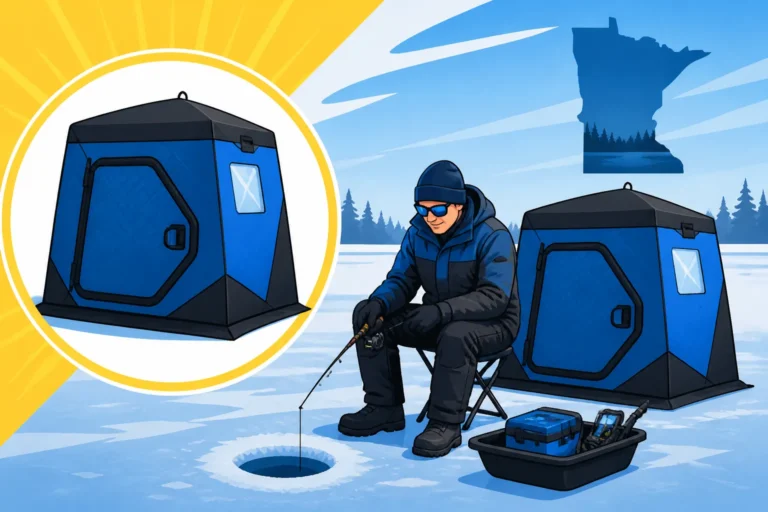
Flip-over shelters are the go-to choice for anglers who like to stay mobile and cover a lot of ice. Think of them as the sports cars of the ice fishing world – fast, efficient, and designed for single or double occupancy. They attach directly to a built-in sled, which means when you're ready to move, you simply "flip" the tent portion over, strap down your gear, and you're off. This quick deployment is ideal for "run-and-gun" tactics, where you drill a few holes, fish for a bit, and then move to the next promising spot if the bite isn't on.
Many popular brands, such as Otter and Clam, offer a fantastic range of flip-overs. They come in various sizes, from compact one-person models perfect for a solo mission to larger two-person versions that offer a bit more elbow room. Modern flip-overs are typically well-insulated with heavy-duty fabrics, often in darker colors to absorb sunlight and help keep the interior warmer. This insulation is crucial for maintaining a comfortable temperature inside, even when the wind is howling outside. The integrated sled design also makes them incredibly practical for transporting all your other gear – augers, rods, electronics, and even a small heater – saving you trips back and forth from your vehicle. They’re surprisingly stable in windy conditions, especially when properly anchored, which is a huge relief when Lake of the Woods decides to show its blustery side.
Hub-Style Shelters for Group Comfort
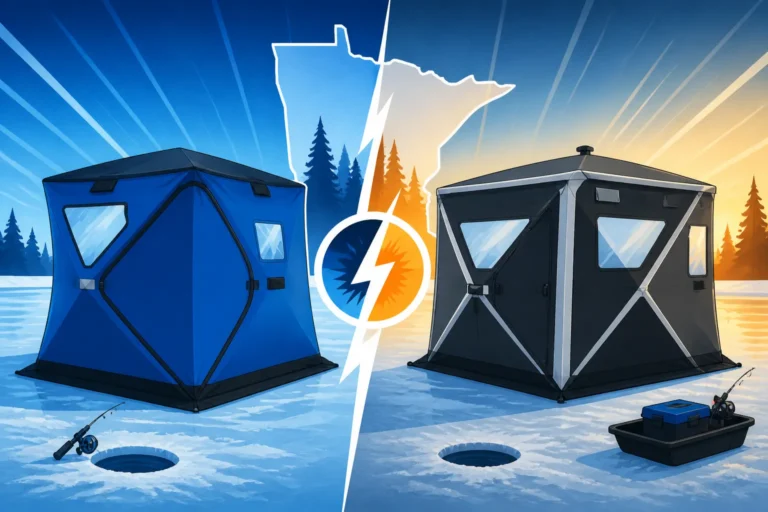
If your idea of ice fishing involves gathering a few buddies or taking the whole family out for a day of shared laughs and hot cocoa, a hub-style shelter is likely what you need. These shelters are like pop-up cabins, offering significantly more interior space and headroom than most flip-overs. They’re not as quick to set up and tear down as a flip-over, but for a longer stay, or when you have multiple anglers and all their gear, the extra comfort is invaluable.
The beauty of a hub-style shelter lies in its spaciousness. You can stand up, stretch out, and fish several holes without feeling cramped. Most models feature multiple windows for natural light, and vents to manage condensation and provide airflow, especially important when running a heater. While they might take a bit longer to deploy – typically by popping out four or five hubs – once they're up, they create a very comfortable base camp. Brands like Eskimo and Clam excel in this category, offering sturdy designs that stand up well to Minnesota's harsh winters. They are generally heavier and bulkier to transport, often requiring a larger sled or ATV with a dedicated gear sled, but for the communal fishing experience, they’re hard to beat. Just remember, the larger the shelter, the more surface area for the wind to catch, so secure those anchors!
Permanent Ice Houses and Wheel Houses
Now, if you're looking to turn your ice fishing trip into a full-blown winter glamping experience, a permanent ice house or wheel house is the ultimate indulgence. These aren't just shelters; they're essentially small, insulated cabins on skis or wheels, designed for maximum comfort and extended stays on the ice. We're talking about amenities like built-in bunks, cooking facilities, power outlets, TVs, and serious heating systems – a true home away from home.
Owning and operating a wheel house is a significant commitment, both financially and logistically. You'll need a stout truck or SUV to pull it out onto the ice, and once it's set up, it's generally meant to stay in one spot for days, if not weeks. They are heavy, and moving them requires careful consideration of ice thickness and access points. However, the comfort they provide is unparalleled. Imagine fishing in your t-shirt while a blizzard rages outside, or waking up to the sound of tip-ups popping after a cozy night's sleep. It's a game-changer for many dedicated anglers. Be sure you're well-versed in the specific regulations, as permanent shelters have different rules regarding how long they can stay out and require an annual Minnesota Ice House License & Rules. Moreover, you absolutely must adhere to the annual Ice Shelter Removal Deadlines in Minnesota to avoid penalties and ensure safe spring conditions.
Ice Augers Cutting Through the Cold
A good ice auger is arguably one of the most critical pieces of ice fishing gear. Without it, you’re just standing on top of the fish, not catching them! The right auger makes drilling holes efficient, saving you energy and getting your line in the water faster.
Manual and Hand Augers for Light Use
For beginners, fair-weather anglers, or those who only plan to drill a handful of holes in thinner ice, a manual or hand auger is a perfectly viable and budget-friendly option. These augers rely entirely on your arm strength and stamina to crank through the ice. They're lightweight, quiet, and don't require any fuel or batteries, making them incredibly simple to operate and maintain. They're also an excellent choice for scouting new areas where you might only need to drill one or two quick holes to check depth or fish activity before moving on.
While they are the most physically demanding option, modern hand augers, like those from Mora or StrikeMaster, are remarkably efficient, especially with sharp blades. They typically come in smaller diameters (6-inch being common for panfish), which are easier to turn. If you’re just looking to chase crappies or sunfish in shallow water, or if you primarily fish early in the season when the ice is thinner, a quality hand auger can serve you very well. It's also an invaluable backup to a power auger, just in case your battery dies or you run out of fuel.
Propane and Gas-Powered Augers for Raw Power
For years, gas-powered augers were the undisputed kings of the ice, and for good reason. They offer raw power, speed, and the ability to cut numerous large-diameter holes through even the thickest mid-winter ice with ease. If you're targeting big walleyes or northern pike that require 8 to 10-inch holes, and you plan to drill a lot of them, a gas auger is a reliable workhorse. Brands like Eskimo and StrikeMaster have long dominated this space, offering robust engines and durable cutting systems.
However, gas augers come with their own set of considerations. They are noisy, produce exhaust fumes (which can be a real issue inside a shelter), and require regular maintenance like fuel mixing, spark plug changes, and winterizing. They are also heavier than hand or electric augers, making transport a bit more cumbersome, especially if you're walking out. Despite these drawbacks, many seasoned ice anglers still swear by their gas augers for their sheer dependability and unyielding power, particularly when faced with multiple feet of rock-hard ice on a vast lake like Lake of the Woods or Mille Lacs.
Electric and Battery-Powered Augers The Modern Solution
The landscape of ice augers has been rapidly changing, with electric and battery-powered models emerging as serious contenders, and for many, the preferred choice. These augers are a breath of fresh air – literally! They are incredibly quiet, produce zero emissions, and are significantly lighter than their gas counterparts. This makes them perfect for use inside a shelter without worrying about fumes, and their quiet operation means less disturbance to the fish below.
The biggest game-changer in this category has been the advancement in battery technology, with lithium-ion batteries providing impressive power and run time, even in frigid temperatures. You can now drill dozens of holes on a single charge, making them highly efficient for active anglers. Models like the StrikeMaster Lithium 40V Auger Review have revolutionized portability and performance. While the initial investment might be higher than a gas auger, the convenience, cleanliness, and ease of use often outweigh the cost for many. Just remember to keep those spare batteries charged and warm, as extreme cold can impact their performance. They are an ideal choice for just about any Minnesota ice angler who values efficiency and a cleaner fishing experience.
Electronics Seeing Beneath the Ice
In modern ice fishing, electronics are no longer just a luxury; they're an essential tool for locating fish, understanding their behavior, and drastically increasing your catch rate. Peering into the underwater world can be a total game-changer.
Flashers for Real-Time Ice Fishing Intelligence
A flasher is perhaps the most fundamental piece of ice fishing electronics, offering a real-time, instantaneous display of what's happening directly beneath your hole. Unlike traditional sonar that paints a historical picture, a flasher shows you your jig, any fish that enter the cone angle, and the bottom, all in vivid colors and real-time. This immediate feedback allows you to adjust your presentation, jigging cadence, and depth to provoke strikes. It’s an invaluable tool for experienced anglers, making them far more efficient.
The market is dominated by a few key players: Vexilar, Humminbird, and MarCum. Each brand has its loyal following, offering various models with different features and price points. The Vexilar FLX-28 Review, for instance, highlights a popular model known for its crisp display and customizable settings. Similarly, the Humminbird Ice Helix Review covers a unit that often combines traditional flasher views with advanced mapping capabilities. Learning to interpret the different colors and signals on your flasher can take a bit of practice, but once you master it, you'll be able to tell if fish are rising to your bait, how they're reacting, and precisely when to set the hook. This ability to "see" the bite before you feel it is revolutionary.
Underwater Cameras for Visual Confirmation
If a flasher gives you data, an underwater camera gives you proof. Imagine seeing a jumbo perch approach your lure, mouth open, before you even feel the tap on your rod! Underwater cameras allow you to visually observe fish, their movements, and their reactions to your bait in real-time. This visual feedback can be incredibly insightful for understanding what fish are keying in on, verifying species, and even confirming bottom composition.
Brands like Aqua-Vu and MarCum offer excellent portable camera systems designed specifically for ice fishing. They often come with durable, low-light cameras and high-resolution monitors. While water clarity can certainly impact their effectiveness – fishing in murky water will yield limited visibility – in clear lakes, they provide an unparalleled perspective. Beyond just spotting fish, cameras are fantastic for identifying actual bottom structure, seeing how your lure looks underwater, and even observing how different species interact. They’re also a huge hit with kids and new anglers, turning passive waiting into an engaging, interactive experience.
GPS and Mapping for Navigation and Spot Finding
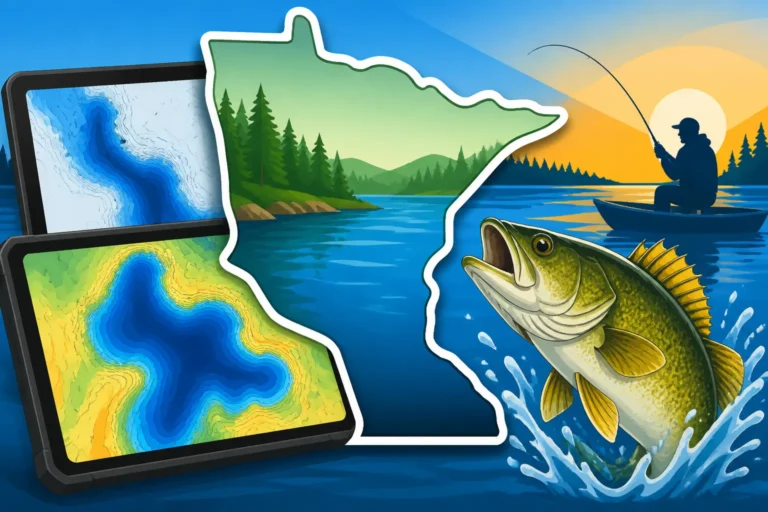
Navigating a vast, snow-covered lake can be daunting, and simply relying on memory or following tracks isn't always safe or effective. That's where a good GPS unit with detailed lake mapping comes into play. GPS is absolutely essential for finding specific humps, reefs, drop-offs, or historical hot spots you've marked. It allows you to confidently move around the ice, especially in whiteout conditions or at night, knowing exactly where you are and where you're going.
Many modern fish finders and flashers now come integrated with GPS and pre-loaded lake maps from providers like Navionics or LakeMaster. These maps show contours, depths, and sometimes even vegetation or bottom composition, giving you crucial information to target specific species. Marking waypoints of productive areas, hazards, or even your ice shelter ensures you can return to them accurately and safely. Whether it’s finding the elusive rock pile on Mille Lacs or the perfect depth transition on Leech Lake, GPS is your digital guide. Don't underestimate the safety aspect either; knowing your exact location can be critical in an emergency. For a deeper dive into the best options, check out resources like "Best GPS Lake Maps for Minnesota (Navionics, LakeMaster)".
Rods, Reels, and Line The Direct Connection
The rod, reel, and line are your direct connection to the fish below. While ice fishing gear looks a bit different than open water tackle, the principles of matching your setup to your target species remain the same.
Ice Fishing Rods for Different Species
Ice fishing rods are typically much shorter than open water rods, ranging from about 24 to 48 inches. This shorter length is ideal for fishing in tight spaces inside a shelter, and for the specific jigging motions used on the ice. However, within this compact form, there's a huge variety in action and power, tailored for different species. For panfish like crappies and sunfish, you'll want an ultra-light or light action rod with a very sensitive, often brightly colored, tip. This allows you to detect the most subtle bites, which are common with panfish.
When targeting walleye, a medium-light or medium action rod with a strong backbone is usually preferred. It needs enough sensitivity to feel those light walleye "thumps" or "lifts" but also enough power to set the hook firmly and fight a larger fish. Brands like St. Croix, Fenwick, and Clam make excellent walleye-specific ice rods. For formidable predators like northern pike or lake trout, you'll need a heavy action, stout rod capable of handling strong runs and heavy lures. The right rod provides the necessary leverage and sensitivity to maximize your chances of success, and many anglers even have dedicated rods for Best Gear for Ice Fishing Walleye in Minnesota versus Best Gear for Ice Fishing Crappie in Minnesota.
Reels Built for the Cold
The reels used for ice fishing are largely similar to their open water counterparts, with spinning reels being the most common choice. Look for reels with smooth, reliable drags that can perform in freezing temperatures. Cheaper reels can become stiff and jerky in the cold, leading to frustrating line management and potentially lost fish. A good quality reel will have cold-weather lubricants and sealed bearings to prevent ice and moisture intrusion.
For finesse presentations, particularly for panfish, inline reels have gained significant popularity. These reels are designed to eliminate line twist, which is a common issue when using tiny jigs and light lines, allowing for a more natural presentation. For larger species like pike, a robust spinning reel with a larger spool capacity and a strong drag is essential. Brands like Shimano, Daiwa, and 13 Fishing offer a wide range of reliable ice fishing reels. Consider the balance of the reel with your chosen rod, as a well-balanced setup will reduce fatigue and enhance your feel for the bite.
Ice Fishing Line Choices
Selecting the right line for ice fishing is crucial, as it needs to be nearly invisible, sensitive, and resistant to freezing and memory. Monofilament line is a classic choice, especially for panfish, due to its stretch (which helps absorb shock from aggressive bites) and relative invisibility. It's also budget-friendly. Fluorocarbon line offers superior invisibility underwater and excellent sensitivity due to its lower stretch, making it a favorite for walleye and other wary fish. However, it can be more prone to memory and stiffness in extreme cold if not specifically designed for ice.
Braided line provides the ultimate in sensitivity and strength, with virtually no stretch. When using braid, it’s almost always recommended to tie on a fluorocarbon leader of a few feet to maintain invisibility to the fish, as braid can be quite visible in clear water. Many manufacturers now offer ice-specific lines that are designed to remain supple and resist freezing, even in sub-zero temperatures. The diameter of your line is also critical: lighter lines for panfish (2-4 lb test), medium for walleye (4-8 lb test), and heavier for pike (10-20 lb test, often with a steel or heavy fluorocarbon leader). For an in-depth look, consult a guide like "Best Line for Ice Fishing (Walleye & Panfish)".
Apparel and Safety Staying Warm and Safe
You simply cannot enjoy ice fishing in Minnesota if you're cold, wet, or unsafe. Investing in proper apparel and carrying essential safety gear is non-negotiable for a successful and enjoyable outing.
Layering for Optimal Warmth and Comfort
The key to staying warm on the ice is a strategic layering system. It's not about wearing one huge, bulky coat, but rather multiple thinner layers that trap air and allow you to regulate your body temperature as conditions change or as you exert yourself. Start with a moisture-wicking base layer (merino wool or synthetic fabrics are excellent) directly against your skin to pull sweat away from your body. Sweaty skin quickly leads to feeling cold.
Next comes your mid-layer, providing insulation. Fleece jackets, down vests, or insulated pants work well here. Finally, your outer layer needs to be windproof and waterproof or highly water-resistant to protect you from the elements. Don't forget extremities: a warm hat that covers your ears, insulated gloves or mittens (often a combination of both – thin gloves for dexterity, warm mittens over them), and quality wool or synthetic socks are crucial. Being able to shed or add layers means you can stay comfortable whether you're drilling holes, sitting in a heated shelter, or battling a biting wind.
Float Suits and Insulated Outerwear
While layering provides warmth, a float suit provides an extra layer of safety that every ice angler should seriously consider. These specialized suits are designed with integrated flotation material, offering buoyancy in the event of an unexpected plunge through the ice. This can buy you precious time for self-rescue or to be rescued by others, especially when combined with ice picks. Beyond safety, float suits are also incredibly warm and often waterproof and windproof, serving as an excellent outer layer.
Brands like Striker Ice, Frabill, and IceArmor have become industry standards for float suits, offering durable, feature-rich options with strategically placed insulation, reinforced knees and seats, and multiple pockets. While they represent a significant investment compared to standard winter outerwear, the peace of mind they offer is invaluable. It’s a bit like wearing a life vest while boating – you hope you never need it, but you're profoundly grateful if you do. For those who venture onto early or late season ice, or even just want maximum protection, a float suit is a smart choice.
Ice Safety Essentials
Beyond proper clothing, carrying essential safety gear is paramount. The ice is unpredictable, and even experienced anglers can face unforeseen dangers. First and foremost, a set of ice picks is an absolute must-have. These are sharp, spiked tools connected by a cord that hangs around your neck, allowing you to grip the ice and pull yourself out if you fall in. They're inexpensive and can be a literal lifesaver.
A spud bar or ice chisel is another critical tool, especially during early and late ice conditions. Use it to constantly check ice thickness as you walk, tapping ahead of you. "Two good whacks and it should still be there," is a common adage. Always carry a rope, ideally a floating one, and consider a throwable flotation device for aiding others. A basic first-aid kit, a fully charged cell phone (in a waterproof case), and knowledge of emergency procedures are also vital. Most importantly, never fish alone on potentially unsafe ice, always communicate your plans to someone on shore, and always be aware of the Minnesota Ice Fishing & Shelter Rules regarding ice safety. Remember, no fish is worth risking your life.
Essential Accessories The Small Details That Matter
Sometimes it’s the little things that make the biggest difference in comfort and convenience on the ice. These essential accessories can elevate your ice fishing experience from tolerable to truly enjoyable.
Heaters for Warmth and Shelter Comfort
Unless you’re fishing in a permanent wheelhouse, a portable heater is almost a necessity for staying warm in your ice shelter, especially during deep winter days or extended trips. Propane heaters, particularly the Mr. Heater Buddy series, are incredibly popular due to their portability, efficiency, and safety features. They provide a surprising amount of warmth for their size, turning a frigid shelter into a cozy haven.
When using any propane heater, proper ventilation is absolutely crucial to prevent carbon monoxide buildup. Always ensure your shelter has adequate air circulation (even a small vent open can make a difference) and consider carrying a portable carbon monoxide detector for added safety. Choosing the right BTU output for your heater depends on the size of your shelter and how warm you want to be. For instance, a small "Buddy" heater might suffice for a one-person flip-over, while a larger "Big Buddy" is better for a spacious hub shelter. Having a reliable heat source allows you to shed bulky outer layers and focus more on fishing. For specific recommendations, check out our guide on the "Best Ice Fishing Heater for a Shelter".
Lighting, Seating, and Gadgets
When the sun dips below the horizon, or even during a dark, cloudy day in a non-windowed shelter, good lighting is essential. A reliable headlamp is a must-have, keeping your hands free for tying knots or handling fish. Portable LED lanterns can illuminate your entire shelter, making it easier to see your jigging rod tips and your surroundings. Many modern flashers and underwater cameras also have built-in screen lights.
Comfortable seating is another game-changer. Sitting on an upside-down five-gallon bucket might work for an hour, but for an all-day trip, your back will thank you for a proper chair. Folding fishing chairs, padded bucket seats, or specialized ice fishing chairs offer much better support and insulation from the cold ground. And in today's digital age, don't forget your gadgets. Portable power banks are invaluable for keeping your phone, flasher, or other battery-powered electronics charged, ensuring you don't miss that important call or lose your fish finder mid-bite. Small tools like pliers, line clippers, a tape measure, and a small scoop or shovel for clearing ice chunks are also incredibly handy.
Sleds and Transport Systems
Unless you have a wheel house or are fishing a small, easily accessible pond, you're going to need a way to transport your gear across the ice. Trying to carry everything by hand is a recipe for exhaustion and multiple trips. A durable ice fishing sled is a lifesaver, allowing you to consolidate all your gear into one manageable load. Brands like Otter, Shappell, and Clam are renowned for their rugged, high-quality sleds that can withstand being dragged over rough ice and snow.
Many anglers customize their sleds with add-ons like tow bars (for pulling with an ATV or snowmobile), internal organizers, rod holders, and covers to protect gear from snow and keep it secure during transport. Some sleds are even designed to integrate seamlessly with flip-over shelters. Having a well-organized and easily transportable gear system not only saves you physical effort but also allows you to be more mobile and efficient on the ice. Preparing your sled the night before your trip, with all your essentials packed, can make for a much smoother and less stressful start to your fishing day.
Live Bait and Lures Tempting the Catch
Even with the best gear, you still need something to entice those fish! The right combination of live bait and artificial lures can make all the difference between a slow day and a banner catch.
Live Bait for Proven Success
For many species in Minnesota, especially walleye and panfish, live bait remains incredibly effective. Minnows are a universal favorite: fatheads, shiners, and rainbow minnows are staples for walleye, often presented on a plain hook or a jig. The natural scent and erratic movement of a lively minnow can trigger strikes when artificials fail. For panfish like crappies and sunfish, tiny offerings such as wax worms, spikes (maggots), or euro larvae tipped on a small jig are often irresistible.
Keeping live bait lively in freezing temperatures is key. You'll need a good insulated bait bucket or a portable aerator to keep minnows oxygenated. For worms and larvae, a small, insulated container can prevent them from freezing solid. While some species like lake trout might prefer larger, dead bait like herring, for most common Minnesota species, a healthy, active live bait presentation is tough to beat. Many anglers will keep a variety on hand, experimenting to see what the fish are keying in on that day. If you're specifically targeting walleye, our guide on "Best Live Bait for Walleye (Leeches, Minnows, Crawlers)" offers deeper insights into effective choices.
Hard Baits and Soft Plastics
Artificial lures offer versatility, durability, and the ability to impart aggressive action. Jigging spoons are a cornerstone of ice fishing, with popular choices like the Rapala Jigging Rap, Northland Forage Minnow, or VMC Tungsten Mongo Jig. These lures flutter and flash on the drop, mimicking injured baitfish, and can be highly effective for drawing in aggressive walleye, perch, and even pike. Jigging raps or similar "swimming lures" like the Moonshine Shiver Minnow are also phenomenal for covering the water column and triggering reaction strikes from larger predators.
For finesse fishing, particularly for panfish, small tungsten jigs tipped with soft plastics have become incredibly popular. Tungsten's density allows for a smaller profile lure that still sinks quickly, which can be crucial when fish are finicky. Brands like Custom Jigs & Spins, Maki Plastics, and Northland Tackle offer a vast array of tiny plastic bodies that can mimic insects or micro-baitfish. Experiment with different colors and retrieve styles. Sometimes a subtle quiver is all it takes, other times a more aggressive snap will get a bite. Having a variety of "Best Tungsten Jigs for Panfish" in different colors and sizes is a smart strategy.
Tip-Ups and Deadsticks
To maximize your chances and cover more water, many Minnesota ice anglers employ tip-ups and deadsticks in addition to their active jigging rods. A tip-up is a device that spans an ice hole, holding a baited line beneath the surface. When a fish bites, a flag "tips up," signaling a strike. This allows you to fish multiple holes at once, essentially passively fishing for larger, cruising fish like northern pike or walleye, while you actively jig another hole. Remember to check the rules on How Many Lines Can You Use Ice Fishing in Minnesota?
A deadstick setup is similar in concept but typically involves a traditional rod and reel propped up over a hole, often with a live minnow under a bobber. The "deadstick" implies minimal to no angler interaction, allowing the bait to do its work naturally. This can be deadly effective for wary walleyes that prefer a less aggressive presentation. Many anglers rig their deadsticks with larger minnows for walleye or a sucker minnow for pike. Having a mix of active jigging and passive tip-up or deadstick presentations can significantly increase your success rate, especially when fish are scattered or unpredictable. For those chasing pike, understanding the Best Tip-Ups for Pike Fishing can be a real advantage.
Transport and Storage Getting There and Back
The journey to and from your fishing spot, and the care of your gear afterward, are just as important as the time spent on the ice. Proper transport and storage ensure your equipment lasts and your adventures are hassle-free.
Vehicles for Ice Access
Accessing prime ice fishing locations often requires a suitable vehicle. For many, an ATV, UTV, or snowmobile is the perfect tool for zipping across the ice, especially when navigating snow drifts or covering vast distances. These machines are nimble, can haul gear in attached sleds, and are less likely to get stuck than a heavier truck in deep snow. They're ideal for those who prefer to explore and move frequently.
However, if you're pulling a larger flip-over shelter, a permanent wheel house, or just have a lot of gear and a big crew, a pickup truck or SUV often becomes necessary. Many popular Minnesota lakes, such as Mille Lacs and Lake of the Woods, develop extensive plowed ice roads during peak season, making truck access easy. Always be mindful of ice thickness and weight limits, especially early and late in the season. No matter your choice of transport, ensure it's in good working order for cold starts and rugged conditions.
Gear Organization and Storage
Few things are more frustrating on the ice than digging through a disorganized pile of gear while your buddy is reeling in fish. Good organization is key to efficiency and enjoyment. Tackle boxes specifically designed for ice fishing, with smaller compartments for tiny jigs and soft plastics, are invaluable. Many anglers use five-gallon buckets with specialized caddies that fit inside, holding rods, bait, and accessories.
Rod cases or sleeves are a smart investment to protect your delicate ice rods from damage during transport. Keeping spare line, tools, and smaller items in readily accessible bags or pouches attached to your sled or shelter can save you precious minutes. The goal is to have a dedicated spot for everything, making it easy to grab what you need and, just as importantly, to pack it up quickly when it's time to go. A well-thought-out gear organization system not only protects your investment but also streamlines your entire fishing process.
Post-Fishing Gear Care
Your ice fishing gear works hard in harsh conditions, so giving it proper care after each outing will significantly extend its lifespan and prevent issues for your next trip. The most critical step for shelters is to thoroughly dry them out. Set them up in a garage or even a warm basement to air out completely before packing them away. This prevents mold, mildew, and unpleasant odors.
Rods and reels should be wiped down, and reels might benefit from a light application of cold-weather lubricant if they're starting to feel stiff. Check auger blades for nicks or dullness, and clean any ice or debris from the auger head. For electric augers and flashers, ensure batteries are charged and stored in a cool, dry place. Cleaning off any mud, slush, or fish slime from sleds, electronics, and clothing helps maintain their condition. By taking a little time after each trip, you ensure your gear is ready and reliable for your next Minnesota ice fishing adventure. You can find many of these items, from specialized tackle boxes to high-quality ice fishing apparel, at retailers like Bass Pro Shops or even online through Amazon, often with competitive pricing and convenient delivery.
Disclaimer
Ice fishing can be an exhilarating and rewarding activity, but it also carries inherent risks, particularly related to ice safety and exposure to extreme cold. This guide is intended for informational purposes only and should not replace sound judgment, local regulations, or professional safety advice. Always check current ice conditions, weather forecasts, and local fishing regulations before venturing onto the ice. Prioritize safety above all else.