Best Lakes for Muskie Near the Twin Cities
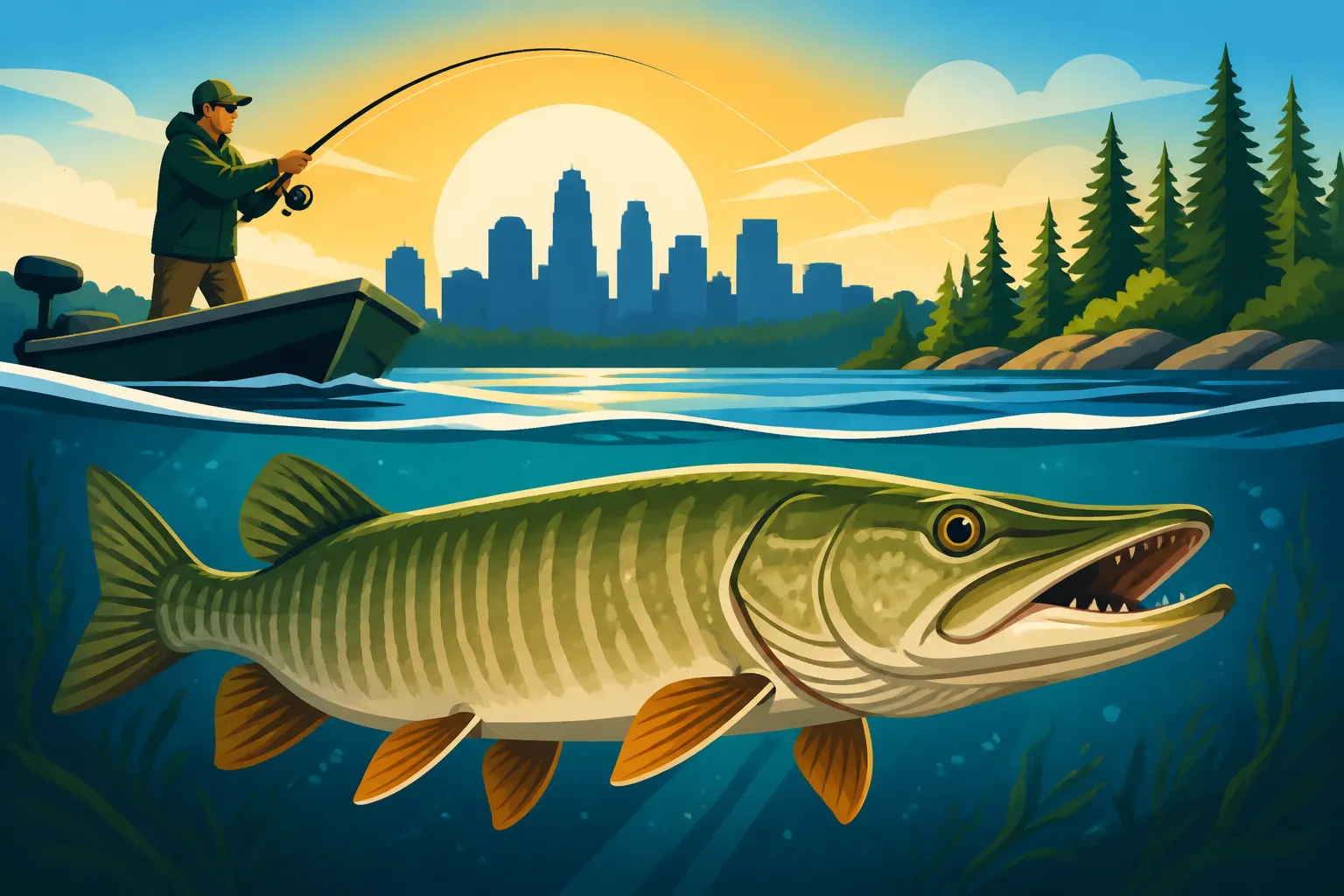
It's a common dilemma for us Minnesota anglers: you've got that muskie itch, the relentless drive to chase the "fish of 10,000 casts," but the thought of a four-hour drive up north just isn't in the cards this weekend. Many of us feel that frustration, believing trophy muskie water is reserved for the distant wilderness. Thankfully, that's not the whole story. This guide is dedicated to revealing the best, most accessible muskie lakes right here near the Twin Cities, proving that a true giants might be closer than you think.
The Metro Muskie Challenge and Opportunity
Let's be honest, fishing for muskie is never "easy," but doing it right outside a major metropolitan area comes with its own unique set of challenges and, surprisingly, some incredible advantages. You're not just casting for a fish; you're often navigating busy waters, dealing with more recreational boat traffic, and fishing structures that see a lot of pressure. However, these metro lakes have robust ecosystems and active stocking programs, making them prime grounds for growing truly massive fish.
Navigating the Urban Waters for Giants
When you picture muskie fishing, you probably envision serene, wild northern lakes with pine trees reflected in glass-calm water. The reality near Minneapolis and St. Paul is a bit different. You might be dodging pontoons, passing by lakeside mansions, and hearing the distant hum of city life. This urban environment means you need to adapt your approach, perhaps fishing during off-peak hours or focusing on less-pressured sections of these large bodies of water. The fish are there, but they've seen a lure or two, so stealth and persistence become even more critical.
Why Muskie Thrive in These Lakes
Despite the urban setting, several factors contribute to the impressive muskie populations and sizes in metro lakes. First, many of these lakes are quite large and deep, offering expansive territories and diverse habitats, from shallow weed beds to deep, clear main lake basins. Second, they often have an abundant forage base of cisco (tullibee), suckers, and perch, providing a rich diet that allows muskie to grow quickly and to immense sizes. Finally, the Minnesota Department of Natural Resources (DNR) has long-standing, successful muskie stocking programs in these waters, ensuring a continuous supply of fish and the maintenance of genetic diversity. These factors combine to create a legitimate opportunity to tangle with a trophy close to home.
Top Muskie Lakes Close to the Twin Cities
You don't need to drive to the Canadian border to find an honest shot at a muskie of a lifetime. The Twin Cities metro area, and its immediate surroundings, boast some truly exceptional muskie fisheries. Each offers a unique experience and challenges, but all hold the potential for that unforgettable fight.
Lake Minnetonka: The Urban Giant
When most people think of metro muskie, Lake Minnetonka immediately springs to mind, and for good reason. It's an immense, sprawling lake covering over 14,000 acres, with an incredibly complex system of bays, points, humps, and deep holes. This vastness means fish can spread out, making them challenging to locate, but also gives them ample room to grow. Minnetonka is famous for its large muskie, with fish regularly caught in the 45-50+ inch range, and rumors of true giants always circulating.
Fishing Minnetonka requires patience and a good understanding of its various basins and bays. Early in the season, you might find fish holding in shallower, warmer bays with abundant weeds. As summer progresses, they often move to deeper main lake points, submerged islands, and weed lines adjacent to drop-offs. Trolling large crankbabaits like a Best Muskie Lures Bucktails Jerkbaits Topwater often proves effective in covering water, while casting bucktails and jerkbaits around structure can entice strikes from active fish. Given its size and complexity, many anglers find value in hiring a local guide, often found through services like FishingBooker, who can help shorten the learning curve and point you to productive areas.
White Bear Lake: A Sleeper Fishery
Often overshadowed by its larger neighbor, White Bear Lake is a truly fantastic muskie fishery that frequently produces big fish and can be less pressured than Minnetonka. Located just northeast of St. Paul, White Bear Lake is about 2,400 acres, making it more manageable but still large enough to hold significant muskie populations. It's known for its clear water and healthy weed beds, which are key habitat for muskie.
The muskie in White Bear Lake are known to be aggressive, often hitting large baits with conviction. Focus your efforts around the extensive weed lines, especially where they meet deeper water, and along points and rock reefs. The shallower nature of some areas means topwater baits can be incredibly exciting during low-light conditions. While you might not find as many muskie as some other lakes, the ones you do hook into tend to be of impressive size. It's a great lake to explore if you want a quality muskie experience without the overwhelming scale of Minnetonka.
Forest Lake: Northern Metro Gem
Further to the northeast, beyond the immediate suburbs, lies Forest Lake. At around 2,200 acres, it shares some characteristics with White Bear Lake in terms of size but has a distinctly "northern" feel with more varied bottom contours and a good mix of structure. Forest Lake has a very healthy muskie population, and like its metro counterparts, consistently kicks out fish over 40 inches, with 50-inchers certainly possible.
Anglers targeting muskie on Forest Lake often focus on the expansive weed beds, particularly in the larger north and south basins, as well as the deeper breaks and rock piles. The lake also features some excellent submerged humps and points that can hold active fish. Trolling is a popular and effective method here, especially with larger diving crankbaits that mimic the lake's abundant forage. Casting heavy bucktails and glide baits around known structure is also highly productive. Access is good, and it feels like a genuine northern muskie experience, just a short drive from the Twin Cities.
Lake Waconia: South of the Cities Potential
Venturing southwest of the Twin Cities, Lake Waconia stands out as another top-tier muskie destination. At just over 3,000 acres, it's a good-sized lake with a diverse fishery, including a strong muskie program. Waconia has gained a reputation for growing healthy, aggressive muskie, thanks to its rich forage base and excellent habitat. Anglers regularly report catching fish in the 40-inch class, with genuine trophy potential.
Waconia's muskie often relate to its numerous weed flats, distinct weed lines, and structural elements like humps and inside turns. The lake's irregular shape, with several points and bays, creates ample ambush points for these apex predators. During peak summer, trolling over open water or along deep weed edges with large crankbaits can be very effective, especially during low light. When casting, work jerkbaits and soft plastics through and around the dense vegetation. Lake Waconia offers a fantastic opportunity for anglers living in the southern metro area to chase big muskie without a long journey.
Here's a quick overview of these fantastic metro muskie waters:
| Lake Name | Approximate Size (Acres) | Max Depth (Feet) | Key Features for Muskie | Typical Muskie Size Range (Inches) | Proximity to Twin Cities |
|---|---|---|---|---|---|
| Lake Minnetonka | 14,700 | 113 | Diverse bays, points, humps, deep weed lines | 40-50+ | Very close |
| White Bear Lake | 2,400 | 49 | Clear water, healthy weed beds, rock reefs | 40-50 | Northeast Metro |
| Forest Lake | 2,200 | 35 | Expansive weed beds, deep breaks, rock piles | 40-50 | Northeast Metro |
| Lake Waconia | 3,000 | 37 | Weed flats, distinct weed lines, humps, points | 40-50 | Southwest Metro |
Essential Gear and Tactics for Metro Muskie
Chasing muskie is a commitment, and that extends to your gear. These are powerful fish, and a proper setup isn't just about landing them; it's about doing so efficiently to ensure a healthy release. Using inadequate gear can lead to prolonged fights, exhausted fish, and ultimately, higher mortality rates.
Heavy-Duty Rods, Reels, and Line
Forget your bass or walleye setups for muskie – these fish demand serious tackle. You'll want a heavy-power, fast-action casting rod, typically 8 to 9 feet long, which provides the leverage needed to cast large baits and turn a big fish. Paired with this, a robust baitcasting reel with a strong drag system is crucial. Brands like Abu Garcia and Shimano offer excellent options designed for muskie fishing. Spool your reel with heavy braided line, usually 80-100 pound test, for its strength and minimal stretch. This allows for solid hook sets and the ability to pull through heavy cover. Remember, a strong leader (fluorocarbon or titanium, 100-150 lb test) is non-negotiable to prevent bite-offs from their razor-sharp teeth. Choosing the right Best Tackle for Muskie in Minnesota is fundamental.
Proven Lures and Presentations
Metro muskie are accustomed to seeing a variety of baits, so having a diverse tackle box is key. Large bucktails are staples, especially those with tandem blades like a Mepps Musky Killer or a Bucher Trolling X. Jerkbaits that suspend or slowly sink, such as a Rapala Super Shad Rap or a Suick, are incredibly effective, especially when worked with erratic pauses and rips. Glide baits, like a Salmo Slider, offer a unique side-to-side action that can trigger strikes from hesitant fish. Topwater lures, including prop baits and walk-the-dog style baits, provide exhilarating explosions on the surface, particularly during dawn and dusk. For specific lake conditions or when fish are holding deeper, large diving crankbaits for trolling or even big rubber baits like a Musky Innovations Bull Dawg can be the ticket. Always be prepared to perform the "figure-8" at the boat to entice a follower to commit, a technique vital for success when muskie hunting.
Seasonal Strategies for Metro Muskie
Understanding Seasonal Fishing Patterns in Minnesota for muskie is critical for consistent success. In spring, after the Minnesota Fishing Seasons & Opener Dates 2026, muskie often relate to shallow, warming bays and emergent weed growth as they recover from spawning. Casting smaller bucktails and jerkbaits in these areas can be productive. As summer progresses, muskie will transition to deeper weed lines, points, and main lake structure. This is prime time for casting larger bucktails, glide baits, and often when trolling becomes a highly effective strategy for covering vast areas. In fall, as water temperatures drop, muskie go on a feeding frenzy, bulking up for winter. This is often when the biggest fish are caught, using large crankbaits, gliders, and even live bait where legal. Keep an eye on local fishing reports, often available through apps or even from guides listed on platforms like FishingBooker, to dial in on current patterns.
Conservation and Responsible Angling
Muskie fishing isn't just about the catch; it's deeply rooted in respect for the fish and the resource. These magnificent predators are a true prize, and ensuring their survival for future generations is paramount. In Minnesota, muskie are almost exclusively a catch-and-release fishery, and handling them properly is a skill every muskie angler must master.
Catch and Release Best Practices
When you hook into a muskie, the excitement is palpable, but quick, responsible handling is crucial. First and foremost, use a large, knotless rubber landing net. This prevents damage to the fish's fins and slime coat. Once in the net, keep the fish in the water as much as possible. If you must remove it for a quick photo, minimize its time out of the water to under 10-15 seconds. Use long-nosed pliers or jaw spreaders to remove hooks carefully. If a hook is deeply embedded, cut the hook rather than tearing at the fish's mouth. Support the fish horizontally with two hands, one under the head and one under the tail, never vertically by the jaw.
Allow the fish to recover in the net alongside the boat, facing into any current or propeller wash, until it vigorously swims away. Avoid excessive handling, especially around the gills. These practices, detailed further in Catch and Release Best Practices in Minnesota, dramatically increase a muskie's survival chances and are a hallmark of a responsible angler.
Protecting Our Fisheries
Beyond individual fish handling, responsible angling encompasses a broader commitment to fishery health. This includes adhering strictly to all Muskie Season & Limit in Minnesota regulations, which typically involve very specific open seasons and often a one-fish possession limit with a high minimum size to protect spawning fish and allow them to reach trophy potential. It also means educating ourselves and others on proper handling, and supporting organizations like Muskies Inc., which are dedicated to muskie conservation, research, and habitat preservation. Our metro muskie fisheries are a treasure, and protecting them ensures that the thrill of chasing these elusive giants remains a possibility for all who seek it.
Disclaimer
Fishing regulations and conditions can change. Always consult the latest Minnesota DNR fishing regulations before heading out on the water. This guide is for informational purposes only.