Lake Sturgeon Regulations & Tag in Minnesota
Navigating the unique world of lake sturgeon fishing in Minnesota can feel like stepping back in time, aiming for a fish that has roamed our waters since prehistoric days. But with such an ancient and magnificent creature, come specific, and often complex, rules and regulations designed to protect them. This guide aims to clear up the confusion surrounding Minnesota's lake sturgeon regulations and the mandatory tag system, ensuring your next sturgeon adventure is both successful and fully compliant with the law.
The Unique Appeal of Minnesota's Lake Sturgeon Fishery
There’s something truly extraordinary about chasing a fish that can live for over 100 years and grow to immense sizes, and in Minnesota, we are incredibly fortunate to have a thriving, albeit carefully managed, lake sturgeon fishery. It's not just about the size, but the history, the fight, and the sheer challenge of landing one of these freshwater giants.
Why Lake Sturgeon Are So Special
Lake sturgeon are often referred to as "living fossils" because their physical characteristics have remained largely unchanged for millions of years. Imagine a fish covered in bony plates instead of scales, with a vacuum cleaner-like mouth perfectly adapted for sifting through riverbeds for food. These are not your average walleye or bass. They are slow-growing, late-maturing, and incredibly long-lived, which makes every single fish a precious resource. The thrill of hooking into a sturgeon, feeling that deep, powerful pull, is an experience unlike any other. It’s a battle of endurance, requiring patience and the right gear to bring one boatside. Many anglers specifically target these impressive fish for the pure sport and the memory of encountering such an ancient creature.
The Journey to Conservation Success
It wasn't always this way for lake sturgeon in Minnesota. Historically, overfishing and habitat destruction, particularly from dam construction that blocked their spawning migrations, decimated populations across their range. For decades, these magnificent fish were nearly absent from many of their native waters. However, thanks to dedicated conservation efforts by the Minnesota Department of Natural Resources (DNR), alongside partner agencies and angler groups, sturgeon populations have made a remarkable comeback. Stocking programs, habitat restoration, and strict fishing regulations have been instrumental in this recovery. Today, rivers like the Rainy River, which flows between Minnesota and Ontario, are world-renowned for their incredible lake sturgeon fishing, a testament to what focused conservation can achieve. This success story is why understanding and following current regulations is so crucial – it’s how we ensure these fish continue to thrive for future generations.
Understanding Lake Sturgeon Regulations in Minnesota
Because of their unique life history and past conservation struggles, lake sturgeon fishing is perhaps the most heavily regulated fishery in Minnesota. The rules are designed to balance angler opportunity with the paramount need for population sustainability. It's not enough to know the general statewide fishing limits; sturgeon have their own specific rulebook.
Seasons and Open Water Opportunities
The open water season for lake sturgeon in Minnesota is highly specialized and often varies by body of water. Generally, anglers will find a catch-and-release season for a significant portion of the year, allowing for recreational fishing without harvest pressure. However, there are often specific, shorter harvest seasons where anglers, with the proper tag, can keep a fish within a very specific size range. For instance, the main stem of the Rainy River, from its mouth to the dam at International Falls/Fort Frances, as well as Lake of the Woods, typically offers a spring and a fall harvest season, each with a very narrow slot limit – meaning only sturgeon within a precise length can be kept. Outside of these brief harvest windows, it’s strictly catch-and-release. Always consult the most current Minnesota Fishing Seasons & Opener Dates (2026) and the specific regulations for the body of water you intend to fish, as these dates and harvest opportunities can change annually to reflect population health.
Ice Fishing for Sturgeon: A Different Challenge
Ice fishing for lake sturgeon is a growing pursuit in Minnesota, offering a unique winter angling experience. Much like the open water season, ice fishing regulations for sturgeon are very particular. On certain waters, such as the Rainy River and Lake of the Woods, a brief ice fishing harvest season might be available, again with very tight slot limits. Many other lakes and rivers that hold sturgeon are strictly catch-and-release during the ice season. The biggest difference, beyond the frozen landscape, is the sheer difficulty of landing a giant sturgeon through a relatively small ice hole! It's a true testament to an angler's determination. Remember, just like open water, you'll need to check specific rules for your chosen ice fishing spot, and be aware of any special provisions for Border Water Fishing Rules (Minnesota-Ontario, Wisconsin) if you’re fishing waters like the Rainy River which straddle the international border. The rules regarding ice shelter removal deadlines in Minnesota also apply here, so keep an eye on those dates too!
The Mandatory Sturgeon Tag System
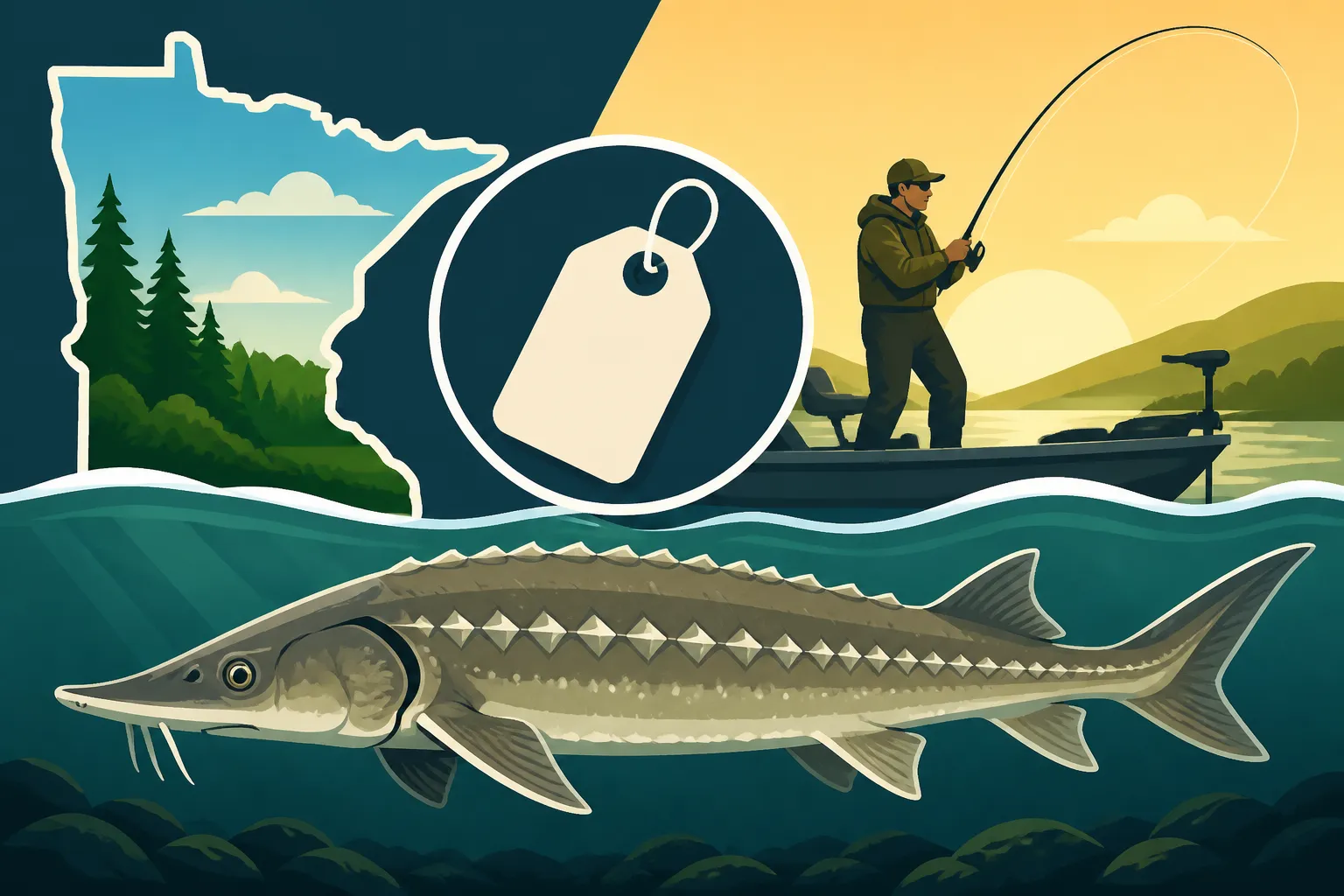
One of the most distinctive aspects of lake sturgeon fishing in Minnesota, particularly if you plan to keep a fish during an open harvest season, is the mandatory sturgeon tag. This isn't just an extra license; it's a critical management tool that helps the DNR track harvest and ensure sustainable fishing. Without a tag, harvesting a sturgeon is strictly prohibited.
How the Tag System Works
When you purchase your annual Minnesota Fishing License: Cost, Types & How to Buy (2026), you’ll notice an option to add a "Lake Sturgeon Tag." This tag is typically issued separately and must be in your possession while fishing for sturgeon. Each tag is uniquely numbered and is only valid for a single fish. It acts as a physical token, marking a fish as legally harvested. The cost for a sturgeon tag is usually quite low, but its importance is immeasurable for conservation purposes. It's vital to remember that even if you're fishing a harvest season, if you don't have a valid sturgeon tag, you must release any sturgeon you catch. This applies whether you're fishing with a group or by yourself – each angler planning to keep a sturgeon needs their own tag.
When and How to Affix Your Tag
The moment you decide to keep a legal-sized sturgeon during a designated harvest season, the clock starts ticking. You are legally required to immediately and securely affix your sturgeon tag to the fish. "Immediately" means as soon as the fish is brought to hand and you’ve confirmed it meets the legal size requirements. "Securely affix" means attaching the tag in a way that it cannot be removed without being damaged, usually by punching it through one of the bony scutes or fin rays and locking it in place. The tag typically comes with instructions and often has a self-locking mechanism. It’s crucial that the tag remains attached to the fish until it is processed for consumption, regardless of whether you're transporting it across the lake or back to your home. Failing to immediately and properly tag a harvested sturgeon is a serious violation and can lead to significant penalties for keeping over-limit fish in Minnesota.
Statewide vs. Specific Water Regulations
While Minnesota has general statewide fishing regulations, lake sturgeon rules are almost always managed at a more granular, water-specific level. This is due to varying population sizes, spawning success, and habitat conditions in different river systems and lakes. What applies to the Rainy River might be completely different from a lesser-known lake that holds sturgeon.
General Statewide Rules for Lake Sturgeon
For most inland lakes and rivers in Minnesota that contain lake sturgeon, the general rule is often strictly catch-and-release, year-round. This is to protect recovering populations that may not yet be robust enough to sustain any harvest pressure. Even in these waters, you still need a valid Minnesota fishing license to legally target them. The statewide Minnesota Fishing Limits: Bag & Possession (2026) document will clearly outline which waters have specific harvest seasons and which are strictly catch-and-release. When you look at the Lake Sturgeon Season & Limit in Minnesota, you'll see a stark contrast between the opportunities on border waters and inland bodies. It's always best to assume catch-and-release unless specifically stated otherwise for the water you're fishing.
Special Regulations for the Rainy River
The Rainy River is truly the crown jewel of Minnesota's lake sturgeon fishery, supporting one of the strongest populations in North America. Because of this, it has some of the most generous, yet still highly managed, sturgeon fishing opportunities. The Rainy River typically offers both open water and ice fishing harvest seasons, along with extended catch-and-release periods. However, these regulations are a bit more intricate due to its status as a border water with Ontario. For instance, possession limits and slot limits might vary slightly between the spring and fall seasons, and anglers must be acutely aware of whether they are fishing under Minnesota or Ontario regulations if they cross the invisible border. The specifics for the Rainy River are often detailed under the Lake of the Woods Fishing Regulations (2026) and in supplemental regulations specifically for the Rainy River. You might find a spring harvest season from mid-April to mid-May, followed by a long catch-and-release period through late summer, and then another brief harvest season in the fall. Always check the current year's regulations for the exact dates and size restrictions before heading out.
| Season Type | Typical Dates (Approx.) | Harvest Allowed? | Tag Required? | Typical Size Limit (Rainy River) |
|---|---|---|---|---|
| Spring Harvest | Mid-April to Mid-May | Yes | Yes | Very specific slot (e.g., 45-50 inches) |
| Summer C&R | Mid-May to Late August | No (C&R Only) | No | N/A |
| Fall Harvest | Late August to Mid-Sept | Yes | Yes | Very specific slot (e.g., 45-50 inches) |
| Late Fall C&R | Mid-Sept to Late Oct | No (C&R Only) | No | N/A |
| Ice Harvest | Mid-Dec to Mid-Jan | Yes | Yes | Very specific slot (e.g., 45-50 inches) |
| Winter C&R | Late Jan to Feb | No (C&R Only) | No | N/A |
Note: These dates and size limits are illustrative and can change annually. Always refer to the current Minnesota DNR regulations.
Best Practices for Catch and Release Sturgeon Fishing
Given the long lifespan and slow reproductive rates of lake sturgeon, catch-and-release is not just a technique; it's an ethical imperative for their continued survival, especially when targeting larger specimens or fishing outside of designated harvest seasons. Even when a harvest season is open, many anglers choose to release these incredible fish to ensure they can continue to grow and contribute to the population.
Handling and Releasing These Giants Safely
Bringing a lake sturgeon to the boat or shore requires patience, but handling it once caught demands precision and care. These are ancient, powerful fish, and mishandling can cause serious injury to both the fish and the angler. Always keep the fish in the water as much as possible. If you must bring it aboard for a quick photo, use a large, wet cradle or mat. Avoid dragging them onto rough surfaces. Support their body weight evenly, especially if lifting, and never hold them by the gills or vertically by the tail. A good rule of thumb is to minimize their time out of water to only a few seconds. When releasing, gently hold the fish upright in the water, facing into the current if possible, until it regains strength and swims away on its own. Using circle hooks can significantly reduce gut hooking, improving the chances of a successful release. These practices align perfectly with general Catch and Release Best Practices in Minnesota.
Essential Gear for Responsible Sturgeon Angling
Responsible sturgeon fishing starts with the right gear. You're not going after panfish here; these fish require heavy-duty tackle. A stout rod (medium-heavy to heavy action, 7-9 feet in length), a powerful reel with a smooth drag system (spinning or baitcasting, depending on preference), and strong braided line (50-80 lb test) are essential. Coupled with a heavy leader (e.g., 80-100 lb fluorocarbon) to resist abrasion from their bony mouths and powerful tail, you'll be well-equipped. For hooks, a strong, large circle hook (sizes 5/0 to 8/0) is preferred as it often hooks in the corner of the mouth, making for easier and safer removal. A large, rubberized landing net or a sturgeon cradle is also crucial for safe landing and handling. Don’t forget a long-nosed pliers or jaw spreader for hook removal, as their mouths can be tough to access. Having the right tools ensures you can fight the fish effectively and release it unharmed.
Common Misconceptions and FAQs
Despite their growing popularity, there are still a lot of questions and sometimes misunderstandings surrounding lake sturgeon fishing in Minnesota. Let's clear up a few common ones.
Debunking Sturgeon Myths
One common misconception is that sturgeon are trash fish or bottom feeders only interested in dead bait. While they are bottom feeders, they are incredibly powerful and discerning, and can be caught on a variety of baits, including fresh cut bait and even some artificials. Another myth is that they are dangerous to handle. While large and strong, with proper handling techniques, they pose no more threat than any other large fish. Their bony plates and scutes can be sharp, so wearing gloves is a good idea. Some anglers also believe that sturgeon fishing is only for the highly experienced, but with the right gear and a little research, even relative newcomers can find success, particularly on productive waters like the Rainy River, which is teeming with Lake Sturgeon in Minnesota. Just remember to respect their power and follow safe handling guidelines.
Where to Find the Official Regulations
The most accurate and up-to-date information on Minnesota’s lake sturgeon regulations can always be found on the official Minnesota Department of Natural Resources (DNR) website or by picking up a copy of the annual Minnesota Fishing Regulations PDF: Where to Find It. These resources detail specific seasons, bag limits, possession limits, and any special regulations for individual bodies of water. Don't rely solely on word-of-mouth or outdated information from online forums, as regulations can and do change year to year, especially with a species as carefully managed as the lake sturgeon. You can also contact a local DNR office or a certified license agent if you have specific questions. Staying informed ensures you're fishing legally and contributing to the conservation of these magnificent fish.
Disclaimer
Please note that fishing regulations, including those for lake sturgeon, are subject to change by the Minnesota Department of Natural Resources. While this guide aims to provide accurate and up-to-date information, it is your responsibility to consult the current official Minnesota fishing regulations before heading out on the water.