Biggest Muskie Ever Caught in Minnesota
The pursuit of a truly colossal muskie can feel like a lifelong quest, often ending in frustration, close calls, and the lingering question of whether that mythical giant actually exists. We all dream of that moment when a monstrous shadow follows our lure, or when a boat-side figure-eight produces an explosion that nearly rips the rod from our hands. This guide isn't just about the fish itself, but the stories, the dedication, and the hallowed waters that have produced the biggest muskie ever recorded in Minnesota, offering insights into what it takes to join the ranks of legendary anglers.
The Minnesota Muskie Dream: Chasing Giants
Minnesota, the Land of 10,000 Lakes, is synonymous with incredible fishing, and for many, the ultimate prize isn't a walleye or a trophy bass, but the elusive muskellunge. This apex predator, often called the "fish of 10,000 casts," captivates anglers with its sheer size, aggressive nature, and formidable challenge. The idea of tangling with a true freshwater titan, a fish that could exceed fifty inches and push sixty pounds, fuels countless hours on the water, meticulous gear preparation, and a healthy dose of obsession. It's a journey filled with anticipation, sometimes disappointment, but always the hope of encountering a creature that embodies the wild spirit of our northern waters.
The Allure of the North Star State's Muskie Fishing
There's something inherently thrilling about chasing muskie in Minnesota. From the vast, wind-swept expanses of Lake of the Woods to the intricate weed lines of Leech Lake, each body of water presents its own unique challenges and opportunities. Our state's healthy muskie populations, carefully managed by the Minnesota Department of Natural Resources (DNR), mean that trophy fish aren't just a fantasy; they're a very real possibility for dedicated anglers. The ecosystem here, with abundant forage and diverse structure, allows these fish to grow to incredible sizes, pushing the limits of what freshwater fish can achieve. This isn't just fishing; it's an adventure into the heart of wild Minnesota, where every cast holds the potential for a memory that will last a lifetime.
When you think about the dedication required, it’s no wonder muskie anglers are a special breed. They spend hours, days, even weeks without a single bite, all for the chance to experience a few seconds of pure adrenaline. It's a mental game as much as a physical one, demanding patience, perseverance, and an unshakeable belief that the next cast could be the one. This relentless pursuit makes every muskie, especially a big one, feel like an earned victory.
Understanding the Quest for a True Trophy
What constitutes a "trophy" muskie can vary from angler to angler, but generally, anything over 50 inches is considered a legitimate giant. These fish are ancient, intelligent creatures that have survived countless fishing seasons, evaded predators, and mastered their environment. They are apex predators, often residing in specific territories, making them even more challenging to locate and entice. The quest isn't just about catching a big fish; it's about outsmarting a creature at the top of its food chain, a true freshwater beast.
The journey to catch a trophy muskie often involves specialized gear, including heavy-duty rods and reels, robust lines, and an arsenal of oversized lures designed to mimic the large prey these fish consume. Anglers often travel to renowned lakes, pour over contour maps, and study seasonal fishing patterns in Minnesota to maximize their chances. It’s a commitment that transcends casual fishing, becoming a dedicated sport focused on a single, magnificent species. Understanding the unique biology and behavior of these fish, like their preference for specific water temperatures and oxygen levels, is key to consistently finding and engaging with them.
The Official State Record: A Tale of Two Trophies
When we talk about the "biggest muskie ever caught in Minnesota," it's crucial to understand that the state officially recognizes two distinct types of records for muskellunge: the traditional all-tackle weight record for a harvested fish, and the more contemporary catch-and-release length record. This reflects a significant shift in fishing ethics, particularly for a species like muskie, where conservation and population health are paramount. Both records tell an incredible story of monumental fish and the anglers who pursued them.
The Legendary Kept Weight Record Muskie
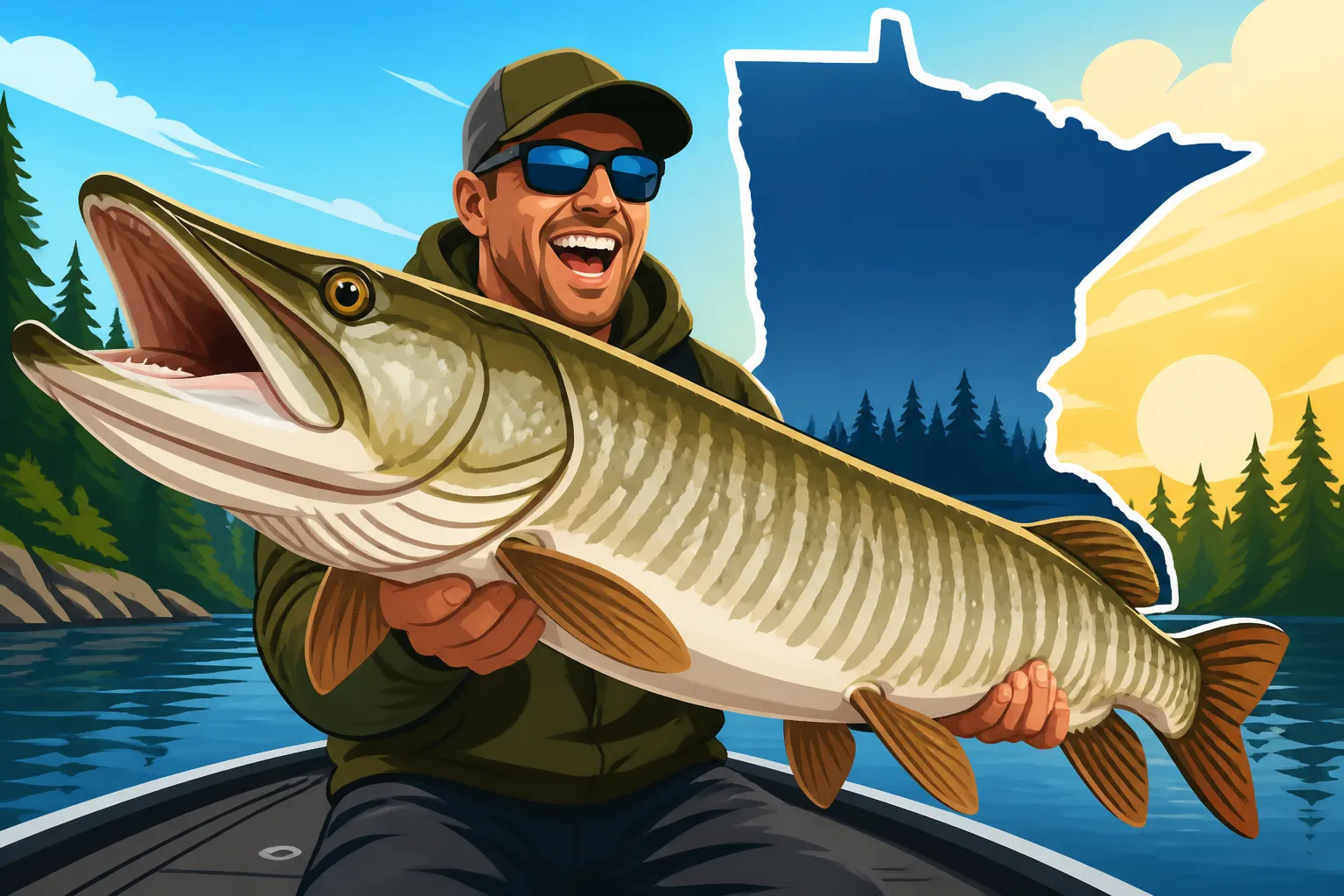
For decades, the benchmark for the biggest muskie was a fish kept, weighed on certified scales, and immortalized in photos. Minnesota's all-tackle state record for a muskie caught and kept stands at a staggering 54 pounds, 0 ounces. This colossal fish was caught by Thomas Herges way back in 1957. The location? The legendary Lake Winnibigoshish, affectionately known as "Big Winnie." Imagine the sheer power of a fish of that magnitude on the end of your line, fifty-four pounds of muscle and raw predatory instinct.
Herges's catch is a testament to the incredible potential of Minnesota's fisheries and the giants that lurked in its waters even then. This record has stood for over half a century, a testament to its exceptional size and the rarity of harvesting a muskie of such proportions today. While many anglers now practice rigorous Catch and Release Best Practices in Minnesota for muskie, especially large ones, Herges's accomplishment remains a historical marker of an undeniable leviathan. The story of this fish often sparks conversations about the golden era of fishing and the changes in fishing pressure and management over time.
The Modern Era's Live Release Length Record
As conservation became a greater priority, especially for long-lived, slow-growing species like muskie, the DNR introduced the "catch-and-release" length record program. This allows anglers to be recognized for truly exceptional fish without having to harvest them, ensuring these genetic marvels can continue to spawn and contribute to the population. This shift aligns perfectly with the ethos of many muskie anglers who view these fish as too valuable to keep.
The current live release state record muskie in Minnesota measures an incredible 58.75 inches! This monumental fish was caught by John E. House in 2023 on Lake Vermilion. Think about that for a moment: almost 59 inches of pure muskie power! While we don't know its exact weight (as it was released), a fish of that length would almost certainly weigh well over 50 pounds, potentially surpassing the historic kept record in terms of estimated weight. This record truly showcases the success of Minnesota's muskie management and the dedication of anglers who prioritize the health of the fishery. It highlights the thriving nature of our muskie populations and inspires others to fish responsibly.
Here's a quick comparison of Minnesota's official muskie records:
| Record Type | Size | Angler | Year | Lake |
|---|---|---|---|---|
| Kept (All-Tackle) | 54 lbs, 0 oz | Thomas Herges | 1957 | Lake Winnibigoshish |
| Live Release | 58.75 inches (length) | John E. House | 2023 | Lake Vermilion |
This table clearly illustrates the difference in how records are recognized and the impressive dimensions of both record-holding fish. It's a fascinating look at the evolution of trophy recognition in our state.
Lakes of Giants: Where Minnesota's Monster Muskie Roam
While record-setting fish certainly capture our imagination, they also point us toward the premier waters that consistently produce these behemoths. Minnesota is blessed with a number of incredible muskie lakes, each with its own character and reputation for harboring truly massive fish. Understanding why certain lakes excel at growing giant muskie can significantly enhance your own trophy hunt.
Dissecting the Waters that Produce Records
Lake Winnibigoshish, the home of the 54-pound kept record, is a massive, shallow lake known for its vast expanses of weeds, sand flats, and submerged humps, all ideal habitat for muskie and their prey. Its rich forage base, including tullibees and large suckers, allows muskie to grow exceptionally fast and large. Lake Winnie's size means there's ample room for these fish to roam and find isolated territories, reducing fishing pressure in certain areas. This sprawling lake requires patience and a good understanding of its intricate bottom structure.
Lake Vermilion, where the 58.75-inch live release record was caught, is a completely different beast. Located in the picturesque wilderness of northeastern Minnesota, Vermilion is a deep, clear, and rocky lake with an abundance of islands, reefs, and sharp drop-offs. Its diverse structure provides both shallow weed beds for ambush points and deep, cool water refuges during warmer months. The clarity of the water often means muskie are extremely wary, demanding stealth and precision from anglers. Vermilion's robust cisco (tullibee) population provides a rich food source, allowing its muskie to achieve incredible lengths. When considering Minnesota Muskie Season & Size Limit, these lakes are often at the forefront of conservation efforts to protect these growing giants.
Other Noteworthy Waters for Trophy Muskie Potential
Beyond these record-holding lakes, several other Minnesota waters have earned reputations as prime destinations for trophy muskie. These are lakes where a 50-inch fish is not just a dream, but a genuine possibility on any given day.
- Lake of the Woods: This immense border water is a true muskie factory, especially the Rainy River arm and the sprawling main basin. Known for its stained water and abundant forage, it produces both quantity and quality. Many anglers specifically target the "Big Narrows" and deeper rock reefs during different seasons. You'll often hear tales of true giants from this lake, some pushing sizes that challenge the imagination.
- Mille Lacs Lake: While primarily known for its walleye, Mille Lacs has developed into a premier muskie fishery, particularly for large smallmouth bass eaters. Its vast mud flats, rock reefs, and weed lines provide diverse habitat. The Mille Lacs Walleye Regulations are often closely watched, but muskie anglers know this lake holds incredible potential for giants that feast on its plentiful forage. This lake regularly produces fish over 50 inches and has an excellent reputation for growing heavy, robust muskie.
- Leech Lake: Leech Lake is another legendary muskie fishery, famous for its unique Leech Lake Muskie Strain Explained, a fast-growing, aggressive strain that thrives in its fertile waters. With its intricate bays, vast weed beds, and numerous islands, Leech offers diverse fishing opportunities. Anglers often focus on areas like Portage Bay, Walker Bay, and Steamboat Bay. It's a fantastic lake for exploring different Muskie Fishing Techniques for Beginners, from casting large bucktails to trolling big crankbaits.
- Cass Lake & Lake Bemidji: Part of the large Cass Lake chain, these northern Minnesota gems consistently produce big muskie. They offer classic muskie structure with good forage bases and a mix of shallow and deep water. The relatively clear water in some areas means fish can be easily spooked, requiring a subtle approach.
These lakes are not for the faint of heart, demanding dedication, proper gear, and an understanding of muskie behavior. But for those willing to put in the effort, the rewards can be truly monumental.
Strategies for Landing Your Own Personal Best Muskie
Chasing a muskie of any size is a challenge, but targeting a trophy muskie requires an elevated approach. It's not just about luck; it's about preparation, persistence, and adopting smart fishing practices. If you're serious about landing your own personal best, perhaps even one that rivals the biggest muskie ever caught in Minnesota, there are key strategies you'll want to employ.
Essential Tactics for Targeting Big Fish
Trophy muskie are seasoned predators, meaning they're often more wary, more selective, and more challenging to tempt. They’ve seen it all, so thinking outside the box and presenting something they haven’t encountered a hundred times can be key.
- Go Big or Go Home (Lures): While smaller lures can catch muskie, true giants often prefer larger, more substantial meals. Think oversized bucktails (like Musky Mayhem Tackle Cowgirls), huge jerkbaits (like those from Musky Innovations or Drifter Tackle), and massive rubber baits. These lures not only mimic large forage but also displace more water, creating a powerful vibration that can call in muskie from a distance. Experiment with different colors, but confidence in your bait is often more important than the specific shade.
- Focus on Prime Time and Weather: Muskie fishing is notoriously affected by weather and lunar cycles. Overcast days, periods of stable weather, and major/minor moon phases are often considered prime times. Early morning and late evening, especially around dusk, can also be incredibly productive. Pay attention to cold fronts, which can shut down muskie activity, and plan your trips around more stable conditions.
- Find the Forage, Find the Muskie: Muskie are where their food is. Look for concentrations of baitfish like tullibees, suckers, or perch. These might be found on deep weed edges, around specific rock humps, or suspended over open water. Use your electronics to locate schools of bait, and you'll likely find muskie nearby. Understanding What Do Walleye Eat? (Forage in MN Lakes) can also give you clues about muskie forage, as they often share similar prey.
- Cover Water Efficiently: Muskie are ambush predators, so covering a lot of water and hitting key spots repeatedly is crucial. Trolling can be an effective way to cover vast areas, especially on larger lakes. When casting, fan-cast around structure, making sure to work all angles and depths. Don't be afraid to revisit productive spots multiple times throughout the day, as muskie activity can turn on and off.
- Master the Figure-8: This is perhaps the most critical technique for catching muskie boat-side. As your lure approaches the boat, don't just reel it in. Instead, plunge your rod tip into the water and trace a large "figure-8" pattern with your lure next to the boat. Many muskie follow the lure all the way in and will strike only when they perceive it trying to escape. Mastering the Muskie Figure-8 Technique can convert follows into catches, and it’s a non-negotiable skill for any muskie angler.
The Critical Importance of Catch and Release
For a species as magnificent and slow-growing as the muskie, catch and release is not just a suggestion; it's a vital practice for ensuring the future of our fisheries. A 50-inch muskie can be over 20 years old, representing decades of growth and spawning potential. Releasing these giants allows them to continue contributing to the genetic pool and provides other anglers with the chance to experience the thrill of catching a lifetime fish.
When you do hook into a muskie, especially a large one, be prepared for a quick and careful release. Here are some key considerations:
- Minimize Fight Time: Use heavy gear to bring the fish in quickly, reducing exhaustion.
- Keep it Wet: Avoid taking the fish out of the water unnecessarily. If you must lift it for a photo, do so horizontally, supporting its entire body, and get it back into the water as quickly as possible.
- Use Proper Tools: Have long-nosed pliers, bolt cutters (for cutting hooks if necessary), and a large, rubberized landing net ready. A large net will cradle the fish, minimizing stress and protecting its slime coat.
- Unhook Gently: Use your pliers to remove hooks quickly and carefully. If a hook is deeply embedded, cut the hook rather than trying to rip it out.
- Revive Thoughtfully: Hold the fish gently in the water, supporting it upright until it regains its strength and can swim away under its own power. This might take several minutes, especially for larger fish.
Remember, the goal is to admire these incredible creatures, celebrate the catch, and then send them back to grow even larger for future generations. Participating in the Trophy Fish in Minnesota: Master Angler Program is a fantastic way to recognize your achievements while promoting responsible fishing practices. Your dedication to ethical angling helps keep the dream of catching a giant muskie alive for everyone.
Disclaimer
Fishing inherently involves risks. Always prioritize safety, wear a life vest, and be aware of weather conditions. Abide by all Minnesota Department of Natural Resources (DNR) fishing regulations, including licensing requirements, season dates, and possession limits. Regulations can change frequently, so always consult the latest official DNR publications before heading out on the water. This guide is for informational purposes only and does not constitute legal advice or guarantee fishing success.