How to Identify Invasive Fish in Minnesota
There's nothing quite like a day out on a Minnesota lake or river, casting lines, enjoying the peace, and hoping for that perfect bite. But sometimes, amidst the excitement, you might reel in something truly unexpected – a fish that just doesn't look quite right. This moment of confusion is more common than you'd think, and it highlights a critical challenge: identifying invasive fish species. Knowing what these unwelcome guests look like is paramount for every angler, not just to comply with regulations, but to actively protect the native fisheries and pristine waters we all cherish. This guide will walk you through how to confidently identify Minnesota's most problematic invasive fish, empowering you to be part of the solution.
Why Identifying Invasive Fish Matters for Minnesota Anglers
When you think about fishing, you're usually dreaming of walleye, northern pike, or crappies, not worrying about species that don't belong. But the reality is, invasive fish pose a significant threat to the very ecosystems we love to fish in. Ignoring them, or worse, accidentally spreading them, can have devastating, long-lasting consequences for our beloved Minnesota waters and the native fish that call them home.
Protecting Our Pristine Waters and Native Species
Minnesota is the "Land of 10,000 Lakes," and each one is a delicate ecosystem. Invasive fish species, sometimes referred to as Aquatic Invasive Species (AIS), disrupt this natural balance in a multitude of ways. They compete with native fish for food, habitat, and spawning grounds, often outcompeting the locals due to their aggressive nature or higher reproductive rates. Imagine a lake where your favorite bluegills and perch suddenly struggle to find food because a new species is devouring all the zooplankton. They can also introduce diseases or parasites that native fish have no natural immunity to, leading to widespread population declines. Beyond fish, these invaders can alter the entire food web, impacting everything from aquatic insects to waterfowl. Our responsibility as anglers goes beyond just catching fish; it extends to being stewards of these precious natural resources. Understanding and preventing the spread of these species is a vital part of protecting our fishing heritage for future generations.
Understanding the Legal Ramifications
Beyond the ecological impact, there are strict rules and regulations in Minnesota surrounding invasive species, and for good reason. It's not just about what you should do, but what you must do by law. Transporting live invasive fish, or even unknowingly releasing one back into the water after catching it, can carry significant penalties. The Minnesota Department of Natural Resources (DNR) takes these issues very seriously because the financial and ecological costs of managing established invasive populations are astronomical. For instance, the regulations around Aquatic Invasive Species (AIS) Rules for Boaters are constantly evolving to combat this threat. Knowing how to identify an invasive fish means you can act quickly and correctly, avoiding fines and, more importantly, preventing further spread. It’s part of being a responsible angler and helps ensure the state doesn't have to implement even stricter rules or Minnesota Fishing Regulations Changes for 2026 in response to growing invasive populations.
Key Characteristics of Common Invasive Fish in Minnesota
Minnesota is vigilant in monitoring and managing aquatic invasive species, but new threats can emerge, and existing ones can spread. While there are many species considered invasive in various parts of the world, a few specific fish species are particularly concerning for Minnesota. Let's get familiar with their distinguishing features so you can identify them on sight.
Asian Carp: Silver, Bighead, Grass, and Black Carp
The term "Asian carp" actually refers to a group of several distinct species, all of which are highly problematic and share a common goal: eating a lot of whatever our native fish need to survive. These include the Silver Carp, Bighead Carp, Grass Carp, and Black Carp. They are primarily found in the Mississippi River and its tributaries, but there's a constant threat of them moving into our inland lakes.
- Silver Carp are probably the most infamous, known for their tendency to jump high out of the water when startled by boat motors. They have a silvery body, a large head, and eyes that are set very low on their head, almost below the midline of their body. Their mouths are upturned, and they have no scales on their head. They feed on plankton, directly competing with many native fish, including juvenile game fish and our valuable Yellow Perch & Sauger in Minnesota.
- Bighead Carp are similar in appearance to Silver Carp but don't typically jump. They have a large head (hence the name) and their eyes are also set low. The main difference is their coloration, which can be a mottled silvery-gray with dark blotches, and they have smaller, more numerous gill rakers compared to silver carp. Like silver carp, they are filter feeders that consume vast amounts of plankton, starving out native species.
- Grass Carp are elongated, torpedo-shaped fish with large scales and a more terminal (front-facing) mouth. They are typically olive-brown on their back, fading to white on their belly. Unlike their plankton-eating cousins, Grass Carp are vegetarian, consuming large quantities of aquatic plants. While some might think this sounds helpful for clearing choked waterways, they can decimate native plant beds that are crucial habitat for spawning fish and other aquatic life. They're often mistaken for native minnows or even common carp.
- Black Carp are the least common in Minnesota waters but represent a significant threat. They are dark gray to black, with large scales and pharyngeal teeth (throat teeth) that are specialized for crushing mollusks. They are snail and mussel eaters, and their introduction could devastate populations of native mussels, many of which are endangered and play a vital role in water filtration.
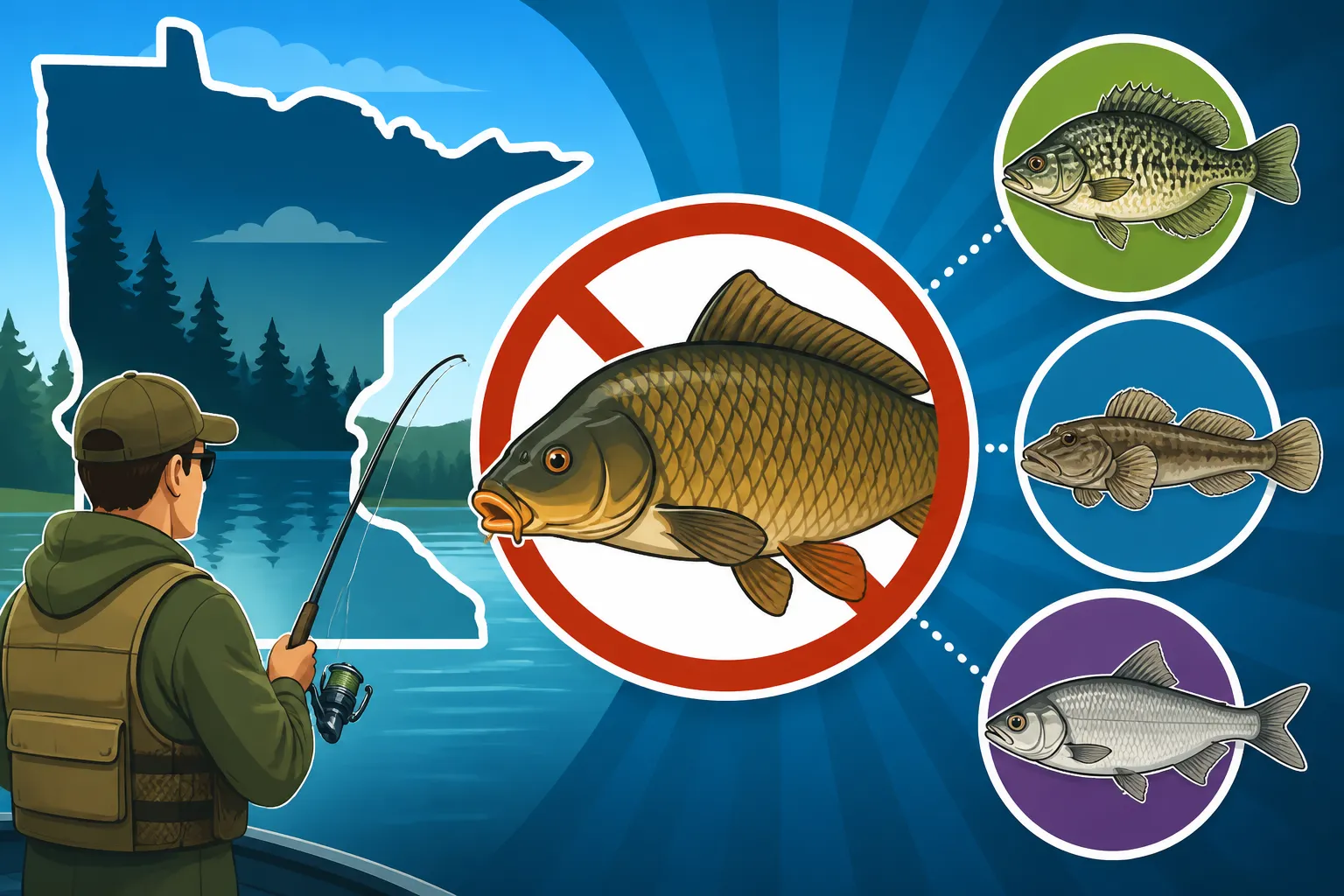
When you catch a carp species in Minnesota, always take a moment to look closely. Is it the common carp we're used to, or one of these more insidious Asian varieties? The low-set eyes and distinct head shapes of Silver and Bighead carp are dead giveaways.
Round Goby: Small but Mighty Invaders
The Round Goby is a small, bottom-dwelling fish that arrived in the Great Lakes via ballast water from transoceanic ships and has been steadily spreading. They are now found in Lake Superior and its tributaries, as well as parts of the Mississippi River and some inland lakes. Despite their small size, usually 4-10 inches, they are incredibly aggressive and reproduce rapidly.
- Identification: Look for a single, fused pelvic fin that forms a suction-cup-like disc on their underside, similar to a goby. This is a key identifier. They also have a prominent black spot on the anterior dorsal fin (the one closer to the head), large eyes, and thick lips. Their bodies are typically mottled brown and gray, providing excellent camouflage on the bottom.
- Impact: Round Gobies compete with native bottom-feeders like sculpins, darters, and even juvenile walleye and smallmouth bass for food and prime spawning habitat. They are also known to eat the eggs of native fish, causing significant declines in reproductive success. Plus, they can carry botulism, which can then be passed up the food chain to larger fish and birds. If you're fishing a popular spot known for Smallmouth & Largemouth Bass in Minnesota or Walleye Fishing in Minnesota, be extra vigilant.
Ruffe: The Spiny Menace
The Ruffe is another invasive species that came from Eurasia via ballast water, first established in the Great Lakes, specifically Lake Superior. They are small, perch-like fish, generally growing no more than 6-10 inches, but their impact is anything but small.
- Identification: The Ruffe has a mottled olive-brown body with dark spots and blotches. Their most distinct feature is their two dorsal fins that are fused at the base, with the first dorsal fin having 12-16 sharp, spiny rays. Their mouth is small and downturned. They often get confused with young Yellow Perch & Sauger in Minnesota or even juvenile walleye, but the fused, spiny dorsal fin is the critical differentiator. If you compare it side-by-side with a native perch, the perch will have clearly separated dorsal fins.
- Impact: Ruffe are prolific breeders and voracious eaters. They aggressively compete with native species like yellow perch and various minnows for food, leading to severe declines in native populations. Their sharp spines also make them unappetizing to many predatory fish, giving them a survival advantage. They also eat the eggs of other fish, further exacerbating the problem.
White Perch: A Panfish Imposter
White Perch are native to the Atlantic coast but have found their way into the Great Lakes and subsequently the Mississippi River system, including parts of Minnesota. They are closely related to striped bass and can be quite destructive in new environments.
- Identification: White Perch are silvery-white to pale greenish-gray, with a slightly deeper body than a typical yellow perch. They lack the distinct dark vertical bars that yellow perch have. Their most important identifying feature is the absence of a forked tail fin and separate dorsal fins, which many native panfish possess. They have two dorsal fins, but the first one, which is spiny, usually has 9-10 spines. They can be tricky to distinguish from juvenile native white bass, but white perch typically have a smaller mouth and lack the distinct dark lines running along the body that white bass have. You might confuse them with a large crappie at a glance, but the body shape is different and the spiny dorsal fin is more pronounced.
- Impact: White Perch are highly adaptable and thrive in a variety of habitats. They reproduce rapidly and are aggressive predators of eggs and larvae of native fish, including walleye, sauger, and yellow perch. They compete directly for food with native panfish like Crappie & Panfish Fishing Techniques, reducing the overall health and population numbers of these beloved sport fish.
Here’s a quick comparison table to help you keep these invasives straight:
| Invasive Fish Species | Key Identification Features | Distinguishing from Native Fish | Primary Threat |
|---|---|---|---|
| Silver Carp | Silvery body, large head, eyes set low (below midline), upturned mouth, no scales on head. | Similar to Bighead Carp (check gill rakers), distinct from Common Carp (eyes/mouth). | Plankton consumption, direct competition with native fish. |
| Bighead Carp | Large head, eyes set low, mottled silvery-gray, smaller gill rakers. | Similar to Silver Carp (check gill rakers), distinct from Common Carp. | Plankton consumption, direct competition with native fish. |
| Grass Carp | Torpedo-shaped, large scales, terminal mouth, olive-brown to white. | Easily confused with Common Carp or large minnows; body shape and mouth are key. | Consumes aquatic vegetation, destroys habitat. |
| Black Carp | Dark gray/black, large scales, crushing pharyngeal teeth. | Unique mouth/teeth structure, darker coloration distinguishes from other carp. | Eats native mussels and snails, ecosystem destruction. |
| Round Goby | Fused pelvic fin (suction cup), prominent black spot on first dorsal fin, large eyes, mottled brown/gray. | Unique fused pelvic fin, distinct from native sculpins/darters. | Eats eggs of native fish, competes for food/habitat. |
| Ruffe | Fused dorsal fins with sharp spines, mottled olive-brown, downturned mouth. | Fused dorsal fin distinguishes from Yellow Perch (separate fins). | Aggressive egg/larvae predation, competes for food. |
| White Perch | Silvery-white to pale greenish-gray, no vertical bars, two dorsal fins (spiny one with 9-10 spines). | Lacks distinct dark lines of White Bass, different body shape from Crappie/Yellow Perch. | Eats eggs/larvae of native fish, competes for food. |
What to Do If You Catch an Invasive Fish
Okay, so you've identified an invasive fish. Now what? This is where your actions become absolutely crucial in preventing further spread. Panic isn't the answer, but swift and correct action is.
Steps to Take On the Water
If you've positively identified an invasive fish species, like a Round Goby or a Ruffe, there's a protocol you need to follow. The general rule of thumb for most regulated invasive fish in Minnesota is DO NOT RELEASE IT. This goes against the usual Catch and Release Best Practices in Minnesota we preach, but for invasives, it's about protecting the ecosystem.
- Do Not Release It Alive: Once you've confirmed it's an invasive species, do not return it to the water, even if it's the same body of water you caught it from. Releasing it risks further reproduction and spread.
- Kill It Humanely: Dispatch the fish quickly and humanely. A swift blow to the head is typically sufficient.
- Contain It: Place the dead fish in a cooler or bucket. Do not discard it back into the lake or river, and absolutely do not transport it to another body of water, even for disposal, without specific guidance.
- Take Photos and Note Location: This is incredibly helpful for authorities. Snap a clear picture of the fish, especially showing its distinguishing features. Note the precise location (GPS coordinates if possible, or a detailed description of where you were) and the date and time of the catch.
- Clean Your Gear: Before moving to another spot or heading home, ensure your boat, trailer, and all fishing gear are thoroughly cleaned. This is where those Minnesota AIS Drain Plug Law Explained rules and general How to Decontaminate Your Boat (AIS) guidelines come into play. Small larvae or eggs could easily hitch a ride on your equipment.
Reporting and Prevention Best Practices
After you've dealt with the fish on the water, your next critical step is to report the catch. This helps the Minnesota DNR track the spread and respond appropriately.
- Report Your Catch: Contact the Minnesota DNR as soon as possible. You can usually find a dedicated AIS hotline or reporting email on their official website. Provide them with the photos, location details, and any other relevant information. Even if you're not 100% sure, it's always better to report a suspicious catch than to let an invasive species go unnoticed. This is a critical piece of the puzzle in managing these threats to the health of What Fish Are in Minnesota Lakes?.
- Never Use Invasive Fish as Bait: This might seem obvious, but it bears repeating. Do not use invasive fish, alive or dead, as bait for other fishing. This is a common vector for spreading species to new waters.
- Dispose of Bait Properly: When you're done fishing, never dump your leftover bait into the water or onto the shore. Dispose of it in the trash. Even non-invasive bait species can introduce diseases or non-native genetic strains if released into a new ecosystem.
- Prevent Further Spread: Always remember the "Clean, Drain, Dry" mantra. Before leaving any body of water:
- Clean: Remove all aquatic plants, mud, and debris from your boat, trailer, motor, and fishing gear. Pay special attention to anchors, ropes, and fishing lines.
- Drain: Drain all water from your boat, livewell, bait bucket, and bilge. Pull your drain plug and keep it out during transport. You can learn more about How to Transport a Boat Legally in Minnesota (AIS) to ensure compliance.
- Dry: Allow all your equipment to thoroughly dry for at least 5 days before using it in another body of water. If drying isn't possible, a thorough rinse with high-pressure hot water (120°F for at least 2 minutes, or 140°F for at least 10 seconds) can kill many aquatic invasive species.
These diligent practices are not just good suggestions; they are often legal requirements designed to protect our precious resources.
Preventing the Spread of Aquatic Invasive Species Beyond Fish
While identifying and properly handling invasive fish is vital, it's equally important to understand that invasive species come in many forms—plants, invertebrates, and even microorganisms. The same preventative measures that stop the spread of invasive fish also apply to these other threats. Being a responsible angler means adopting a holistic approach to AIS prevention.
Clean, Drain, Dry Your Gear
This three-step process is the bedrock of AIS prevention. It applies not just to your boat but to everything that touches the water.
- Boats and Trailers: This is often the biggest culprit for moving invasives. Zebra mussels, for instance, can attach to hulls, motors, and even inside bilge pumps. Pull your drain plug before leaving the ramp and let all water drain out. Inspect every nook and cranny of your boat and trailer for plant fragments, mud, or hitchhiking organisms. Remember, even a tiny piece of Eurasian watermilfoil can start a new infestation.
- Fishing Tackle: Your fishing rods, reels, lines, nets, and even waders can carry tiny invasive organisms or plant fragments. After each outing, give your tackle a good rinse. If you've been in waters with known invasives, a dilute bleach solution or hot water rinse can be a good extra step. Make sure your landing net is completely free of debris.
- Livewells and Bait Buckets: These are notorious for harboring aquatic invasive species, especially small larvae or microscopic organisms. Always drain and thoroughly clean your livewell and bait bucket before leaving the launch and again before your next trip. Never transport water from one lake to another. This is where understanding rules like Minnesota AIS Drain Plug Law Explained becomes essential, as keeping plugs out during transport is mandatory.
Don't Release Bait or Aquarium Pets
The decision to release bait or unwanted aquarium pets might seem harmless, but it's a huge risk. Many invasive species were introduced precisely this way.
- Live Bait: Any live bait, whether purchased from a bait shop or caught yourself, should never be released into a waterbody different from where it originated. Many species sold as bait are not native to all Minnesota waters, and introducing them can disrupt local ecosystems. Dispose of unused bait in the trash. If you collect your own bait, ensure you're only using it in the same waterbody where it was collected. Transporting collected bait between different waterbodies is generally prohibited.
- Aquarium and Water Garden Species: Believe it or not, many invasive species that cause problems in natural waters started as someone's innocent pet or water garden plant. Goldfish, koi, and various aquatic plants can quickly become invasive when released into a lake or river, competing with native species and introducing diseases. If you have an unwanted aquarium fish or water garden plant, never release it into the wild. Contact a pet store, school, or local humane society for proper disposal or rehoming options. This simple act of responsible pet ownership can prevent a massive ecological headache.
By adopting these practices, you're not just avoiding a ticket; you're actively contributing to the long-term health and vibrancy of Minnesota's incredible fishing opportunities. It's about preserving the Best Fishing Lakes in Minnesota for everyone, now and in the future.
Disclaimer
The information provided in this guide is for general informational purposes only and does not constitute legal advice. Fishing regulations, including those pertaining to aquatic invasive species, can change frequently. Always consult the most current Minnesota Department of Natural Resources (DNR) regulations and advisories before fishing to ensure compliance.