Best Beginner Walleye Setup for Minnesota
It’s easy to feel completely overwhelmed when you’re new to walleye fishing in Minnesota. There are so many choices for rods, reels, baits, and tackle, it can frankly feel like you need a degree in angling just to get started! This guide is here to cut through the noise, offering a practical, no-nonsense breakdown of the best beginner walleye setup that will have you confidently casting for Minnesota's favorite fish without breaking the bank or your spirit.
Understanding the Walleye Angler's Dilemma
For many, the dream of catching a Minnesota walleye is strong, but the path to getting there feels shrouded in mystery and expensive gear. You might walk into a local bait shop or browse online at places like Bass Pro Shops, and suddenly you're staring at hundreds of different rods, lines, and lures, each with a specific purpose you don't yet understand. This isn't just a beginner's problem; even seasoned anglers get caught up in the latest gadgets. The truth is, you don't need a boatload of specialized equipment to start catching walleye; you just need the right foundational tools.
The biggest mistake a new walleye angler can make is buying a super specialized setup that only works in very specific conditions, or conversely, buying the cheapest, most generic "fishing kit" they can find. Walleye fishing, especially in a diverse state like Minnesota, involves various techniques, from jigging to trolling to slip bobber fishing. While you won't master them all on day one, your beginner setup should be versatile enough to tackle a few of these common approaches. The goal here isn't to buy everything, but to invest wisely in gear that offers flexibility and a good learning curve.
Common Beginner Frustrations
You might be asking yourself, "What's the difference between a fast action and a moderate-fast rod?" or "Do I really need braided line?" These are completely valid questions that many of us wrestled with when we first started. It's frustrating to hear conflicting advice or to buy a piece of gear only to realize it's not suitable for the type of fishing you want to do. Perhaps you've spent money on a setup that feels clunky, heavy, or just plain wrong, making the whole experience less enjoyable. This guide aims to alleviate those common headaches by focusing on a setup that prioritizes ease of use, effectiveness, and adaptability for typical Minnesota walleye scenarios.
Another common pitfall is the sheer intimidation of choosing the "right" bait. Should you use leeches, minnows, or nightcrawlers? What about artificial lures? The world of walleye baits is vast, and what works one day might not the next. We’ll simplify this by focusing on proven staples that consistently put walleye in the boat or on the ice, depending on the season. Remember, fishing is a journey of learning, and starting with a solid, versatile foundation is the best way to ensure you stick with it and enjoy every moment.
The Essential Walleye Rod and Reel Combo
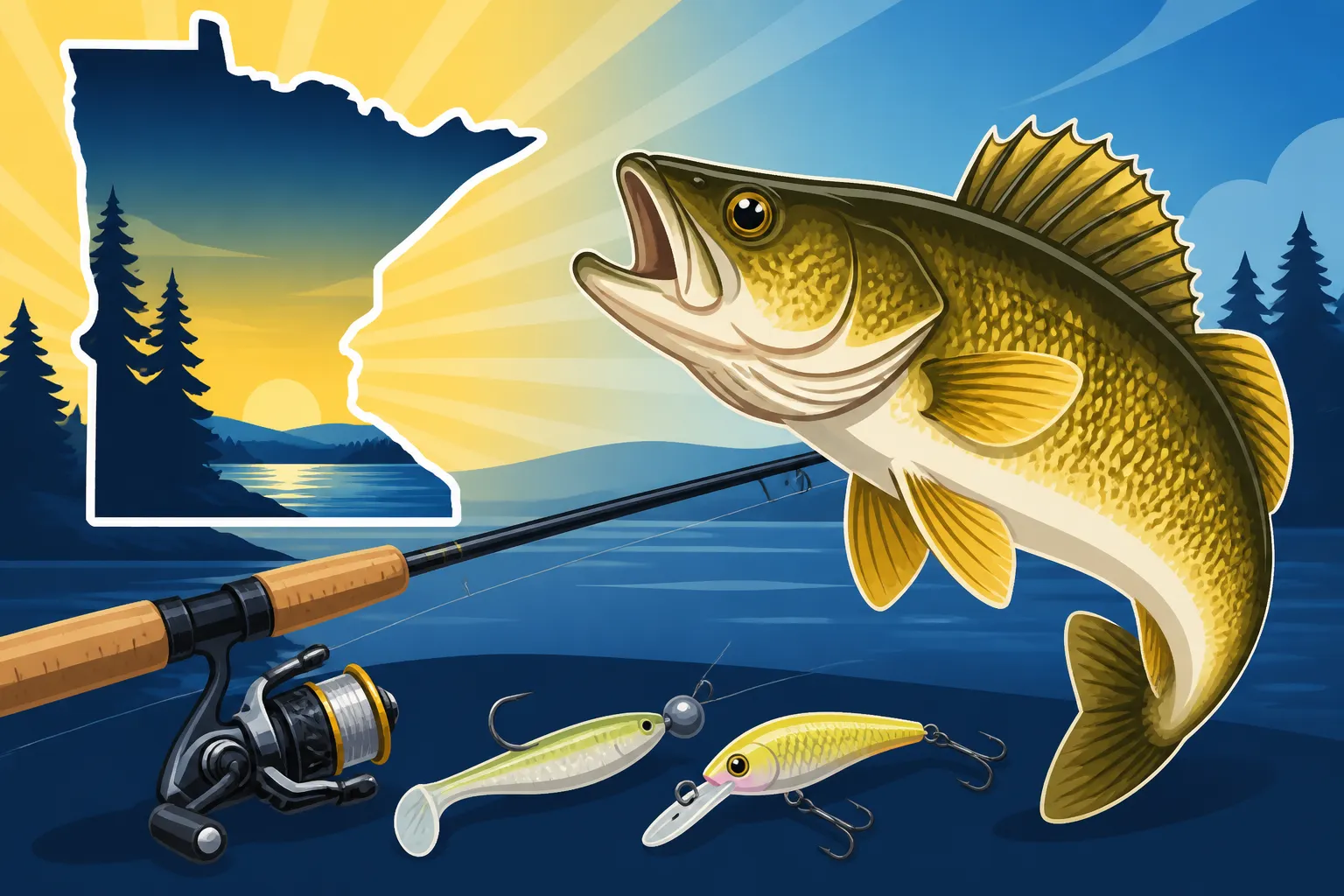
Your rod and reel are the heart of your walleye fishing setup. Choosing the right combination makes a world of difference in your casting, feel, and ultimately, your success. For beginners, versatility is key, allowing you to try different techniques without needing a different rod for each.
Rod Selection: The Backbone of Your Setup
When it comes to walleye rods, you'll hear terms like "action" and "power." Don't let them scare you off! For a versatile beginner setup, we're looking for a spinning rod that balances sensitivity with enough backbone to handle a fighting walleye.
- Length: A 6'6" to 7' medium-light to medium power spinning rod is an excellent starting point. This length provides good casting distance from shore or a boat, while still being manageable for beginners. A 6'6" rod is often preferred for more precise jigging, while a 7' rod offers a bit more casting distance and can handle slightly heavier presentations if you get into light trolling.
- Power: "Medium-Light" to "Medium" power is ideal. Power refers to how much force it takes to bend the rod. A medium-light rod will feel sensitive, perfect for detecting subtle walleye bites, especially when using lighter jigs or live bait. A medium power rod offers a bit more backbone for larger fish or heavier lures, giving you more control during the fight.
- Action: "Fast" or "Extra Fast" action is generally recommended for walleye. Action describes where the rod bends. A fast action rod bends mostly in the top third, providing excellent sensitivity for detecting those light walleye nibbles and quick hook sets. It means the tip is flexible, but the rest of the rod is stiff, which is exactly what you want for feeling those subtle taps and setting the hook quickly before the walleye spits it out.
Think about it like this: if you're standing on the dock at Lake Winnibigoshish or casting from a small boat on Leech Lake, a 7-foot medium-power, fast-action rod will let you cast a decent distance, feel the bottom, and detect the light bite of a walleye mouthing your lure. This general-purpose rod allows you to try jigging with a minnow or even a light slip bobber rig, giving you a taste of different methods without investing in specialized gear right away. For a deeper dive, check out our guide on Best Walleye Rods & Reels.
Reel Choice: Smoothness and Strength
Matching your rod with a reliable spinning reel is crucial. A good reel will provide smooth casting, retrieve, and a consistent drag system, making the entire fishing experience more enjoyable.
- Size: A 2500 or 3000 series spinning reel is perfect for your beginner walleye setup. These sizes balance line capacity with a comfortable weight and retrieve ratio, pairing well with the recommended 6'6" to 7' medium-light to medium rods. You don't want a reel that's too small, as it won't hold enough line, nor one that's too large, which will feel unbalanced on your rod and be cumbersome to cast all day.
- Gear Ratio: A gear ratio around 5.2:1 to 6.2:1 is versatile. This range allows for both slower retrieves, often preferred when jigging or working subtle presentations, and quicker retrieves when you need to take up slack or retrieve a lure quickly to re-cast.
- Drag System: This is arguably the most critical feature on a reel. A smooth, consistent drag is essential for fighting walleye, preventing line breaks and ensuring you can tire out the fish without putting too much strain on your line. Look for reels from reputable brands like Shimano, Daiwa, or Pflueger, which are known for their reliable drag systems. Many of these can be found at stores like Bass Pro Shops or on Amazon. When you're fighting a nice walleye in one of Minnesota's larger lakes, like Lake of the Woods, a smooth drag will let the fish run when it needs to, preventing it from snapping your line and getting away.
A good example of a reliable beginner spinning reel would be something like a Shimano Sienna or a Pflueger President. These reels offer excellent performance for their price point, providing the smoothness and durability you need to get started without a hefty investment. They are robust enough to handle the occasional larger pike or bass that might hit your walleye presentation, ensuring you're not caught off guard.
Line, Lures, and Live Bait: What Goes on the End
Once you have your rod and reel, the next crucial step is equipping them with the right line and understanding what to tie on the end. This is where the rubber meets the road, literally, in terms of connecting you to the fish.
Choosing the Right Fishing Line
Line choice is often overlooked by beginners, but it can make a huge difference in sensitivity, castability, and overall success. For a versatile walleye setup, a combination of braided and fluorocarbon line is often recommended, but monofilament also has its place.
- Main Line (Braided): Start with 10-15 lb braided line. Brands like PowerPro or Sufix 832 are popular choices. Braid has almost no stretch, meaning you’ll feel every subtle bite and every bump on the bottom. It's also incredibly strong for its diameter, allowing you to cast farther and cut through weeds better. The main downside for beginners is that it's visible underwater, which is why we pair it with a leader.
- Leader (Fluorocarbon): Always tie a 6-10 lb fluorocarbon leader to your braided main line. Fluorocarbon is nearly invisible underwater, has good abrasion resistance, and offers some stretch, which can act as a shock absorber. A 2-4 foot leader is typically sufficient. This combination gives you the sensitivity and strength of braid with the stealth of fluorocarbon. Learning to tie a reliable knot, like a Double Uni Knot or an FG Knot, to connect your braid to fluorocarbon leader is a fundamental skill for walleye anglers. Our guide on Best Fishing Line for Walleye (Braid vs Mono vs Fluoro) offers even more detail.
- Monofilament Alternative: For absolute beginners, especially if you're on a very tight budget or simply want to simplify, a good quality 8-10 lb monofilament line can work as a main line. It's affordable, easy to tie knots with, and offers some stretch, which can be forgiving. However, you'll sacrifice some sensitivity compared to braid. If you go this route, consider using a clear or low-visibility green monofilament.
Imagine you're fishing on Lake Mille Lacs. The walleye can be finicky, especially on calm, clear days. Using that braided main line connected to a fluorocarbon leader will give you the edge needed to feel the lightest "tick" of a walleye inhaling your bait, rather than just pulling on it. This combination is a staple for many experienced anglers for a reason.
Key Lures for Minnesota Walleye
While live bait is king for many walleye scenarios, having a few key artificial lures can be incredibly effective, especially when covering water or targeting more aggressive fish. For a beginner, focus on versatile options that imitate common walleye forage.
- Jigs: This is a non-negotiable item for walleye fishing. You'll want an assortment of 1/8 oz to 3/8 oz jigs. Colors like chartreuse, white, pink, orange, and basic black/brown are excellent starting points. Pair these with soft plastic grubs, paddle tails, or minnow imitators. Jigging is one of the most effective ways to catch walleye in Minnesota, whether you're working a weed line or a deep break. For more on this technique, check out Jigging for Walleye: Jig & Minnow Basics.
- Walleye Spinners/Crawler Harnesses: These are particularly effective for trolling or drifting, especially when paired with a nightcrawler. They consist of a spinner blade, beads, and usually two hooks. Popular colors for blades include chartreuse, orange, silver, and gold. Brands like Lindy and Northland Fishing Tackle make excellent spinner rigs. A simple bottom bouncer with a crawler harness is a deadly combination for finding active walleye over flats or along structure.
- Crankbaits: While more advanced for beginners, having a few shallow-diving and medium-diving crankbaits can be great for covering water, especially during specific times of the year or if you find yourself trolling. Colors that imitate perch, shiners, or crawfish are often effective. Rapala Shad Raps and Berkley Flicker Shads are classic choices that consistently catch walleye. If you decide to try trolling, you'll quickly realize how effective these can be. For those ready to explore this, our guide on Trolling for Walleye: Crankbaits & Leadcore has some great insights.
Start with a small, focused selection. A couple of different colored jigs, some spinner rigs, and maybe one or two crankbaits will give you plenty of options without overwhelming your tackle box. Don't feel pressured to buy every color or style you see. Mastering a few presentations is far more important than having a massive, disorganized tackle collection.
The Magic of Live Bait
For many Minnesota walleye anglers, live bait is an indispensable part of the equation. Walleye are often opportunistic feeders, and the natural movement and scent of live bait can be irresistible.
- Minnows: Golden shiners, fatheads, and rainbow shiners are all excellent choices for walleye. Minnows are fantastic for jigging, slip bobber fishing, or fishing on a plain hook under a split shot. They are especially effective in cooler water, like during the walleye opener in May or late fall.
- Leeches: Perhaps the quintessential Minnesota walleye bait. Leeches are incredibly hardy, active in the water, and often out-produce minnows in warmer summer months. They can be fished on jigs, spinner rigs, or under a slip bobber. Jumbo leeches are particularly attractive to larger walleye. If you're going to use leeches, learning How to Fish a Lindy Rig for Walleye is a must.
- Nightcrawlers: Versatile and readily available, nightcrawlers are great for walleye, especially on crawler harnesses or when drift fishing. Walleye will often pick up on the scent trail and vibrations of a struggling nightcrawler.
- Presentation: Regardless of the live bait you choose, presentation is key. Keep your bait lively, hook it appropriately (e.g., through the lips for minnows, through the sucker for leeches), and use just enough weight to get it to the desired depth. Don't be afraid to experiment with different baits until you find what the walleye are biting on that particular day. Our comprehensive guide on Best Live Bait for Walleye (Leeches, Minnows, Crawlers) provides all the details you need.
A common scenario: you're out on a lake like Lake Vermilion, and the walleye are a bit sluggish. Tipping your jig with a lively minnow or leech can often be the difference between a slow day and a successful one. The natural action and scent can entice bites when artificials might be ignored.
| Live Bait Type | Best Use | Key Benefits | Seasonal Effectiveness |
|---|---|---|---|
| Minnows | Jigging, Slip Bobbers | Active, natural flash/scent | Spring, Fall, Cool Water |
| Leeches | Slip Bobbers, Spinner Rigs, Lindy Rigs | Hardy, active, good in warm water | Summer, Warmer Water |
| Nightcrawlers | Spinner Rigs, Bottom Bouncing, Drifting | Readily available, strong scent | All Season, especially Summer |
Accessorize for Success: Beyond the Basics
While your rod, reel, line, and bait are the core, a few essential accessories will significantly enhance your beginner walleye fishing experience. These aren't just "nice-to-haves" but rather practical tools that make landing fish safer and more efficient.
Landing Nets and Pliers
These two items are often overlooked but are absolutely critical for successful walleye fishing. A lost fish at the boat or shore due to poor handling is a heartbreaking experience.
- Landing Net: A good quality, rubber-coated landing net is a must. The rubber coating protects the fish's slime coat (which is vital for their health) and prevents hooks from tangling in the mesh. Look for a net with a decent hoop size (at least 20-24 inches across) and a sturdy handle. This will allow you to safely net even larger walleye. Trying to hand-land a thrashing walleye with treble hooks dangling is a recipe for disaster for both you and the fish. Having a net ready, especially when fishing from a boat on a windy day, is a game-changer.
- Pliers/Forceps: You'll need a good pair of long-nose pliers or fishing forceps for hook removal. Walleye have sharp teeth, and reaching in with your bare fingers is asking for trouble. Pliers allow for quick and safe hook removal, minimizing stress on the fish if you plan to release it. They're also handy for bending hooks or fixing tackle. Brands like Rapala or Berkley offer affordable and durable options. Always keep them easily accessible in your boat or tackle bag.
Imagine you've hooked into a gorgeous 25-inch walleye on Upper Red Lake, and it makes one last surge at the boat. Without a net, your chances of getting it in are dramatically reduced. And once it's in, those pliers become your best friend for safely unhooking it.
Essential Tackle Box Items
Your tackle box doesn't need to be overflowing, but a few key items will make your fishing trips much smoother.
- Bobbers: A selection of slip bobbers and fixed bobbers. Slip bobbers are incredibly versatile for presenting live bait at specific depths, especially in deeper water or when fishing from shore. Fixed bobbers are great for shallower water or presenting lighter baits.
- Weights: An assortment of split shot weights and small bell or bullet sinkers. These are essential for getting your bait down to the strike zone.
- Hooks: A variety of plain shank hooks (e.g., Aberdeen or octopus hooks) in sizes 4, 2, and 1. These are perfect for live bait presentations.
- Swivels and Snaps: Small barrel swivels (size 10-12) prevent line twist, especially when using spinner rigs. Snap swivels make it quick and easy to change lures.
- Line Clippers/Scissors: Essential for cleanly cutting line and tying knots. A small pair of dedicated fishing scissors or fingernail clippers works great.
- Sunscreen and Bug Spray: Essential for comfort during long days on the water, especially during Minnesota summers.
- First Aid Kit: A small kit for minor cuts, hook pokes, or other unexpected incidents. Safety first!
A well-organized, albeit small, tackle box means less fumbling and more fishing. When you're trying to quickly re-rig after a bite or a snag, having your essentials neatly organized in a tackle bag from a brand like Plano will save you a lot of frustration.
Navigational Tools and Safety
While not directly part of your "fishing setup," these items are crucial for safety and finding fish, especially if you're venturing out onto new waters.
- Lake Map/GPS: Even if you don't have a fancy boat electronics system, a good paper lake map or a fishing app on your phone (like Navionics or Fishbrain) can help you identify structure, depth changes, and potential fishing spots. Knowing where to start looking for fish is half the battle. This is particularly useful when exploring large bodies of water like Lake Pepin or Cass Lake.
- Life Vest (PFD): Absolutely non-negotiable if you are in a boat, canoe, or kayak. Even if you're a strong swimmer, unexpected situations can happen. Ensure everyone on board has a properly fitting life vest.
- Weather Awareness: Always check the weather forecast before heading out. Minnesota weather can change rapidly, and being caught in a storm on the water can be dangerous.
- Communication Device: A fully charged cell phone (in a waterproof case) or a VHF radio for emergencies.
Getting familiar with basic navigation, understanding depth contours, and always prioritizing safety will make your walleye fishing adventures in Minnesota much more enjoyable and successful in the long run. Remember, knowing where to find Walleye Fishing in Minnesota: Complete Guide will help you understand the species and its habits better, which is as important as the gear you carry. As you gain confidence, you can explore more advanced techniques covered in resources like How to Catch Walleye in Minnesota (Step by Step).
Beginner's Walleye Tackle Box Checklist
Here’s a simplified checklist to help you get started with assembling your tackle box. This focuses on versatility and essentials, preventing that overwhelming feeling of needing everything right away.
| Category | Item | Quantity | Notes |
|---|---|---|---|
| Rods & Reels | Medium-Light to Medium Power Spinning Rod (6'6" – 7' Fast Action) | 1 | Versatile for jigging, slip bobbers, light casting. |
| 2500-3000 Series Spinning Reel | 1 | Smooth drag, good line capacity. | |
| Line | 10-15 lb Braided Line (Main Line) | 1 spool | Low stretch, sensitive. |
| 6-10 lb Fluorocarbon Line (Leader) | 1 spool | Nearly invisible, abrasion resistant. | |
| Lures & Baits | 1/8 oz – 3/8 oz Jigs | 5-10 | Assorted colors (chartreuse, white, pink, black). |
| Soft Plastic Grubs/Paddle Tails | 1-2 packs | Various colors to pair with jigs. | |
| Walleye Spinner Rigs (Crawler Harnesses) | 2-3 | Assorted blade colors (chartreuse, orange, silver). | |
| Live Bait (Minnows, Leeches, or Nightcrawlers) | As needed | Purchase fresh before each trip; check availability. | |
| Terminal Tackle | Plain Shank Hooks (#4, #2, #1) | 1 pack each | For live bait. |
| Split Shot Weights | 1 assorted pack | For fine-tuning bait depth. | |
| Small Bell/Bullet Sinkers | 1 assorted pack | For heavier presentations or bottom bouncing. | |
| Barrel Swivels (#10-12) | 1 pack | Prevents line twist. | |
| Snap Swivels | 1 pack | Quick lure changes. | |
| Tools | Long-nose Pliers or Forceps | 1 | Safe hook removal. |
| Line Clippers/Small Scissors | 1 | Clean line cuts. | |
| Landing Net (Rubber Coated) | 1 | Safe fish handling. | |
| Safety & Comfort | Small First Aid Kit | 1 | For minor injuries. |
| Sunscreen | 1 | Sun protection. | |
| Bug Spray | 1 | Insect repellent. | |
| Water/Snacks | As needed | Stay hydrated and energized. | |
| Life Vest (PFD) | 1 per person | Crucial for boat safety. |
This list provides a solid foundation. As you gain experience and explore different techniques or specific lakes, you'll naturally adapt and expand your gear to fit your evolving fishing style. Remember, the goal is to enjoy the process and the beauty of Minnesota's waters!
Disclaimer
Fishing regulations, seasons, and limits can change frequently. Always consult the most current Minnesota Department of Natural Resources (DNR) fishing regulations handbook before heading out on the water. This guide is for informational purposes only and should not replace official DNR publications.