Best Gear for Catfish Fishing in Minnesota
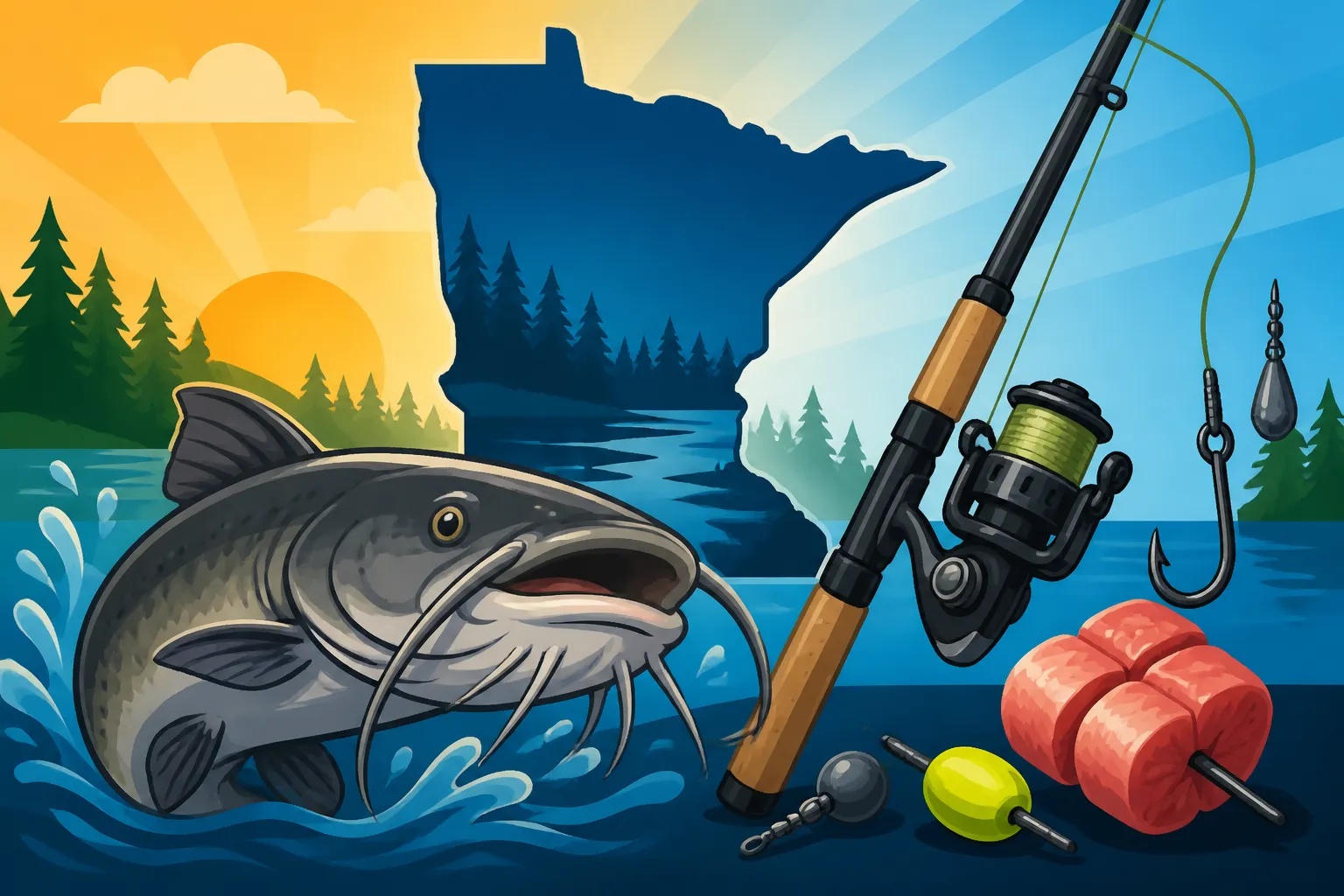
Navigating the world of catfish gear in Minnesota can feel like a real head-scratcher, especially when you’re facing the mighty Mississippi or trying to pull a monster flathead out of a snaggy river bend. It’s not just about any old rod and reel; you need equipment that can stand up to powerful runs and the sheer weight of these hard-fighting fish. This guide is all about cutting through the noise and equipping you with the practical advice you need to confidently tackle Minnesota's fantastic catfish opportunities, from sturdy rods to the right hooks and line.
The Right Rod and Reel Combo for Minnesota Catfish
When it comes to catfish, you’re not looking for finesse. You need power, durability, and the ability to handle heavy baits and even heavier fish. Choosing the right rod and reel combo is the foundation of a successful catfish setup in Minnesota's diverse waters.
Rod Power, Action, and Length
The rods you choose for catfish will depend heavily on the size of the fish you're targeting and the water you're fishing. For instance, chasing respectable channel catfish in a smaller river or lake is a bit different than wrestling a trophy flathead out of the depths of the St. Croix.
For most Minnesota channel catfish angling, a medium-heavy to heavy power rod is an excellent starting point. This provides the backbone needed to set hooks firmly and control a strong fish that’s trying to dive into cover. The action is equally important; a moderate-fast action often strikes the perfect balance. It gives you enough sensitivity to feel those tentative bites but still has a good parabolic bend to absorb powerful head shakes and prevent hooks from pulling out. A rod that bends more through its length, rather than just the tip, is crucial for fighting big fish without putting too much strain on your line or breaking your rod. You can find many excellent options at retailers like Bass Pro Shops that cater specifically to catfish anglers.
When it comes to length, an ideal catfish rod typically ranges from 7 to 9 feet. If you’re primarily casting from shore, a longer rod, say 8 to 9 feet, offers better casting distance, allowing you to reach prime channels and deeper holes. This extra length also helps keep your line out of shoreline brush and obstacles. For boat fishing, a slightly shorter rod, around 7 to 7.5 feet, can be more manageable when fighting fish around your boat or other anglers. The added leverage of a longer rod is also a huge advantage when you're trying to steer a feisty cat away from snags. If you’re interested in specific tactics for these fish, check out our guide on how to catch channel catfish in Minnesota (Step by Step) or our detailed article on how to catch flathead catfish in Minnesota (Step by Step).
Reel Type and Size
The reel is where the brute strength comes into play. It needs to hold enough heavy line and possess a smooth, powerful drag system to wear down a big catfish.
For many Minnesota catfishermen, a heavy-duty spinning reel in the 5000 to 8000 series size is a popular choice, especially for channel catfish. These reels are easy to cast, even with heavy rigs, and their open-face design helps prevent line twist. Look for models with a robust bail, a strong main shaft, and a carbon fiber drag system that can withstand sustained pressure. The key here is line capacity; a reel that can comfortably hold 200+ yards of 20-30 lb monofilament or equivalent braided line is a must.
However, for serious flathead fishing, especially when using heavy live bait or battling in strong currents like those found on the Mississippi River, a conventional baitcasting reel or a robust casting reel is often preferred. These reels offer superior cranking power and a more direct connection to the fish. Sizes in the 20 to 30 series (like an Abu Garcia 6500 or similar) are common, offering immense line capacity and incredibly strong drag systems. They might take a bit more practice to cast without backlashing, but their raw power and control are unmatched for trophy catfish. Remember, a smooth drag isn't just about fighting fish; it's about protecting your line from breaking under sudden surges.
Choosing the Best Fishing Line for Catfish
Your fishing line is the single point of connection between you and that big Minnesota cat. It needs to be strong, abrasion-resistant, and chosen with the specific fishing conditions in mind.
Monofilament Line
Monofilament line has been a staple for catfish anglers for decades, and for good reason. Its inherent stretch acts as a shock absorber, cushioning violent strikes and head shakes, which can be a lifesaver when a big flathead decides to bolt. This stretch can also forgive a slightly too-tight drag setting. Good quality mono also offers excellent knot strength, which is vital when you're cinching down heavy leaders and hooks. It's generally more budget-friendly than braided line, making it a great option for those starting out or looking to spool multiple reels without breaking the bank.
For channel catfish, 15 to 25 lb test monofilament is a solid choice. It's strong enough to handle average channels, yet still allows for decent casting distance. When targeting larger flatheads or fishing in snag-infested areas, you might bump up to 30 or even 40 lb test mono. The downside of mono is its larger diameter for a given strength compared to braid, which can lead to more water resistance in current and less line on your spool. It also has more memory, meaning it can coil up and lead to more tangles, especially on spinning reels if not properly managed. Brands like Berkley Big Game are popular among catfishermen for their strength and abrasion resistance.
Braided Line
Braided line has become increasingly popular in catfish circles, particularly for its incredible strength-to-diameter ratio and lack of stretch. The zero-stretch characteristic of braid provides unparalleled sensitivity, allowing you to feel even the most subtle taps on your bait. This is a huge advantage when fishing at long distances or in deep water, where the stretch of mono can dampen bites. Its thin diameter also cuts through current better, allowing your baits to hold bottom with less weight, and you can pack a lot more line onto your reel.
For general catfish use, 30 to 65 lb test braided line is common. The higher end of that range is perfect for flatheads or fishing in heavy cover. While braided line is incredibly strong, it’s not as abrasion-resistant as some heavy monofilaments or fluorocarbons when rubbed against sharp rocks or submerged timber. For this reason, many experienced anglers will use a heavy monofilament or fluorocarbon leader (see below) tied to their braided main line. Braid can also be more expensive upfront, and tying good, strong knots requires a bit more care. However, the benefits of sensitivity and raw power often outweigh these drawbacks, especially when wrestling a powerful fish in tough conditions. Many reliable braided lines can be found on Amazon, offering good value and performance.
Fluorocarbon Leaders
Even if you choose braided line for your main line, adding a fluorocarbon leader is a smart move for catfish fishing in Minnesota. Fluorocarbon has excellent abrasion resistance, much better than standard monofilament, which is a huge asset when your line is rubbing against rough river bottoms, submerged logs, or rocky structures. It's also nearly invisible underwater due to its refractive index, which can make a difference in clear water, though catfish are generally less line-shy than other species.
A fluorocarbon leader, typically 3 to 6 feet long, is tied directly to your main line (using a strong knot like an FG knot or an Albright knot) and then to your hook or swivel. This provides a strong, tough, and less visible section of line right near your bait, where it matters most. For channel catfish, 20-40 lb test fluorocarbon is appropriate, while for flatheads, you might go up to 50-80 lb test, especially when dealing with their notoriously rough mouths. The peace of mind knowing you have that extra protection against break-offs is priceless.
Essential Terminal Tackle for Catfish Rigs
Beyond the rod, reel, and line, your terminal tackle is what truly connects you to the fish. Choosing the right hooks, sinkers, and swivels is crucial for effective catfishing.
Hooks: Sizing and Types
Selecting the right hook is paramount for successful catfish fishing. You want hooks that are strong enough not to straighten under pressure, sharp enough for quick penetration, and appropriately sized for your bait and target species.
For catfish, especially when using larger natural baits, circle hooks are the preferred choice for many anglers. Circle hooks are designed to hook fish in the corner of the mouth, reducing gut-hooking and making catch-and-release much safer for the fish. This is particularly important for species like lake sturgeon, which share some of the same waters as catfish in Minnesota, and often require special handling. Common sizes range from 5/0 to 10/0, depending on the size of your bait. A 6/0 or 7/0 circle hook is a versatile choice for many channel catfish setups, while larger 8/0 to 10/0 hooks are better suited for big cut baits or live baits for flatheads. Look for heavy-gauge, sharp circle hooks from reputable brands like Gamakatsu or Owner.
While circle hooks are excellent for preventing deep hooking, J-hooks (like Octopus or Kahle hooks) still have their place, especially if you prefer to set the hook manually or are fishing with smaller baits where a quick bite detection and hook set is needed. Sizes generally run from 4/0 to 8/0 for J-hooks. Regardless of type, ensure your hooks are chemically sharpened and strong enough to handle the fight.
Sinkers and Weights
Catfish are bottom feeders, and getting your bait to the bottom and keeping it there, especially in current, is the job of your sinker. The type and weight of your sinker will depend entirely on the water conditions.
For still water or very light current, an egg sinker or a no-roll sinker from 1/2 oz to 2 oz is usually sufficient. Egg sinkers slide freely on your main line, allowing the fish to pick up the bait without feeling the weight, which can be critical for shy biters. A swivel is then tied below the egg sinker to prevent it from sliding down to your hook. No-roll sinkers, as their name suggests, are excellent for keeping your bait stationary on the bottom and are often used in similar conditions.
In rivers with moderate to strong current, like the lower portions of the Minnesota River or sections of the Mississippi, you'll need heavier weights to keep your bait from washing away. Pyramid sinkers (2 oz to 6 oz or more) are fantastic for gripping the bottom in current. Flat-sided no-roll sinkers are also great for this. The exact weight you need will vary daily based on current speed, but it's wise to carry a variety. The general rule is to use just enough weight to hold your bait in place without excess.
Swivels and Leaders
Swivels are small but mighty components of your catfish rig. They prevent line twist, especially when using spinning gear or when your bait tumbles in current. They also act as a connection point for your leader and can help create a snell rig.
Barrel swivels or ball-bearing swivels are both suitable. Ball-bearing swivels offer superior rotation, which is great if you have a bait that tends to spin, but they are also more expensive. For most catfish applications, a heavy-duty barrel swivel (rated 50-80 lb test) will suffice. Ensure the swivel is strong enough to match or exceed your main line's breaking strength.
When discussing leaders, we're talking about the section of line between your swivel and your hook. As mentioned with fluorocarbon, this leader material is often chosen for its abrasion resistance. A common catfish rig is a simple Carolina rig or Santee Cooper rig, where the sinker slides above a swivel, and a leader of about 12-24 inches connects the swivel to the hook. This allows the fish to pick up the bait with minimal resistance. For fishing through debris or in rocky areas, a sturdy snell rig tied directly to your hook can also be very effective.
Other Must-Have Catfish Gear
Beyond the core tackle, there are a few other items that make catfish fishing safer, more comfortable, and ultimately more successful.
Bait and Bait Preparation
Let's be real, catfish are not picky eaters, but they definitely have preferences, and the right bait can make all the difference. For channel catfish, cut bait is a consistent winner. Freshly cut pieces of oily fish like shad, suckers, or even smaller panfish (check local regulations on using game fish as bait) release a strong scent that cats can't resist. Store-bought stink baits, chicken livers, and nightcrawlers are also highly effective, especially for smaller channels.
Flathead catfish, on the other hand, are primarily piscivores and overwhelmingly prefer live bait. Live bluegills, sunfish, or suckers are prime choices, usually rigged with a large circle hook through the back or lips. Transporting and keeping live bait healthy requires a good bait bucket with an aerator. Preparing your bait can be as simple as cutting up a fresh sucker you caught, or it can involve creating your own potent stink bait mixtures. The fresher the bait, often the better, especially for flatheads. Knowing the best live bait for walleye (leeches, minnows, crawlers) can also translate to catching other species like channel catfish.
Landing Gear and Safety
Landing a big catfish, particularly a flathead pushing 30, 40, or even 50 pounds, isn't something you want to do bare-handed. A sturdy, large-hoop landing net is absolutely essential. Look for nets with rubber-coated or knotless mesh, as these are gentler on the fish's slime coat if you plan on releasing it, and they also prevent hooks from getting tangled. A net with a long handle is a huge advantage, especially when fishing from shore or a high bank.
Additionally, a good pair of fishing pliers (like those from Rapala or Gerber) is crucial for safely removing hooks. Catfish have tough, sandpaper-like mouths, and a good grip and leverage from pliers will protect your fingers. Heavy-duty gloves can also be a wise investment to protect your hands from sharp fins, gill plates, and teeth while handling a thrashing fish for a quick photo before release. Practicing catch and release best practices in Minnesota is important for the health of our fisheries.
Rod Holders and Bells
For those long waits between bites, especially when bank fishing or setting multiple lines, rod holders are indispensable. Bank fishing rod holders can be simple spike-style holders that push into the ground, or more elaborate tripod setups. These keep your rods secure and pointed towards the water, ready for a bite. For boat anglers, robust transom-mounted or rail-mounted rod holders keep your lines deployed effectively while trolling or anchored.
And let's not forget the classic catfish bell! These small bells clip onto your rod tip and jingle furiously when a fish takes the bait. They're simple, effective, and let you relax a bit without constantly staring at your rod tip, particularly useful during night fishing for walleye in Minnesota or when casting out for nocturnal cats. You can often find a good selection of these and other accessories at any well-stocked tackle shop.
Here's a quick overview of suggested gear for different Minnesota catfish species:
| Gear Category | Channel Catfish (Avg. 5-15 lbs) | Flathead Catfish (Avg. 15-50+ lbs) |
|---|---|---|
| Rod Power | Medium-Heavy to Heavy | Heavy to Extra-Heavy |
| Rod Action | Moderate-Fast to Moderate | Moderate-Fast |
| Rod Length | 7' – 8' (Shore: 8-9') | 7' 6" – 9' |
| Reel Type | Large Spinning (5000-8000 series) | Conventional/Baitcasting (20-30 series) |
| Main Line | 15-25 lb Mono / 30-50 lb Braid | 30-40 lb Mono / 50-80 lb Braid |
| Leader Material | 20-40 lb Fluoro or Heavy Mono | 50-80 lb Fluoro or Heavy Mono |
| Hook Type | Circle (5/0-7/0), J-hook (4/0-6/0) | Circle (8/0-10/0) |
| Sinkers (Still) | Egg, No-Roll (1/2 – 2 oz) | Egg, No-Roll (1 – 3 oz) |
| Sinkers (Current) | Pyramid, No-Roll (2 – 4 oz) | Pyramid, No-Roll (3 – 8 oz+) |
| Primary Bait | Cut bait, stink bait, chicken liver, worms | Live bait (bluegill, sucker), large cut bait |
| Net Size | Medium to Large Hoop | Extra-Large Hoop, Deep Bag |
This table provides a general guideline, and specific conditions will always dictate slight adjustments. But with these recommendations, you'll be well on your way to a successful day on the water, no matter if you're fishing a quiet lake or the mighty Mississippi.
Disclaimer
Fishing regulations, including seasons, limits, and gear restrictions, can change. Always consult the latest Minnesota Department of Natural Resources (DNR) fishing regulations before heading out on the water. This guide is for informational purposes only and should not be considered a substitute for official DNR regulations.