Best Ice Fishing Rods for Walleye & Panfish
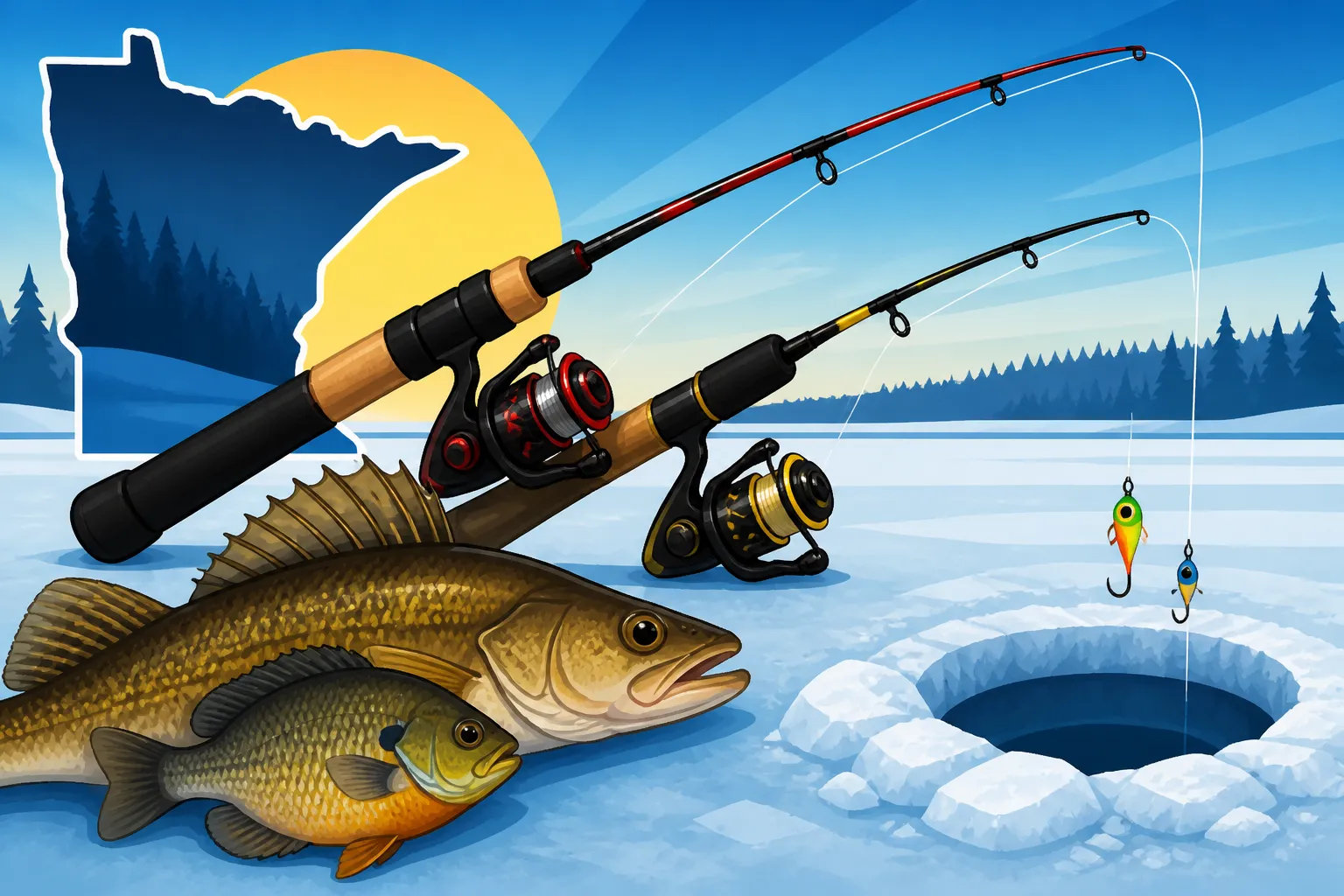
There's nothing quite like the crisp bite of a Minnesota winter, hunkered down on the ice, waiting for that subtle tap that signals a fish on the line. But if you've ever felt frustrated by missed strikes or a rod that just doesn't feel right, you know the struggle. This guide is all about helping you navigate the sometimes overwhelming world of ice fishing rods, ensuring you choose the perfect setup for chasing walleye and panfish on our beloved frozen lakes.
Why the Right Rod Matters for Ice Fishing Success
Let's be honest, standing out on a frozen lake in January, battling the elements, you want every advantage you can get. The right ice fishing rod isn't just a piece of equipment; it's an extension of your senses, designed to transmit even the most delicate take and give you the leverage needed to land that trophy. Without it, you’re often left guessing, missing bites, and frankly, having a less enjoyable experience. It's a game of inches, or rather, ounces of sensitivity.
The Frustration of Mismatched Gear
How many times have you been out there, feeling absolutely nothing, only to see your buddy pull up fish after fish with what seems like less effort? A lot of that comes down to sensitivity, and that's where a mismatched rod can really let you down. Picture this: you're trying to detect a light-biting walleye in 30 feet of water using a stiff, medium-action rod meant for larger game. The subtle thump a walleye makes as it inhales your lure feels more like a phantom vibration or gets lost entirely in the rod's lack of responsiveness. It's like trying to feel a feather drop while wearing thick mittens.
Conversely, imagine hooking into a hefty Mille Lacs walleye on a flimsy, ultra-light panfish rod. While it might be a fun fight, you’re risking a broken rod or snapped line with every head shake. You lack the backbone to set the hook effectively and control the fish, especially when it decides to make a run under the ice. This frustration isn't just about lost fish; it's about losing confidence and enjoyment in a sport we all love. Choosing the correct tool for the job makes all the difference, transforming a potential struggle into a satisfying experience.
Understanding Rod Components
Before we dive into specific recommendations, it's crucial to understand what makes up an ice fishing rod. Unlike open water rods that are often two-piece or more, most ice rods are single-piece designs, which generally translates to better sensitivity and fewer potential points of failure.
- The Blank: This is the core of your rod, typically made from graphite, fiberglass, or a composite blend. Graphite offers superior sensitivity and lightness, allowing you to feel those subtle bites. Fiberglass, while heavier, is incredibly durable and flexible, making it great for absorbing shock and preventing breaks when a big fish suddenly surges. Composites aim to blend the best of both worlds. The quality of the blank material and its taper directly influence the rod's action and power.
- Guides: These are the small rings along the blank that guide your line. On ice rods, you'll often see larger guides near the reel, tapering down to smaller ones towards the tip. The material of the guide inserts (like ceramic or stainless steel) affects how smoothly your line casts and retrieves, and critically, how quickly ice can build up on them in freezing conditions. Some premium rods feature recoil guides that spring back into shape, reducing breakage.
- Handle: The handle provides a comfortable grip and typically houses the reel seat. Common materials include cork, EVA foam, or a combination. Cork is often preferred for its classic feel, lightweight nature, and warmth in cold hands. EVA foam is durable, easy to clean, and provides excellent grip, even when wet. The length and shape of the handle also play a role in balance and comfort, especially when fighting a larger fish or fishing for extended periods.
Ice Fishing Rod Types: What's the Difference?
When you walk into a store like Bass Pro Shops or browse online on Amazon, you'll quickly notice terms like "fast action" or "medium-light power." These aren't just marketing jargon; they're critical descriptors that tell you how a rod will perform. Understanding these distinctions is fundamental to picking a rod that truly enhances your time on the ice. They dictate how much bend the rod has, where it bends, and how much force it can handle.
Rod Action Explained
Rod action describes where the rod bends when pressure is applied. This characteristic is paramount in ice fishing because it affects hook sets, lure presentation, and bite detection.
- Fast Action: A fast-action rod bends primarily in the top third of the blank. This design offers maximum sensitivity, allowing you to feel even the slightest nibble. The stiff backbone of the rod helps transmit vibrations directly to your hand. When you set the hook, the fast tip quickly transfers power, resulting in powerful, instantaneous hook sets. This is ideal for twitching small jigs or spoons for panfish or feeling subtle walleye takes. However, the stiffer blank means less forgiveness; you need to be careful not to overpower smaller lines or risk snapping them on a strong hook set or sudden surge.
- Moderate-Fast Action: This is arguably the most versatile action for many ice anglers, especially when targeting walleye. A moderate-fast rod bends in the top half of the blank, providing a good balance of sensitivity and forgiveness. You still get excellent bite detection, but the deeper bend absorbs some of the shock from a powerful hook set or a thrashing fish, reducing line breaks. It's great for jigging spoons or larger jigs, offering enough backbone to drive a hook home while having enough flex to cushion strong runs.
- Moderate Action: A moderate-action rod bends through the middle of the blank, closer to the handle. This softer action is less sensitive than faster rods but offers incredible forgiveness and parabolic bend, meaning it distributes stress more evenly along the blank. It's often favored for deadsticking with live bait, where the fish needs to take the bait and run without feeling too much resistance, or for techniques where a softer presentation is desired. While it might not be your first choice for jigging tiny panfish lures, it can be excellent for larger presentations or when targeting bigger, harder-fighting fish like pike or lake trout where sensitivity is less critical than shock absorption.
Rod Power for Different Species
Rod power, often referred to as "flex" or "taper," describes how much force it takes to bend the rod. It essentially tells you how strong the rod is and what size of line and lure it’s designed to handle. Using a rod with the wrong power rating can lead to difficulty casting (or dropping) your lure, poor hook sets, or worse, broken equipment.
- Ultra-Light (UL): These rods are incredibly thin and flexible, designed for the lightest lines (1-4 lb test) and the smallest lures. They are the ultimate choice for targeting tiny panfish like bluegill or small crappie with micro-jigs and tear drops. The extreme sensitivity of an ultra-light rod can make even a small fish feel like a giant, adding to the fun. They excel at detecting the most subtle bites.
- Light (L): A step up from ultra-light, light-power rods are still highly sensitive but offer a bit more backbone. They are perfect for crappie, perch, and smaller walleye, handling lines in the 2-6 lb range. If you're using slightly larger jigs or small spoons, a light power rod gives you more control and a better chance of landing a respectable fish without feeling overpowered. They are a good all-around choice for active panfishing.
- Medium-Light (ML): This is a fantastic all-purpose power for many Minnesota ice anglers, especially if you're primarily chasing walleye but might encounter a decent crappie or jumbo perch. Medium-light rods typically handle 4-10 lb line and a wider range of lures, from spoons to jigging raps. They offer that crucial blend of sensitivity for detecting walleye bites and enough power to set the hook and control a fighting fish. For many, a medium-light, moderate-fast action rod is the sweet spot for versatile walleye and larger panfish applications.
- Medium (M): When you're consistently targeting larger walleye, northern pike, or even smaller lake trout through the ice, a medium-power rod is often the way to go. These rods are built for lines from 6-12 lb test and heavier lures. They provide substantial backbone for aggressive hook sets and serious fish-fighting power. While you lose some of the subtle sensitivity found in lighter rods, the trade-off is the ability to confidently tackle bigger fish that could otherwise overpower lighter gear.
Specific Rod Recommendations for Walleye Anglers
Walleye, with their notorious light bites and powerful runs, demand a rod that can balance sensitivity with backbone. Whether you're deadsticking a minnow, ripping a spoon, or jigging a Rapala, the right rod makes all the difference in connecting with these elusive fish. Many seasoned Minnesota ice anglers have a dedicated setup for walleye, often different from their panfish gear, because of these unique demands.
Best Rod Actions & Powers for Walleye
For walleye, the name of the game is often detection and control. You need to feel that characteristic "thump" or subtle pressure, and then have the power to drive a hook through a bony mouth.
- Medium-Light, Moderate-Fast Action: This combination is arguably the quintessential walleye ice rod. The moderate-fast action provides excellent sensitivity through the tip, allowing you to feel light bites without being overly stiff. The medium-light power offers enough backbone to confidently set the hook and handle most walleye you’ll encounter in Minnesota’s popular lakes like Leech Lake or Lake of the Woods. It's versatile enough for jigging spoons, rattle baits like a Rapala Rippin' Rap, and even larger soft plastics. Brands like St. Croix (with their Mojo Ice series) and Fenwick (often seen at your local retailer) are known for producing excellent rods in this category.
- Medium, Fast Action: When you’re targeting larger walleye, especially on big lakes like Mille Lacs, or if you prefer a more aggressive jigging style, a medium-power, fast-action rod can be a real workhorse. The fast action helps you transmit every vibration from your lure and detect aggressive strikes. The medium power gives you significant leverage for strong hook sets and muscling bigger fish out of heavy cover or off the bottom. This setup is particularly effective when working heavier jigging spoons or larger soft swimbaits, where a powerful snap from the wrist is needed to impart action. This rod is less about delicate finesse and more about commanding control.
- Light, Moderate Action (for Deadsticking): While not for active jigging, a light-power, moderate-action rod is perfect for deadsticking with live minnows. The softer action allows a walleye to pick up the bait and swim off without feeling immediate resistance, which can be critical for picky biters. The tip will bend slowly and deliberately when a fish takes the bait, giving you time to react without spooking them. Pair this with a small spinning reel and a bait feeder option for ultimate control. This is where patience truly pays off, and the rod becomes more of a signaling device than an active tool. For this technique, a longer rod (around 32-36 inches) can also be beneficial, providing more separation between your line and the hole, which can be critical for wary fish.
Ideal Rod Lengths & Handle Styles for Walleye
Rod length and handle design might seem like minor details, but they significantly impact your comfort, control, and overall effectiveness on the ice.
- Rod Length: Most walleye ice rods fall in the 28-36 inch range.
- Shorter Rods (28-32 inches): These are great for fishing inside smaller portable shelters or for anglers who prefer to sit closer to the hole. They offer excellent maneuverability and quick hook sets due to less "swing" when lifting. If you're in a tight space or frequently moving from hole to hole, a shorter rod is practical. However, they provide less leverage for fighting bigger fish and less forgiveness in terms of shock absorption.
- Longer Rods (34-36+ inches): A longer rod provides more leverage, which can be a huge advantage when battling bigger walleye or when fishing in deeper water. The added length acts as a shock absorber, helping to prevent line breaks on strong runs. They also keep your line further away from the edge of the ice hole, reducing line abrasion. These are often preferred for larger permanent ice houses or when fishing outside in the open. They may feel a bit unwieldy in small flip-over shelters, but the fighting advantage is undeniable.
- Handle Styles:
- Split Grip Cork Handles: These are very popular, offering a lightweight feel and good sensitivity. The exposed blank in the split grip allows for direct contact with the rod, transmitting vibrations straight to your hand. Cork is also comfortable and relatively warm to the touch.
- Full Grip EVA Foam: EVA foam handles are durable, easy to clean, and provide excellent grip, even when wet or slimy. They can offer a slightly softer feel than cork, which some anglers prefer for extended fishing sessions. They might feel a bit colder than cork, but their robustness is a big plus. Many modern rods combine cork and EVA for specific ergonomic benefits.
- Reel Seats: Look for a comfortable and secure reel seat that holds your spinning reel firmly. Some ice rods have minimalist tape-style reel seats to save weight and maximize blank exposure for sensitivity, while others use traditional locking seats. For walleye, a secure locking reel seat is generally preferred to prevent any play when battling a strong fish.
Specific Rod Recommendations for Panfish Anglers
Ah, panfish! The bread and butter of many Minnesota ice anglers. Whether you're after jumbo crappie, schooling perch, or feisty bluegill, these smaller species offer non-stop action and are fantastic table fare. But don't let their size fool you; they can be incredibly finicky, requiring a delicate touch and specialized tackle to consistently put them on the ice.
Best Rod Actions & Powers for Panfish
Panfish often have incredibly soft bites, sometimes just breathing on the bait. This makes extreme sensitivity paramount.
- Ultra-Light, Fast or Moderate-Fast Action: This is the go-to setup for most dedicated panfish anglers. The ultra-light power is designed for whisper-thin lines (1-3 lb test) and tiny jigs, often tungsten. The fast or moderate-fast action ensures you feel every subtle tap, even when a bluegill just "mouths" the bait. This combination makes even a small sunfish feel like a worthy adversary, amplifying the fun. A fast action here helps with quick, upward hook sets which are often necessary for small-mouthed panfish. Look for models from companies like Thorne Bros., known for their custom ice rods, or brands like Clam and Frabill which offer excellent production options available at retailers like Bass Pro Shops.
- Light, Moderate-Fast Action: If you’re often targeting larger crappie or jumbo perch, especially in deeper water where a slightly heavier jig might be needed, a light-power, moderate-fast action rod offers a good compromise. You still get fantastic sensitivity, but the increased backbone provides a bit more control over larger panfish, reducing the chances of them tearing off or tangling in weeds. This is a great choice when you’re not sure if you’ll encounter smaller bluegill or a school of bigger crappie. It's also more forgiving for slightly heavier lines (say, 4 lb test) if you're worried about breaking off on a snag or an unexpected walleye.
- The "Noodle" Rod (Ultra-Light, Moderate/Slow Action): While less common for active jigging, a true "noodle" rod with an ultra-light power and very slow, parabolic action can be deadly for extremely finicky crappie or deadsticking small minnows. The entire rod bends, acting as a giant spring bobber, detecting the lightest bites without giving resistance. It's incredibly fun to fight fish on, though hook sets require a bit more finesse. This is a specialized tool, but for specific conditions, it can outfish anything else. This style of rod might be something you'd find from custom rod builders or specialized shops, rather than mainstream retailers, due to its niche nature.
Micro-Jigging and Spring Bobber Setups
Panfishing has become an art form, especially with the rise of micro-jigging and the use of spring bobbers. These techniques elevate sensitivity to an entirely new level.
- Micro-Jigging Rods: These are typically ultra-light power, fast action rods, often very short (24-28 inches), designed to impart tiny movements to even the smallest tungsten jigs. The idea is to have a rod that allows for maximum control over these miniature presentations. Think of a surgeon's scalpel – precise and delicate. Many anglers use these rods without a traditional spring bobber, relying solely on the rod tip for bite detection. This technique is deadly for bluegill and crappie in shallower water or when they are suspended.
- Spring Bobber Setups: A spring bobber is a small, ultra-sensitive wire spring that attaches to the tip of your rod. It acts as an indicator, amplifying the smallest movements of your line and lure. For extremely light bites, a spring bobber can be invaluable.
- Integration: While you can add a spring bobber to almost any rod, they pair best with ultra-light or light-power rods, especially those with a slightly stiffer tip section where the spring can truly shine. The spring absorbs the minimal weight of the micro-jig, allowing it to hang perfectly vertical and respond to the faintest contact.
- Advantages: They practically eliminate the guesswork of "is that a bite or just the line settling?" They allow you to use an otherwise stiff-tipped rod for finesse presentations.
- Disadvantages: They can sometimes tangle with your line, especially in windy conditions, and add an extra component that can break or freeze up. However, for serious panfish anglers, the benefits often outweigh these minor inconveniences. You'll find a wide array of spring bobbers available from brands like HT Enterprises or Berkley, often stocked alongside ice rods at places like Bass Pro Shops or via online shopping on Amazon.
Key Features to Look For in an Ice Fishing Rod
Beyond action and power, several other features contribute to a rod's overall performance, durability, and comfort. Ignoring these details can lead to frustration on the ice, especially when dealing with sub-zero temperatures and slippery conditions.
Blank Material & Sensitivity
The material of your rod blank is the biggest factor in how sensitive it feels and how durable it is.
- Graphite: The undisputed champion for sensitivity. Graphite blanks are lightweight and excellent at transmitting vibrations from your lure and from fish bites directly to your hand. They allow you to feel the texture of the bottom, the subtle thud of a lure hitting a rock, and the most delicate take. However, graphite can be more brittle than fiberglass, especially in extreme cold, making it susceptible to snapping if high-sticked or hit sharply against the edge of the hole. For pure bite detection, especially for walleye and finicky panfish, high-modulus graphite is preferred.
- Fiberglass: The workhorse material. Fiberglass rods are incredibly durable, flexible, and often more affordable. They excel at absorbing shock, making them great for fighting larger, harder-pulling fish without fear of snapping the rod. The trade-off is reduced sensitivity; you won't feel as many subtle taps as you would with graphite. Fiberglass is a good choice for deadsticking, beginner setups, or when durability is a primary concern over ultra-finesse.
- Composite Blanks: Many manufacturers now blend graphite and fiberglass to create composite blanks. These aim to offer a balance, providing some of the sensitivity of graphite with the durability and flexibility of fiberglass. A good composite rod can be a versatile option, giving you decent bite detection and robust performance without breaking the bank. For a budget-conscious angler, a well-designed composite rod can be a fantastic all-around option.
Reel Seats and Guides
These seemingly small details can have a huge impact on your ice fishing experience, especially when temperatures plummet.
- Reel Seats:
- Standard Locking Reel Seats: These are secure and reliable, holding your spinning reel firmly in place. They prevent the reel from twisting or coming loose, which is crucial when battling a strong fish.
- Tape-Style Reel Seats: Some ultra-light panfish rods forgo a traditional reel seat in favor of a minimalist design where the reel foot is taped directly to the blank. This reduces weight and maximizes blank exposure, increasing sensitivity. While effective, it's less convenient for swapping reels and requires re-taping.
- Integrated Reel Seats: Some rods feature a molded handle with an integrated reel seat, offering a seamless and ergonomic design. The key is to ensure the seat holds your chosen reel securely without any wobble.
- Guides:
- Size: Larger guides, especially the stripping guide closest to the reel, are important to prevent ice build-up. A frozen guide can impede line flow, making it difficult to jig and detect bites, and can even fray your line.
- Material: Guide inserts made from durable, low-friction materials like stainless steel, zirconium, or silicon carbide (SiC) are preferred. These materials reduce friction on your line, allowing for smoother jigging and reducing wear. Stainless steel guides are durable and less prone to freezing than ceramic in sub-zero conditions, though they may not be as smooth.
- Number of Guides: More guides generally mean better distribution of stress along the rod blank when fighting a fish, but too many tiny guides can be a nightmare for ice build-up. A good ice rod strikes a balance, offering enough guides for even load distribution without becoming an ice-collection point.
Handle Materials and Ergonomics
Your hands are constantly in contact with the rod, so the handle's comfort and warmth are vital.
- Cork: Natural cork handles are lightweight, provide a classic feel, and are relatively warm to the touch. They also offer excellent grip, even when wet. Good quality cork is durable, but cheaper cork can chip or crumble over time. Many anglers prefer the tactile feedback of cork for enhanced sensitivity.
- EVA Foam: Ethylene-vinyl acetate (EVA) foam handles are very durable, resistant to moisture, and easy to clean. They offer a comfortable, soft grip and are generally warmer than bare aluminum or plastic. They might not transmit vibrations quite as crisply as cork, but their practical benefits are undeniable, especially for those long days on the lake.
- Skeletal/Exposed Blank Handles: Some high-end rods feature designs where portions of the blank are exposed through the handle. This maximizes contact with the blank, directly transferring vibrations to your hand for the ultimate sensitivity. These are fantastic for feeling the most subtle bites but might feel colder in extreme conditions.
- Ergonomics: Consider how the handle fits your hand. A comfortable handle reduces fatigue, especially during extended fishing sessions. Some handles are contoured for a better grip, while others are more cylindrical. A longer handle can offer better leverage for fighting bigger fish, while a shorter handle is better for tight spaces. The overall balance of the rod and reel combination is also critical; a well-balanced setup feels lighter and reduces strain on your wrist.
Pairing Your Rod with the Right Reel and Line
A great ice fishing rod is only part of the equation. To truly optimize your setup, you need to pair it with a reel that balances perfectly and a line that complements your target species and fishing style. Think of it like a symphony; all the instruments need to work in harmony to produce the best result.
Matching Reel Size and Balance
The right reel isn't just about holding line; it's about balance, smooth operation, and durability in freezing conditions.
- Reel Size: For ice fishing, smaller spinning reels are generally preferred.
- 500-1000 Series: These are ideal for panfish and smaller walleye setups. They are lightweight, balance well on shorter ice rods, and offer sufficient line capacity for typical ice fishing depths. The smaller spool size also helps to minimize line twist, a common nuisance when using light line and small lures. A Best Ice Fishing Rods for Walleye & Panfish article would certainly recommend these smaller reels for panfish.
- 1000-2000 Series: For larger walleye or if you prefer a bit more retrieve power and line capacity, a 1000 or 2000 series reel is a solid choice. They provide a more robust drag system and can handle slightly heavier lines without issue. The key is to find a reel that balances well with your chosen rod. When the reel is mounted, the rod should feel balanced just forward of your hand, not tip-heavy or butt-heavy. Brands like Daiwa, Shimano, and Pflueger offer excellent spinning reels that perform reliably in cold weather. You can often find great deals on these at Bass Pro Shops or online platforms like Amazon.
- Features to Look For:
- Smooth Drag: A reliable, smooth drag system is critical to prevent line breaks, especially when fighting a strong fish on light line.
- Anti-Reverse: Instant anti-reverse prevents the reel handle from backing up, allowing for immediate hook sets.
- Cold Weather Performance: Ensure the reel is designed or performs well in cold temperatures. Cheaper reels can seize up or become sluggish in sub-zero conditions, making fishing a frustrating chore. Look for reels with quality internal components and minimal exposed grease that can stiffen in the cold.
Line Selection for Sensitivity and Strength
Choosing the right fishing line for ice fishing is just as important as your rod and reel. It's the direct connection between you and the fish, so it needs to be sensitive, strong, and resistant to cold-weather issues. Check out our guide on Best Line for Ice Fishing (Walleye & Panfish) for a deep dive.
- Monofilament (Mono):
- Pros: Inexpensive, stretchy (which can be forgiving for aggressive hook sets or strong runs), and generally less visible than braided line. It also absorbs less water than braid, reducing ice build-up.
- Cons: Stretchy nature means reduced sensitivity, making it harder to feel subtle bites. It can also retain "memory" from the spool, leading to coils and tangles.
- Best Use: Deadsticking, live bait applications where stretch is desired, or for beginner panfish setups where forgiveness is key.
- Fluorocarbon (Fluoro):
- Pros: Nearly invisible underwater, low stretch (better sensitivity than mono), and highly abrasion-resistant. It sinks faster than mono, helping lures get down quickly.
- Cons: More expensive than mono, can be stiffer, and sometimes prone to coiling, especially in colder temperatures.
- Best Use: A fantastic choice for walleye and panfish where stealth and sensitivity are crucial. Many anglers use a short fluorocarbon leader with braided main line.
- Braided Line (Braid):
- Pros: Zero stretch for maximum sensitivity, incredible strength-to-diameter ratio, allowing you to use lighter test lines for more feel and better lure action. It's excellent for feeling every twitch of your lure and every bump from a fish.
- Cons: Highly visible (requires a fluorocarbon leader), absorbs water (leading to significant ice build-up on guides and spool), and can be challenging to tie small knots.
- Best Use: The top choice for active jigging for walleye and panfish when paired with a fluorocarbon leader. The superior sensitivity helps you detect those light winter bites. Many anglers will use 4-6 lb braid for panfish and 6-10 lb braid for walleye.
| Feature / Species | Walleye Fishing Rods | Panfish Fishing Rods |
|---|---|---|
| Power | Medium-Light to Medium | Ultra-Light to Light |
| Action | Moderate-Fast to Fast | Fast to Moderate-Fast, sometimes Moderate (Noodle) |
| Length | 28-36 inches (longer for leverage, shorter for shelters) | 24-32 inches (shorter for precision, longer for reach) |
| Blank Material | High-modulus graphite or sensitive composite | High-modulus graphite is preferred |
| Guides | Larger, durable inserts (e.g., stainless steel, SiC) | Smaller, durable inserts (e.g., stainless steel) |
| Handle | Cork or EVA, often split grip, secure reel seat | Cork or EVA, often minimalist, can be tape-style |
| Reel Size | 1000-2000 series spinning reel | 500-1000 series spinning reel |
| Line Type | Braid with fluoro leader, or straight fluorocarbon | Braid with fluoro leader, or straight fluorocarbon/mono |
| Typical Lures | Jigging spoons, Rapalas, larger jigs, deadsticks | Micro-jigs, tear drops, small spoons, plastics |
| Sensitivity | High (to feel subtle walleye "thump") | Extreme (to feel lightest panfish "breaths") |
Remember, while a rod designed for a specific species will offer optimal performance, having a versatile setup can save you money and storage space. Many anglers opt for a good medium-light, moderate-fast rod as their primary walleye rod, which can also handle bigger crappies in a pinch. For serious panfish fanatics, however, a dedicated ultra-light setup is almost a necessity. Regardless of your choice, a well-matched rod, reel, and line will significantly improve your chances and enjoyment on the hardwater. Consider pairing your new rod with other essential gear from our Best Ice Fishing Gear for Minnesota (2027 Guide) to be fully prepared for your next outing. Also, learning Ice Fishing in Minnesota: Complete Beginner-to-Pro Guide can provide further insights.
Disclaimer
Always consult the official Minnesota Department of Natural Resources (DNR) regulations before heading out on the ice. Fishing rules and limits can change seasonally and by lake. This guide is for informational purposes only and does not supersede state fishing regulations.