Best Ice Augers for Minnesota: Electric vs Gas
There's nothing quite like the thrill of chasing fish on hard water in Minnesota, but that magic can quickly turn to frustration if your ice auger isn't up to the task. Whether you're wrestling with a stubborn pull cord in sub-zero temperatures or your battery dies midway through a hot bite, choosing the right auger is critical for a successful outing. This comprehensive guide will slice through the confusion, comparing electric and gas-powered ice augers to help you find the perfect one for Minnesota's diverse ice fishing conditions.
The Enduring Debate: Electric vs. Gas Ice Augers
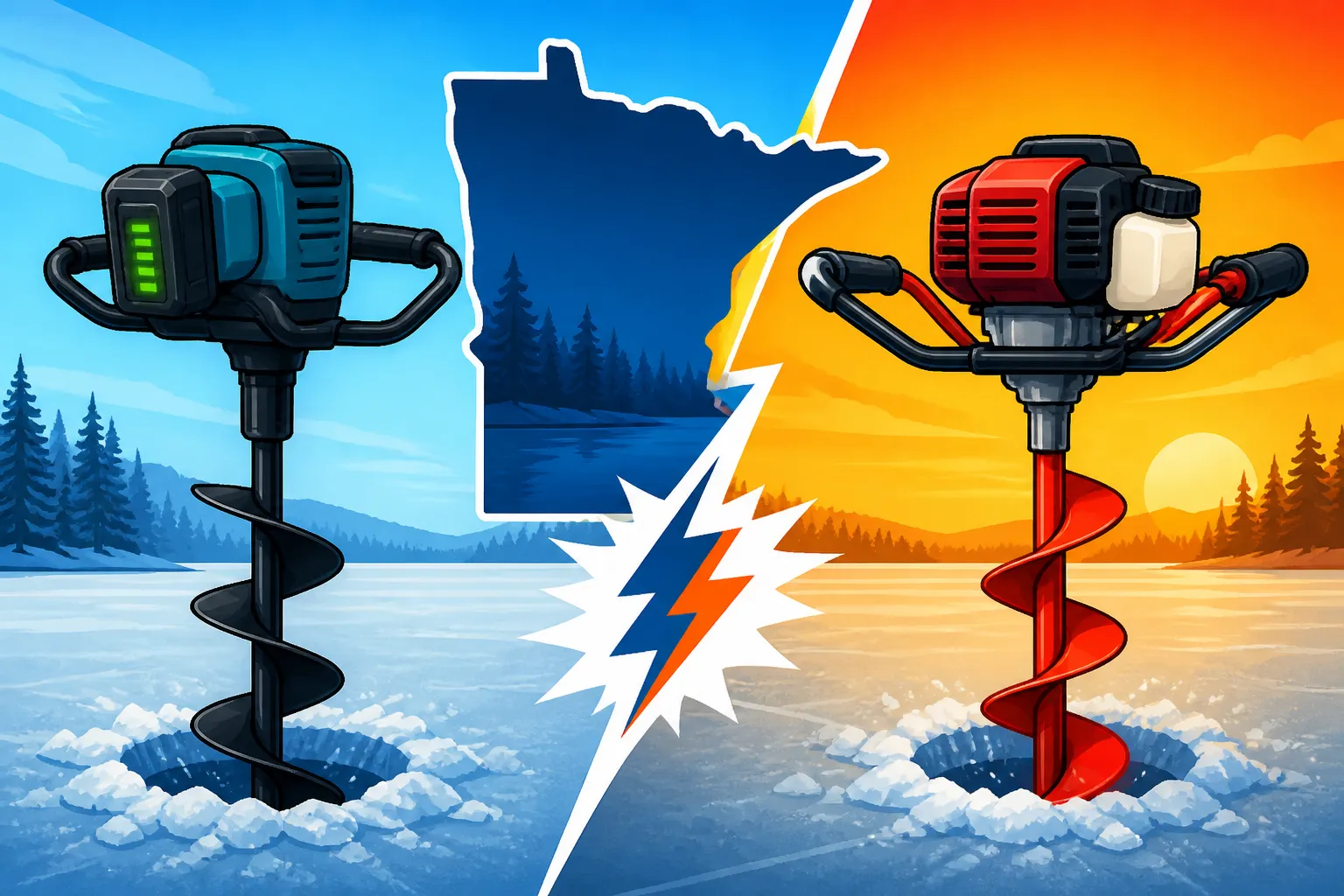
For generations, the rumble of a gas auger was as synonymous with ice fishing as a thermos of hot coffee. But times, and technology, have changed. Electric augers have carved out a significant niche, offering a compelling alternative that challenges the old guard. Deciding between the two often boils down to balancing power, convenience, and the unique demands of your preferred fishing style.
The Traditional Powerhouse: Gas Augers
Ah, the familiar scent of two-stroke exhaust mingling with the crisp winter air – a true sign that ice fishing season is in full swing for many of us. Gas augers have been the workhorses of the ice for decades, and for good reason. Their primary advantage lies in sheer, unadulterated power and the ability to run all day, or even all weekend, with just a few refills of fuel. When you're facing down two or three feet of solid Lake of the Woods ice, or even more on a massive body like Lake Superior, a gas auger feels like the only reliable option. They chomp through thick, dirty, or refrozen ice with a powerful roar, making short work of even the most challenging conditions. You don't have to worry about battery levels; as long as you have fuel, you have power. This reliability is especially comforting for those long trips up north where charging options are scarce or when you’re venturing far from the truck in a permanent ice house. They are typically heavier than their electric counterparts, which can be a drawback for anglers who like to move around a lot, but for those who set up camp and stay put, that weight often translates to stability and power.
The Modern Revolution: Electric Augers
Enter the electric auger, a game-changer that has quickly won over a vast number of Minnesota anglers. The first thing you'll notice is the blissful silence. No more yelling over a roaring engine or startling every fish within a hundred-yard radius. Electric augers offer a stealthy approach, which can be a real advantage when targeting wary walleye or panfish in shallower waters. Then there's the convenience: no mixing gas and oil, no fumes to deal with in your portable shelter, and no frustrating pull-cord starts in freezing temperatures. Just press a button, and you're drilling. They're generally lighter than gas models, making them a fantastic choice for the run-and-gun angler who likes to drill dozens of holes in a day, covering a lot of water to find active fish. Modern lithium-ion batteries provide impressive power and run time, allowing for many holes on a single charge, especially with the newer, more efficient brushless motors. While they might not quite match the sustained brute force of a large gas auger for sheer volume of holes on exceptionally thick ice, for most everyday Minnesota ice fishing scenarios, they are more than capable.
The Hybrid and Manual Alternatives
While the electric versus gas debate dominates, it's worth remembering that other options exist, each with its own niche. Propane augers, like those offered by Eskimo, represent a kind of hybrid solution. They offer many of the clean-burning, fume-free advantages of electric augers but with the extended run time of a fuel-based engine. No mixing oil, easy starting, and generally quieter than gas. They can be a great middle-ground for those who want power without the traditional gas fuss.
Then there are hand augers, the ultimate lightweight and silent option. For early and late ice, or targeting smaller panfish on lakes with moderate ice thickness, a good hand auger is incredibly efficient and offers a fantastic workout. They're also an essential backup for any power auger. Many anglers, especially those just getting into the sport, start with a hand auger before investing in something powered.
Finally, the drill attachment augers have surged in popularity. These systems combine a specialized auger bit with a heavy-duty cordless power drill. They offer incredible portability and many of the quiet, fume-free benefits of electric augers at a potentially lower entry cost if you already own a suitable drill. Brands like StrikeMaster offer systems like the Lite-Flite Lazer Drill Unit, which converts your existing cordless drill into a powerful ice auger. They're excellent for moderate ice and a good number of holes, but battery life is dependent on your drill's battery and performance can wane in extreme cold or very thick ice.
Understanding Minnesota's Ice Fishing Demands
Minnesota isn't just the "Land of 10,000 Lakes"; it's also the land of endlessly varied ice conditions, fish species, and fishing styles. What works perfectly for drilling a few holes for crappies on a smaller lake might be completely inadequate for punching through three feet of ice on Upper Red Lake in pursuit of jumbo walleye. Understanding these local demands is key to picking an auger that won't leave you stranded or frustrated.
Ice Thickness and Species
The amount of ice you typically encounter throughout the season is perhaps the most significant factor in your auger choice. Early in the season, when we're talking about 6-12 inches of ice for those initial runs for panfish or shallow walleye, almost any auger will do the trick, even a good hand auger. But as winter digs in, especially by January and February, ice thickness can easily reach two to three feet, and sometimes even more, particularly on larger, exposed lakes. Imagine trying to consistently drill through that kind of ice with an underpowered unit – it's a recipe for exhaustion and frustration.
Consider the species you’re targeting, too. If you’re primarily focusing on smaller panfish like bluegills or crappies, an 8-inch auger is usually sufficient. But if you're dreaming of trophy northern pike, lake trout, or strapping Lake Sturgeon, you’ll want a 10-inch hole to comfortably land those giants, which demands more power from your auger. For the dedicated walleye angler, a 6-inch or 8-inch hole is standard, offering a good balance between drilling speed and fish-landing capability. When looking for the best spots and tactics, our guide on how to Catch Walleye Through the Ice in Minnesota offers valuable insights, and you'll want an auger that can get you to those spots efficiently.
Portability and Mobility Needs
Are you the kind of angler who likes to "run and gun," drilling dozens of holes, constantly moving to find active schools of fish? Or do you prefer to set up a comfortable portable shelter, like those from Clam or Otter, and stay put for hours, perhaps even overnight? Your mobility needs heavily influence the ideal auger weight and power source.
If you're often dragging a lightweight sled or carrying your gear by hand, every pound matters. An electric auger, typically lighter than a comparable gas model, becomes a clear winner for the highly mobile angler. Imagine lugging a heavy gas auger, a portable ice shelter, tackle, and a bucket across a half-mile of snow-covered ice on a windy day – it quickly becomes a grueling task. However, if you're pulling a larger sled with an ATV, snowmobile, or driving a truck directly onto the ice, then the weight of the auger becomes less of a concern, and the sustained power of a gas unit might be more appealing. For those who use permanent ice houses or larger wheelhouses, the quiet, fume-free operation of an electric or propane auger is a huge advantage, allowing you to drill holes inside your shelter without choking on exhaust fumes.
Cold Weather Performance
Minnesota winters are legendary for their brutal cold. This extreme cold directly impacts auger performance, particularly for both gas and electric models. Gas augers can be notoriously difficult to start when the mercury plummets. Cold-soaked engines, stiff recoil cords, and thick oil can make starting a chore, requiring multiple pulls and sometimes even a warm-up period. It’s not uncommon to see anglers struggling with their gas augers in the morning when temperatures are well below zero.
Electric augers, while offering instant start, also face challenges in extreme cold. Lithium-ion batteries perform less efficiently in freezing temperatures, meaning your battery capacity can diminish significantly. What might give you 50 holes in mild conditions might only give you 30 in deep cold. Keeping spare batteries warm in an insulated bag or inside your jacket is a common tactic to maximize their performance. When you're out ice fishing in Minnesota, you're battling the elements as much as you are the fish, and your auger needs to be able to stand up to those conditions. Our comprehensive guide on Ice Fishing in Minnesota: Complete Beginner-to-Pro Guide covers many of these cold-weather considerations.
Deep Dive into Electric Ice Augers
Electric ice augers have revolutionized ice fishing, moving from niche curiosities to mainstream essentials. Their evolution has been rapid, with significant advancements in battery technology, motor efficiency, and blade design. They offer a host of benefits that make them incredibly attractive, but also a few considerations to keep in mind, especially when fishing in Minnesota's challenging conditions.
Key Features and Benefits
The most celebrated feature of electric augers is undoubtedly their quiet operation. Picture this: you've finally found a prime spot on a quiet bay, marking fish on your flasher. With a gas auger, drilling holes means a loud, disruptive roar that can spook shallow-water fish for a considerable radius. An electric auger, on the other hand, makes minimal noise, allowing you to sneak up on those wary fish and drill holes right over them without sending them scattering. This stealth factor is huge, especially when pursuing sensitive species or fishing in areas with heavy fishing pressure.
Another significant benefit is the absence of fumes. This is a massive advantage, particularly if you fish inside a portable ice shelter or a more permanent structure. No more headaches from exhaust, no more smelling like a gas station, and a much safer environment for you and your fishing buddies. The instant start feature is also a dream come true. Forget the countless pulls of a recoil cord on a frigid morning; with an electric auger, it's often just the press of a button or a squeeze of a trigger, and you're drilling. This convenience saves energy and time, letting you get your lines in the water faster.
Lastly, electric augers are generally lighter and better balanced than their gas counterparts. This reduced weight significantly eases transport, especially for the "run-and-gun" angler who covers a lot of ice on foot. If you're carrying your gear over slush, snowdrifts, or just long distances, that weight difference makes a real impact on your energy levels throughout the day.
Battery Technology and Lifespan
The heart of any electric auger is its battery, and modern lithium-ion technology is what makes these units truly viable. Brands like ION and StrikeMaster have invested heavily in robust battery systems designed for cold weather. Lithium-ion batteries offer a higher power-to-weight ratio and a much slower self-discharge rate compared to older battery types, meaning they hold a charge longer when not in use.
However, even the best lithium-ion batteries are affected by extreme cold. Their internal chemistry slows down, reducing both their overall capacity and their ability to deliver peak power. A common strategy among experienced Minnesota ice anglers is to keep spare batteries warm, either in an insulated cooler bag or even tucked into an inner pocket of your ice fishing suit. This helps preserve their charge and performance. Many modern electric augers also offer larger battery capacities (e.g., 4Ah, 5Ah, 8Ah), providing more holes per charge. It’s also wise to invest in an in-vehicle charger or a portable power station if you plan on multi-day trips or want to top up your battery while moving between spots. Always ensure your batteries are fully charged before heading out and stored in a moderate temperature when not in use to prolong their overall lifespan.
Blade Design and Efficiency
While the motor provides the power, it's the blades that actually do the work of cutting through the ice, and their design is paramount to an electric auger's efficiency. Most electric augers feature a shaver-style blade or a combination of chipper and shaver. Shaver blades, like those found on the StrikeMaster Lite-Flite or ION Alpha, are designed to shave off thin layers of ice, creating a clean cut with less effort. This design is highly efficient for most ice conditions and helps conserve battery life.
The flighting – the helical spiral that brings the ice shavings up and out of the hole – is also crucial. Lighter, polymer flighting helps reduce overall auger weight, which is another benefit for electric models. Keeping your blades razor-sharp is non-negotiable. Dull blades force the motor to work harder, draining your battery faster and significantly slowing down drilling. Always use a proper blade guard during transport to prevent damage. Many manufacturers offer replacement blade sets, which are an important accessory to have on hand, especially if you accidentally nick a blade on some submerged debris or refrozen ice. You can usually find these spare blades at your local Bass Pro Shops or even online through retailers like Amazon.
Deep Dive into Gas-Powered Ice Augers
Despite the rise of electric models, gas-powered ice augers remain a staple for many anglers, particularly those who demand raw power, extended run times, and unwavering reliability in the harshest conditions. There's a certain satisfaction that comes from the authoritative growl of a gas auger as it effortlessly pulverizes through thick ice, and for some, it's simply a part of the traditional ice fishing experience.
Power and Reliability for Tough Ice
The undisputed champion of raw power, a gas auger, particularly a well-maintained two-stroke or four-stroke model, cuts through virtually any ice condition with relentless force. When you’re faced with several feet of slush-laden, refrozen, or dirty ice – the kind that makes lesser augers bog down – a gas auger simply grinds its way through. This immense power is especially valuable on Minnesota's larger, deeper lakes where ice can grow exceptionally thick, like Lake Vermilion or Lake Winnibigoshish. If you're targeting big fish like lake trout in the Boundary Waters or chasing a potential state record lake sturgeon, you'll likely need a 10-inch hole, and a gas auger makes punching those larger holes far less strenuous and faster than most electric options.
The reliability of a gas auger, especially when it comes to sustained use, is another key differentiator. You're not beholden to battery life or charging stations. As long as you have extra fuel, you can drill holes all day, every day, for an entire trip. This is a huge advantage for multi-day excursions to remote locations or for professional guides who need to drill hundreds of holes for clients over a weekend. While they might require a bit more effort to start in extreme cold, once they're running, they deliver consistent, high-performance drilling power that many still find unmatched.
Maintenance and Fuel Considerations
Owning a gas auger means embracing a bit more maintenance compared to the plug-and-play simplicity of an electric unit. Most gas augers are either 2-stroke or 4-stroke engines.
- 2-stroke engines are typically lighter and simpler in design but require you to mix oil directly with your gasoline. The correct oil-to-gas ratio is crucial for engine longevity.
- 4-stroke engines are generally heavier and more complex, but they run on straight gasoline and have a separate oil reservoir, often resulting in slightly quieter operation and cleaner emissions.
Regardless of the engine type, routine maintenance is key. This includes checking and changing the spark plug periodically, cleaning the air filter, and ensuring the carburetor is properly tuned, especially for cold-weather operation. The fuel itself needs attention. Using fresh, high-octane gasoline mixed with the correct two-stroke oil (if applicable) is paramount. Many experienced anglers use fuel stabilizers to prevent fuel degradation, especially during off-season storage. Bad fuel or a gummed-up carburetor is the most common reason for a gas auger refusing to start.
The major drawbacks are the noise and fumes. A running gas auger is loud, requiring hearing protection for prolonged use, and the exhaust fumes can be unpleasant, particularly in a confined space like a portable shelter. Never operate a gas auger inside an enclosed ice shelter without adequate ventilation due to the risk of carbon monoxide poisoning.
Popular Gas Auger Brands and Models
Several brands have dominated the gas auger market for years, earning reputations for rugged reliability.
StrikeMaster is perhaps the most iconic name in Minnesota ice fishing, offering a range of powerful gas augers. The StrikeMaster Mora is a classic, known for its durable Swedish steel blades and robust engine, a favorite among those who appreciate reliable performance without breaking the bank. For even more power, the StrikeMaster Lazer Mag or Solo series offers serious hole-punching capability, often favored by serious anglers tackling thick ice.
Eskimo is another top contender, known for its powerful engines and competitive pricing. Models like the Eskimo Mako and the beefier Shark Z71 are popular choices, providing excellent drilling speed and reliability. Eskimo's Quantum blades are particularly effective at cutting clean holes. You can often find a wide selection of these reliable gas augers, along with spare parts and fuel, at major outdoor retailers like Bass Pro Shops.
When choosing a gas auger, consider the engine size (cc's), auger diameter, and overall weight. A 40-50cc engine is usually sufficient for most 8-inch augers, while 10-inch models benefit from larger, more powerful engines.
Comparing Top Auger Models for Minnesota Anglers
Choosing an ice auger isn't just about picking a gas or electric; it's about finding the specific model that aligns with your fishing style, the conditions you typically face, and your budget. Let's look at some of the standout options from both camps that Minnesota anglers consistently rely on.
Electric Auger Standouts
The electric auger market is vibrant, with continuous innovation driving better batteries, lighter designs, and more powerful motors.
- ION Augers: ION has long been a leader in the electric auger space. Their ION G2 is a popular choice, known for its lightweight design and powerful 6 Ah battery that can drill a significant number of holes, even through thick ice. The G2 is exceptionally smooth and quiet. For even more power and holes, the ION Alpha series boasts larger battery capacities and robust motors, often preferred by anglers who need to drill 50+ holes in a day. The ION models typically use a durable, composite material flighting that reduces weight without sacrificing strength. Their reverse function, allowing you to flush slush out of the hole, is a simple but incredibly useful feature.
- StrikeMaster Lithium 40V: StrikeMaster's entry into the electric market has been met with widespread acclaim. The StrikeMaster Lithium 40V combines the brand's legendary Lazer blades with a powerful 40-volt lithium-ion battery. It's known for its incredible drilling speed and efficiency, making it a true competitor to many gas augers in terms of performance. The StrikeMaster Lite-Flite Lazer Drill Unit is another innovative product, allowing you to attach a dedicated auger bit to your existing cordless drill, offering a super lightweight and portable solution for modest ice thickness and mobility. This is a fantastic option for early ice or for panfish anglers who don't need a full-blown power auger.
- Eskimo ION E40: Eskimo's electric offerings, like the ION E40, are also strong contenders. They often provide excellent value for the money, delivering reliable performance with a good balance of power and battery life. Eskimo models feature efficient cutting blades and ergonomic designs, making them comfortable to operate even after drilling many holes.
Gas Auger Workhorses
For those who prioritize brute force and extended run time, these gas augers continue to dominate the thick-ice frontier.
- StrikeMaster Mora and Lazer Mag: As mentioned, StrikeMaster gas augers are synonymous with reliability. The Mora remains a classic, offering a proven 2-stroke engine and sharp Swedish steel blades that consistently perform. It's often considered a great entry-level gas auger that can still handle serious ice. The Lazer Mag series steps up the power, featuring larger engines that make quick work of thicker ice and larger diameter holes. These augers are built to last, often enduring years of harsh Minnesota winters.
- Eskimo Mako and Shark Z71: Eskimo's gas augers are known for their powerful Viper engines and efficient Quantum blades. The Mako is a popular choice, offering a strong engine and good drilling speed at a competitive price point. The Shark Z71 takes it up a notch with a larger, more powerful engine, ideal for anglers who need maximum cutting power for large holes or extreme ice conditions. Eskimo augers are generally well-regarded for their durability and consistent performance.
When considering any of these, check out retailers like Amazon or your local Bass Pro Shops for current models, pricing, and availability. They often have sales that can make a big difference in your investment.
Price, Weight, and Performance Comparison
To help you visualize the differences, here's a comparative table of popular ice auger models frequently seen on Minnesota's lakes. Remember that prices can fluctuate, and "holes per charge" estimates vary greatly with ice thickness, temperature, and battery age.
| Model | Type | Price Range (USD) | Weight (lbs) | Battery/Fuel Type | Auger Diameter (inch) | Approx. Holes Per Charge/Tank (8" auger, 24" ice) | Notable Features |
|---|---|---|---|---|---|---|---|
| ION G2 | Electric | $600 – $750 | 17-18 | 6Ah 40V Lithium-Ion | 8, 10 | 1000-1600 inches of ice (40-65 holes) | Lightweight, reverse, bright LED light. |
| StrikeMaster Lithium 40V | Electric | $550 – $700 | 21-23 | 4Ah/5Ah 40V Lithium-Ion | 8, 10 | 1000-1600 inches of ice (40-65 holes) | Fast drilling, steel Lazer blades, excellent torque. |
| Eskimo ION E40 | Electric | $450 – $600 | 22-24 | 4Ah 40V Lithium-Ion | 8 | 800-1200 inches of ice (30-50 holes) | Durable, balanced, good value. |
| StrikeMaster Lite-Flite | Drill Conv | $200 – $300 (bit only) | 4-6 (bit) | Cordless Drill Battery (not incl.) | 6, 8 | Varies greatly by drill | Ultra-light, portable, uses existing drill. |
| StrikeMaster Mora | Gas (2-str) | $350 – $450 | 25-28 | 32-35cc Gas/Oil Mix | 6, 8 | Full tank can last all day (>100 holes) | Reliable, traditional, affordable. |
| Eskimo Mako | Gas (2-str) | $350 – $450 | 28-32 | 43cc Viper Engine | 8, 10 | Full tank can last all day (>100 holes) | Powerful, smooth operation, robust. |
| Eskimo Shark Z71 | Gas (2-str) | $500 – $600 | 33-35 | 71cc Viper Engine | 8, 10 | Full tank can last all day (>100 holes) | Extreme power for thickest ice. |
Note: "Holes per charge/tank" is a rough estimate and depends heavily on ice thickness, temperature, auger diameter, and battery condition for electric models. Gas augers generally provide continuous drilling as long as fuel is available.
Making the Right Choice for Your Fishing Style
Ultimately, the best ice auger for you is one that seamlessly integrates into your unique fishing style and the conditions you most frequently encounter. There's no single "best" auger; only the best one for you. Let's break down some common angler profiles.
The Run-and-Gun Angler
If your idea of a perfect ice fishing day involves covering miles of ice, drilling hole after hole in search of active fish, then portability and speed are your top priorities. You're likely the angler who constantly checks their Best Ice Fishing Flashers: Vexilar vs Humminbird vs Garmin to pinpoint exactly where the fish are, and then you want to get a line in the water now. For you, an electric auger is almost certainly the way to go. Their lighter weight drastically reduces fatigue, and the instant-on, quiet operation allows you to drill numerous holes quickly without spooking fish or disturbing others.
Think about chasing crappies in the spring on Lake Minnetonka, or actively pursuing walleye in smaller weed beds. You might drill 30-50 holes in a single outing. An ION G2 or a StrikeMaster Lithium 40V with a lightweight Lite-Flite bit is an ideal setup. The ease of transport, whether walking or using a small ATV, makes these augers perfect for this highly mobile approach to finding fish. You’ll also want to read up on Ice Fishing for Walleye: Tactics & Setups to pair your mobile drilling with effective fishing strategies.
The Permanent House/Day Shelter Angler
For those who prefer the comfort of a heated portable ice shelter or a stationary permanent ice house, some of the traditional drawbacks of gas augers become less significant, while the benefits of electric models become even more pronounced. If you're primarily fishing from a heated shelter, you're not lugging the auger across vast distances, so weight is less of an issue. Your concern shifts to continuous power for a long day and, crucially, avoiding exhaust fumes inside your enclosed space.
A powerful gas auger, like an Eskimo Shark Z71, could be a good fit if you need to punch many large holes at the beginning of the day for a group, and then leave it outside. However, the silent, fume-free operation of an electric auger like an ION Alpha is incredibly appealing for drilling inside your shelter. You can make adjustments to your hole placement throughout the day without stepping outside or filling your shelter with exhaust. If you're using a permanent house, you might also be curious about the specific rules for keeping your shelter on the ice, so check out the Minnesota Ice Fishing & Shelter Rules to stay compliant. Also, remember that how Many Lines Can You Use Ice Fishing in Minnesota will affect how many holes you'll need to drill!
Budget and Long-Term Value
The initial investment for a power auger can be significant, so considering your budget and the long-term value is wise. Hand augers or drill conversion kits offer the lowest entry point, perfect for beginners or those on a tight budget.
Between electric and gas, the upfront cost can be comparable, but the ongoing expenses differ. Electric augers have no fuel costs, but you might eventually need to replace an expensive lithium-ion battery (typically every 3-5 years, depending on use and care). Gas augers require fuel and oil, plus more frequent maintenance (spark plugs, air filters, occasional carburetor cleaning), but their engines can last for many years with proper care.
When shopping, it's always a good idea to compare prices from various retailers. Major outdoor stores like Bass Pro Shops often have sales events, and online platforms like Amazon can sometimes offer competitive deals, especially on accessories or specific models. Consider the reputation of the brand for customer service and parts availability – you want to know you can get replacement blades or battery packs easily if needed. Thinking about what fish species you’ll primarily target also helps justify the investment. Our guide to the Best Ice Fishing Gear for Minnesota (2027 Guide) gives a broader perspective on overall value.
Essential Auger Accessories and Maintenance Tips
No matter which type of auger you choose, proper care and the right accessories will not only extend its life but also improve your overall ice fishing experience. Overlooking these small details can lead to big headaches out on the ice.
Protecting Your Investment
Your auger's cutting blades are its most critical component, and they are surprisingly fragile if not protected. Always, always use a blade guard when transporting or storing your auger. A chipped or bent blade not only makes drilling impossible but can also be dangerous. Many augers come with a plastic guard, but consider upgrading to a more robust option if you're frequently on the move.
An auger bag or cover is another excellent investment. These bags protect the entire auger head and shaft from bumps, scrapes, and exposure to the elements during transport. They also contain any residual ice or slush, keeping your vehicle or ice shelter cleaner. When transporting in a truck bed or on an ATV, securely strap down your auger to prevent it from bouncing around, which can damage the engine, battery, or blades. Keeping your auger blades sharp is paramount for efficiency and ease of use. If your blades feel dull, replace them or have them professionally sharpened if possible. Dull blades put extra strain on your auger's motor, whether electric or gas, and drain batteries much faster.
Battery Care for Electric Augers
For electric auger owners, battery care is king. The lifespan and performance of your lithium-ion battery depend heavily on how you treat it.
- Proper Charging: Always follow the manufacturer's charging instructions. Overcharging or undercharging can reduce battery life. Charge your battery in a temperate environment, not in freezing cold, for optimal cell health.
- Storage Temperatures: When not in use, store your batteries in a cool, dry place – ideally around room temperature. Avoid storing them in extreme heat or freezing cold for extended periods. If you're on a multi-day trip, bringing spare batteries into a heated shelter or even your sleeping bag overnight can significantly improve their performance the next morning.
- Cold-Weather Performance: As discussed, batteries perform less efficiently in the cold. To mitigate this, keep active batteries in an insulated bag or a warm pocket until you're ready to drill. This can give you an extra percentage of charge and maintain peak power output. Consider an auxiliary portable power bank if you plan to be out for extended periods away from a charging source.
Gas Auger Winterization and Troubleshooting
Gas augers, while robust, demand specific maintenance for cold weather and long-term storage.
- Fuel Stabilizer: This is non-negotiable for gas augers. Add a high-quality fuel stabilizer to your gasoline, especially if the fuel will sit for more than a month. This prevents fuel from degrading and gumming up the carburetor, which is the most common cause of starting issues. Run the auger briefly after adding the stabilizer to ensure it circulates through the fuel system.
- Spark Plug Checks: Periodically inspect your spark plug for fouling or wear. A clean, properly gapped spark plug is essential for easy starting and efficient combustion. Keep a spare spark plug and a spark plug wrench in your tackle box – it's a simple fix that can save a trip.
- Air Filter Maintenance: A clogged air filter restricts airflow, reducing engine power and potentially causing hard starting. Clean or replace your air filter as needed, especially if you're fishing in dusty or snowy conditions.
- Starting Issues in Extreme Cold: If your gas auger is hard to start in sub-zero temperatures, try bringing it into a warmer spot (like a truck cab or heated shelter) for 15-20 minutes to warm up the engine and fuel. Ensure the primer bulb is properly primed, and don't flood the engine with too much choke. Sometimes, just a couple of extra pulls are needed when it's truly frigid. After the season, completely drain the fuel or run the auger until it's out of fuel before storing it for the summer to prevent issues next year.
Following these tips will ensure your auger, whether electric or gas, is ready to perform season after season, making your Minnesota ice fishing adventures much more enjoyable.
Disclaimer
The information provided in this guide is for general informational purposes only and does not constitute professional advice. Ice conditions can be unpredictable and dangerous. Always exercise extreme caution on the ice, check local regulations, and prioritize safety. Product specifications, prices, and availability are subject to change by manufacturers and retailers. Always consult official Minnesota Department of Natural Resources (DNR) resources for the most current fishing regulations and safety guidelines.