Boundary Waters (BWCA) Fishing Guide
The Boundary Waters Canoe Area Wilderness is a bucket list destination for many anglers, but the sheer scale of the wilderness, coupled with strict regulations and the challenge of canoe-only access, can make planning a fishing trip feel incredibly daunting. Don't let the logistics deter you from experiencing some of the most pristine and productive fishing Minnesota has to offer. This comprehensive guide will walk you through everything you need to know to plan and execute an unforgettable BWCA fishing adventure.
Understanding the BWCA Experience: More Than Just Fishing
Venturing into the Boundary Waters is unlike any other fishing trip you've ever taken. It’s a place where the journey is as significant as the destination, and every paddle stroke brings you closer to an untamed natural world. Before you even think about what lures to pack, it’s crucial to grasp the unique philosophy of the BWCA and what it demands from visitors. It’s a commitment to self-reliance, respect for nature, and a willingness to embrace simplicity.
The Remote Wilderness Appeal
The BWCA spans over a million acres along the U.S.-Canadian border, characterized by a vast network of interconnected lakes, rivers, and portage trails. There are no motors allowed past certain entry points, no resorts on the interior lakes, and very few signs of human development once you push off from shore. This incredible solitude is what draws so many people, offering a chance to disconnect from the digital world and reconnect with nature on a profound level. Imagine casting a line at sunrise with nothing but the call of a loon echoing across the still water – that’s the BWCA experience in a nutshell.
This remoteness, however, comes with its own set of challenges. You won't find bait shops on every lake, nor can you easily resupply or call for help if you forget something critical. Every item you bring in must be carried, portaged, and carried again. This means lightweight, durable gear is paramount, and thoughtful preparation is key to a successful and enjoyable trip. The appeal truly lies in the raw, unfiltered interaction with wilderness, forcing you to sharpen your outdoor skills and appreciate the simple necessities.
Permits, Portages, and Planning Ahead
Successfully navigating the BWCA starts long before your paddle hits the water. The wilderness operates on a strict permit system to manage visitor impact, especially during peak season. You need to secure an entry permit for a specific date and entry point well in advance, often months ahead for popular spots. This isn't just a suggestion; it's a hard rule enforced by the U.S. Forest Service. Without a valid permit, you simply cannot enter the BWCA.
Once you’re in, the true adventure of portaging begins. These are overland trails connecting lakes, requiring you to unload your canoe, carry all your gear (canoes included!) across land, and then reload on the other side. Portages can range from short, flat paths to rugged, mile-long climbs over rocky terrain. This physically demanding aspect means packing efficiently and intelligently is crucial. You'll quickly learn the art of the "one-trip portage" if you want to save time and energy, often by using portage packs, tumplines, and a well-balanced canoe carry. The satisfaction of earning your way to a pristine, secluded fishing lake makes every strenuous portage worth it.
Essential Regulations and Permits for BWCA Fishing
Fishing in the Boundary Waters requires a solid understanding of not just general Minnesota fishing regulations, but also specific BWCA-only rules designed to protect this fragile ecosystem. Missteps can lead to fines and a ruined trip, so paying close attention to these details is non-negotiable.
Quotas, Entry Points, and Booking Your Trip
As mentioned, securing an entry permit is the absolute first step for any BWCA trip. The Forest Service limits the number of groups entering each day at specific entry points to minimize overcrowding and preserve the wilderness experience. These permits are typically released in late January or early February for the upcoming season, and popular entry points and dates can be snatched up within minutes. It's like trying to get concert tickets! You can reserve your permit through recreation.gov.
Beyond the entry permit, remember that you’ll still need a valid Minnesota Fishing License: Cost, Types & How to Buy (2026). The BWCA permit allows you entry, but the fishing license allows you to fish. Always carry copies of both, along with a photo ID. When booking, consider factors like the number of people in your group (max 9), the number of canoes (max 4), and your planned duration. Some groups even find it helpful to consult with local outfitters or guides, who sometimes have a limited number of permits available or can help navigate the complex booking system.
General Minnesota Fishing Regulations in the BWCA Context
While you're in the BWCA, you're still subject to all statewide fishing rules and seasons, as detailed in the annual Minnesota Fishing Seasons & Opener Dates (2026) and the Minnesota Fishing Limits: Bag & Possession (2026) guide. This means adhering to specific opener dates for species like walleye, northern pike, and bass, as well as daily and possession limits. However, many BWCA lakes have special regulations that override statewide rules, often involving reduced limits or slot limits for certain species to protect larger, breeding fish.
It is absolutely vital to check the current Minnesota Department of Natural Resources (DNR) fishing regulations specifically for the lakes you plan to visit within the BWCA. These special regulations are often listed by lake name. For example, some lakes might have a one-fish walleye limit or require all northern pike over a certain size to be immediately released. Carrying a physical copy of the regulations or having them downloaded to a device that works offline is a smart move, as cell service is virtually nonexistent.
Catch and Release Ethos and Specific Rules
The BWCA fosters a strong catch and release ethic, even when keeping fish is allowed. The pristine nature of these waters means fish populations can be more sensitive to pressure. Many anglers embrace the idea of only keeping enough for a fresh shore lunch and releasing the rest to fight another day. This helps maintain healthy fish populations and ensures future generations can enjoy the same incredible fishing. To facilitate successful releases, barbless hooks are highly recommended, and proper handling techniques are crucial. Learning Catch and Release Best Practices in Minnesota will significantly increase a fish's survival rate.
Beyond the general ethos, there are specific BWCA regulations to be aware of. For instance, the use of live bait is often restricted to certain types (e.g., native minnows only) or completely prohibited on some lakes to prevent the introduction of Aquatic Invasive Species (AIS) or non-native species. Check the regulations carefully for bait restrictions. Also, the transport of live bait across portages can be challenging and is often illegal if water is transferred. It’s generally safest and easiest to rely on artificial lures, or to purchase approved minnows from a local outfitter right before your entry point, ensuring they are certified disease-free.
Top Fish Species to Target in the BWCA
The BWCA's vast and interconnected waters support a rich diversity of fish species, each offering a unique challenge and reward. Depending on your target, you'll find yourself exploring different types of water and employing varied techniques.
Walleye: The Northern Delicacy
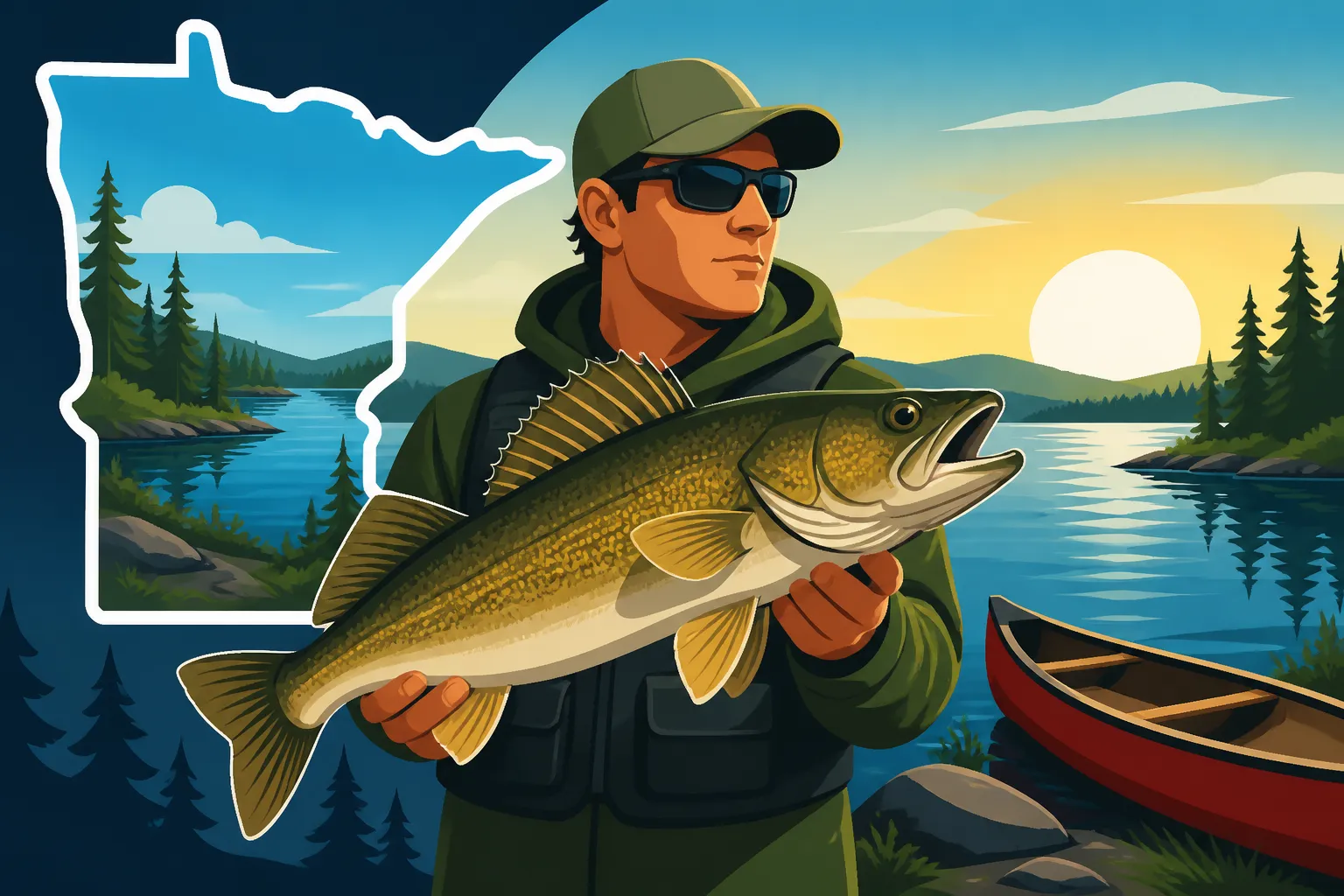
Ah, the walleye. Minnesota's state fish and a prime target for many BWCA anglers. These toothy predators thrive in many of the larger, deeper lakes within the wilderness, particularly those with good forage bases and rocky structures. The feeling of a walleye thumping your line after a long day of paddling is truly something special. They are renowned for their flaky, white meat, making for an unparalleled shore lunch.
Walleye in the BWCA tend to follow classic patterns. In spring and early summer after the Minnesota Walleye Opener 2026, they often frequent shallow points and reefs, particularly near river inlets or narrows, as they recover from spawning. As summer progresses, they move to deeper main lake structures, congregation on rock humps, sunken islands, and along breaklines. Many BWCA walleyes are caught by jigging with a live minnow or a soft plastic, or by slowly trolling crankbaits or spinner rigs along structure. Remember to check local lake regulations, as many BWCA lakes have specific slot limits to protect the breeding stock, meaning you might need to release larger fish.
Northern Pike: Aggressive Freshwater Predators
If you're looking for aggressive strikes and powerful fights, the northern pike is your fish in the BWCA. These ambush predators are ubiquitous throughout the wilderness, found in shallow, weedy bays, around fallen timber, and along rocky shorelines. They’re less particular about water clarity or depth than walleye, making them a more accessible target for many anglers, especially those just getting their feet wet in the BWCA.
BWCA pike often run large, with many lakes producing fish in the 30-inch range, and genuine trophy pike pushing 40 inches or more are not uncommon. They are savage fighters, often leaping from the water and making powerful runs. Large spoons, spinnerbaits, and topwater lures are incredibly effective, especially when cast into weed beds or along rocky points. Don't forget a good pair of pliers and a jaw spreader; those teeth are no joke! While Northern Pike in Minnesota: Identification & Where to Catch can be a great starting point, remember that BWCA pike often grow larger due to less fishing pressure.
Smallmouth Bass: Pound-for-Pound Fighters
For pure fighting power and acrobatic displays, the smallmouth bass of the BWCA are hard to beat. These bronzebacks thrive in many of the clearer, rockier lakes and rivers, often found around submerged boulders, rocky points, and current seams. They are incredibly strong for their size, providing exhilarating battles on light tackle, often jumping and tail-walking across the surface. Many anglers consider the BWCA a world-class smallmouth fishery.
Smallmouth bass fishing in the BWCA really heats up in late spring and summer. They'll readily hit a variety of lures, including tube jigs, crankbaits, spinnerbaits, and topwater plugs. Pay close attention to rocky shorelines, submerged humps, and current areas between lakes. One of the joys of BWCA smallmouth fishing is discovering untouched populations in remote lakes accessed by multiple portages. For more general tactics, check out Smallmouth & Largemouth Bass in Minnesota, but adapt for the pristine, clear water often found in the BWCA.
Lake Trout: Deepwater Royalty
For those seeking a true wilderness trophy, the lake trout of the BWCA offer an incredible challenge. These cold-water giants inhabit some of the deepest, clearest, and most oxygenated lakes, particularly in the northern reaches of the wilderness. They are powerful, long-lived fish that require specialized techniques and patience, but the reward of landing one of these prehistoric-looking beauties is immense.
Lake trout are typically found in deep water, especially during the warmer summer months. In spring, shortly after ice-out, they might be found shallower, cruising rocky points and drop-offs. Traditional methods include trolling deep-diving crankbaits or spoons, or vertical jigging heavy spoons or tube jigs over known deepwater structure. Electronics like portable fish finders can be a huge asset, but remember, battery life and weight are concerns on a BWCA trip. Look for lakes specifically known for lake trout, and be prepared for a serious workout if you hook into a big one. For detailed information, consult the Lake Trout Fishing in Minnesota: Streams & Lakes guide, but focus on the "lakes" aspect rather than streams for BWCA.
Panfish: Crappies and Sunfish for Fun
While walleye, pike, and bass often steal the spotlight, don't overlook the abundant panfish populations in the BWCA. Black crappies and various sunfish (bluegill, pumpkinseed, green sunfish) offer consistent action and are perfect for a relaxing afternoon or for getting kids hooked on fishing. Many lakes hold impressive numbers of these feisty little fish, and finding a secluded bay filled with them can provide hours of entertainment.
Panfish typically congregate in shallower, weedy areas, around submerged logs, or near docks at entry points (though you won't find many docks in the BWCA interior!). They are readily caught on small jigs tipped with a piece of worm, a minnow, or a soft plastic tail under a bobber. Fly fishing with small poppers or wet flies can also be incredibly effective and fun. Crappies often suspend in slightly deeper water around brush piles or submerged trees, while sunfish stick closer to dense vegetation. They make an excellent addition to any shore lunch and are generally less sensitive to fishing pressure. If you're looking for techniques, the Crappie & Panfish Fishing Techniques article has great general advice that can be adapted to the BWCA.
| Species | Preferred Habitat | Common Baits/Lures | Special BWCA Note |
|---|---|---|---|
| Walleye | Rocky points, humps, deep breaks, current areas | Jigs (minnow/plastic), crankbaits, spinner rigs | Check specific lake slot limits; excellent for shore lunch. |
| Northern Pike | Weedy bays, fallen timber, rocky shorelines | Spoons, spinnerbaits, topwater lures | Often large and aggressive; bring pliers/jaw spreaders. |
| Smallmouth Bass | Rocky shorelines, submerged boulders, current | Tube jigs, crankbaits, topwater, spinnerbaits | Fantastic fighters; thriving populations in clear, rocky lakes. |
| Lake Trout | Deep, cold, oxygenated lakes; main lake basins | Deep-diving crankbaits, heavy spoons, tube jigs | Requires deep-water tactics; often in northern, more remote lakes. |
| Crappie | Submerged timber, brush piles, weed edges | Small jigs (minnow/plastic), tiny spoons, bobber setups | Great for consistent action and a delicious shore lunch. |
| Sunfish | Weedy shallows, lily pads, fallen trees | Worms under bobber, tiny jigs, small flies | Abundant and easy to catch; perfect for introducing new anglers to the BWCA experience. |
Best Time to Fish the Boundary Waters
Timing your BWCA trip can significantly impact your fishing success and overall experience. Each season offers unique advantages and challenges, from post-ice out frenzy to autumn solitude.
Spring Opener: Post-Ice Out Excitement
For many Minnesota anglers, the spring opener is a sacred event, and in the BWCA, it can be absolutely phenomenal. As soon as the ice melts (typically late April to mid-May, depending on the year and specific lake), fish become incredibly active. Walleye and northern pike, in particular, are shallow and hungry, making them easier to target. Water temperatures are still cold, and fish are recovering from spawning, often found in predictable areas like shallow bays warmed by the sun, river mouths, and rocky points.
However, spring in the BWCA isn't without its caveats. The weather can be highly unpredictable, swinging from warm sunshine to cold rain or even snow. Bugs, especially mosquitoes and black flies, start to emerge, though they're usually not at their worst until early summer. The water is cold, meaning capsizing could be a serious hazard. You'll need to pack layers, waterproof gear, and be prepared for rapidly changing conditions. The rewards, though, are often worth the challenges: less fishing pressure than later in the season, and arguably some of the best shallow-water fishing opportunities.
Summer Patterns: Structure and Deeper Water
Most BWCA visitors flock to the wilderness during the summer months (June, July, August) for warmer weather and longer days. This is when the fishing shifts. Walleye and lake trout move to deeper, cooler waters, often suspending over main lake basins or holding tight to deep structure like humps and breaklines. Northern pike might still be found in weeds, but often in deeper pockets. Smallmouth bass will be active on rocky points and shoals, especially during morning and evening bites.
The summer offers more stable weather, though thunderstorms can roll in quickly, requiring vigilance. Bugs are generally at their peak intensity in early to mid-summer, so bring good insect repellent and consider bug-proof clothing. Fishing during this time often means adapting your techniques to target deeper fish – slower presentations, deeper dives with crankbaits, or vertical jigging. While fishing can be excellent, you might encounter more fellow paddlers and anglers than during other seasons, especially on popular routes. Planning a guided trip with a local expert through a service like FishingBooker can help you find less-pressured waters and the best spots even during peak season.
Fall Fishing: Trophy Opportunities
For many seasoned BWCA anglers, fall (September and October) is the prime time to visit. The crowds thin out, the bugs largely disappear with the first hard frosts, and the fall colors are absolutely breathtaking. More importantly, fishing can be incredible, especially for trophy-sized fish. Many species, particularly walleye, northern pike, and lake trout, go on a feeding frenzy as they prepare for winter, often moving back to shallower depths before returning to deep water.
Cooler water temperatures mean fish are aggressive and willing to chase lures. Large northern pike will hammer big spoons and crankbaits. Walleye will aggressively hit jigs and minnows on rocky structure. Lake trout might move into depths more accessible to vertical jigging. The challenge in fall is the rapidly cooling weather, shorter days, and the increased chance of strong winds, which can make long paddles and portages difficult. Layering warm clothing, waterproof outer shells, and being prepared for freezing temperatures, especially overnight, is essential. However, the chance at a truly monstrous fish against a backdrop of golden aspens makes fall an unforgettable BWCA fishing experience.
BWCA Fishing Techniques and Tactics
Fishing in the BWCA means adapting your techniques to the wilderness environment. You won't have the luxury of a powerful outboard motor to cover vast amounts of water quickly, or advanced electronics guiding your every cast. Instead, stealth, precision, and an understanding of fish behavior become your most valuable assets.
Shoreline Casting and Jigging
One of the most effective and accessible techniques in the BWCA is shoreline casting. Since you'll be paddling canoes, you're naturally propelled close to the shore, making it easy to cast to prime fish-holding structures. Look for fallen trees, rocky points, weed edges, current breaks, and drop-offs. These are natural ambush points for pike, smallmouth bass, and even walleye during certain times of the year.
Jigging is a cornerstone technique for walleye, crappie, and even smallmouth bass in the BWCA. Whether you're casting jigs from shore or vertically jigging from your canoe over a productive spot, a simple jig-and-minnow or jig-and-plastic combination is incredibly versatile. Experiment with different jig weights and colors based on water depth and clarity. A good quality spinning rod and reel combo that’s sensitive enough to feel subtle bites but strong enough to handle larger fish is ideal. This minimalist approach often yields surprising results, proving that fancy gear isn't always necessary in the Boundary Waters.
Trolling with Canoes and Kayaks
While you won't be high-speed trolling, paddle-trolling is a highly effective way to cover water and find active fish in the BWCA. Simply let out a crankbait, spoon, or spinner rig behind your canoe while you paddle from one fishing spot to another. The slow, steady pace often proves irresistible to walleye, northern pike, and lake trout. It’s also a great way to explore contours and breaklines you might not notice otherwise.
When paddle-trolling, pay attention to your speed and lure depth. Use lures that dive to the desired depth or add a small amount of weight if needed. For walleye, lipless crankbaits or shallow-diving minnow imitations are excellent for shallower passes, while deeper-diving models can probe humps. For northern pike, larger spoons or jointed crankbaits work well. For lake trout, you'll need heavier spoons or deep-diving plugs. The key is to match your lure presentation to the depths where the fish are holding. This is also a technique where a basic paper map or a downloaded lake map on your phone (in airplane mode to save battery) can help you trace contours effectively. More detailed information on this can be found in Trolling for Walleye: Crankbaits & Leadcore, though the 'leadcore' part might be less applicable given the canoe.
Fly Fishing in the BWCA
For the dedicated fly angler, the BWCA offers some truly unique opportunities. Smallmouth bass readily take poppers and streamers, providing explosive topwater action. Panfish are abundant and eager to rise to dry flies or small nymphs. Even northern pike can be targeted with large, flashy streamers, offering a powerful fight on a fly rod. Certain lakes and rivers within the BWCA also hold brook trout, particularly in some of the more remote, spring-fed systems, providing a serene experience for trout enthusiasts.
Fly fishing in the BWCA requires careful planning. You’ll want a versatile rod, typically a 5 or 6-weight, capable of handling a range of flies and fish sizes. Leaders and tippets should be strong enough to withstand unexpected encounters with pike. Packing a minimalist fly box with a variety of patterns – poppers, streamers, nymphs, and some dry flies – will cover most situations. The beauty of fly fishing here is the quiet, meditative aspect, allowing you to immerse yourself even deeper in the wilderness experience. Plus, it eliminates the need for live bait, simplifying your packing list and adhering to potential bait restrictions.
Gear and Equipment for Your BWCA Fishing Adventure
Packing for the BWCA is an exercise in minimalism and versatility. Every item needs to earn its spot in your pack. You’re not just packing fishing gear; you’re equipping yourself for survival and comfort in a remote wilderness.
Packable Rods and Reels
When portaging, a traditional one-piece fishing rod quickly becomes a cumbersome liability. This is where multi-piece pack rods shine. Look for 3-piece, 4-piece, or even 5-piece travel rods that break down into short sections, easily fitting into a portage pack or strapped securely to a canoe. Many reputable brands offer excellent packable rods that don't sacrifice action or sensitivity. A medium-light or medium power spinning rod is often the most versatile choice, capable of handling everything from panfish to decent-sized walleye and pike.
Pair your pack rod with a reliable, lightweight spinning reel. A 2000 or 2500 series reel spooled with 8-10 lb braided line (with a fluorocarbon leader) is a fantastic all-around setup. Braided line offers excellent sensitivity, strength, and casting distance – all critical when fishing from a canoe or shore. Remember, you can't easily replace broken gear or lost line in the BWCA, so quality and durability are paramount. Consider bringing a backup reel if space allows, or at least extra spools of line. For advice on specific setups, check out Best Walleye Rods & Reels and Best Spinning Reels for Walleye.
Essential Lures and Baits (Live vs. Artificial)
Given the restrictions on live bait in many BWCA lakes and the difficulty of transporting it, artificial lures are often the way to go. Focus on versatile lures that can catch multiple species and be fished in various ways. Jigs (1/8 to 3/8 oz) with soft plastic tails or grub bodies are incredibly effective for walleye, crappie, and smallmouth bass. Colors like chartreuse, white, black, and natural baitfish patterns are good starting points.
Crankbaits, both shallow and deep-diving, are excellent for covering water via paddle-trolling or casting. Spoons (like Dardevles or Johnson Silver Minnows) are pike magnets and can also tempt walleye and lake trout. Spinnerbaits are great for pike and bass in weedy areas. Topwater lures (poppers, walk-the-dog baits) offer exhilarating strikes for bass. If live bait is permitted on your chosen lakes and you decide to use it, leeches are a fantastic, durable option for walleye and bass, while nightcrawlers work for almost everything. Always check the rules for specific lakes before bringing any live bait. For general lure advice, the Best Walleye Lures: Jigs, Cranks & Spinners and Best Bass Lures for Minnesota Lakes articles offer great ideas that can be adapted.
Navigation and Safety Gear
Beyond your fishing setup, critical navigation and safety gear can literally be lifesavers in the BWCA. A detailed waterproof map (like those from Fisher Maps or McKenzie Maps) of your route is absolutely essential, along with a compass. Learn how to use them proficiently before your trip. GPS devices or smartphone apps (like Navionics or Gaia GPS, with downloaded maps) are great backups but remember battery life is limited without recharging.
Safety gear includes Coast Guard-approved PFDs (personal flotation devices) for everyone in your group, a first-aid kit, fire-starting materials, a water filter or purification tablets, extra food, and a multi-tool. A headlamp with extra batteries is invaluable for camp tasks and early morning fishing. For cold weather trips, a satellite messenger device (like an InReach or Zoleo) can be a wise investment for emergency communication, as cell service is non-existent. Always file a float plan with someone back home who knows your route and expected return date.
Planning Your BWCA Trip: Logistics and Resources
A successful BWCA trip hinges on meticulous planning. The wilderness rewards preparation and punishes complacency. From choosing your route to finding local support, every detail contributes to the overall experience.
Choosing Entry Points and Routes
The BWCA has over 70 designated entry points, each leading to a different network of lakes and portages. Your choice of entry point and subsequent route will determine the type of fishing you encounter, the level of portaging difficulty, and the amount of solitude you experience. For instance, entry points near Ely or Grand Marais are popular and can lead to busier routes, while more remote entry points might offer greater solitude but also longer, more challenging access.
Consider your group's experience level, physical fitness, and fishing goals. If you're targeting lake trout, you'll need to choose a route that includes deep, cold lakes known to hold them. If you prefer walleye, look for routes with larger, mesotrophic lakes. Shorter, less challenging routes are perfect for beginners or those seeking a more relaxed trip. Longer, more strenuous routes can take you deep into the wilderness, far from any other groups, offering unparalleled solitude and often less-pressured fishing. Researching specific lake characteristics (depth, structure, primary species) is key. Online resources, guidebooks, and conversations with outfitters can help immensely in making these choices.
Outfitters and Guided Trips
For those new to the BWCA or wanting to maximize their chances of success, hiring an outfitter or a guided trip can be an excellent option. BWCA outfitters, based in towns like Ely, Grand Marais, and Grand Portage, offer a range of services from partial outfitting (renting canoes, specific gear) to full outfitting (providing all gear, food, and even route planning). They are invaluable resources for up-to-date information on conditions, fishing reports, and regulation changes.
If you want the ultimate worry-free experience or aim for specific trophy fish, consider booking a guided trip. An experienced BWCA guide knows the intricacies of the area, including the best fishing spots, portage routes, and wilderness survival skills. They handle all the logistics, cooking, and guiding, allowing you to focus purely on fishing and enjoying the scenery. Websites like FishingBooker can connect you with reputable local guides who specialize in BWCA trips, making the process of finding and booking an expert much simpler. This can be particularly beneficial for first-timers or those wanting to target elusive species like lake trout or trophy pike.
Minimizing Your Impact: Leave No Trace
The BWCA operates on strict Leave No Trace principles, which are critical for preserving its pristine condition for future generations. This means everything you pack in, you must pack out – including all trash, food scraps, and even fish entrails (which should be disposed of in deep water, far from shore). Human waste must be buried at least 6-8 inches deep and 200 feet from water, trails, or campsites. Campfires are allowed only in designated fire grates at established campsites and must be completely extinguished.
Fishing-specific Leave No Trace practices include using barbless hooks to minimize harm to fish, avoiding cleaning fish directly at campsites or near shore, and being mindful of your impact on sensitive areas. It’s about leaving no sign of your presence. This ethos is fundamental to the BWCA experience and ensures that the wilderness remains wild. Remember to How to Decontaminate Your Boat (AIS) before and after your trip, even if it's just a canoe, to prevent the spread of aquatic invasive species.
Common Challenges and How to Overcome Them
The BWCA offers incredible rewards, but it also presents unique challenges. Being prepared for these hurdles can turn potential frustrations into memorable moments of triumph.
Dealing with Bugs and Weather
Without a doubt, the persistent buzzing of mosquitoes, black flies, and deer flies is one of the biggest challenges in the BWCA, especially from late May through July. These insects can be relentless, turning an otherwise perfect fishing spot into an unbearable ordeal. However, with proper preparation, you can mitigate their impact significantly.
Pack a high-quality insect repellent containing DEET or picaridin. Permethrin-treated clothing (or treating your own clothing before the trip) is highly effective at deterring bugs. Long-sleeved shirts, pants, and a head net are essential, especially during dawn and dusk. Building a small fire at camp, where allowed, can also help keep them at bay. As for weather, the BWCA can deliver all four seasons in a single day. Be prepared for sudden thunderstorms, heavy rain, strong winds, and significant temperature swings. Pack rain gear, multiple layers of clothing (avoid cotton), and a waterproof bag for your essentials. Always keep an eye on the sky and be ready to find shelter or make camp if conditions deteriorate.
Navigating Portages with Gear
Portages are an integral part of the BWCA experience, but they are often physically demanding, especially with heavy fishing gear. The challenge is balancing efficiency (fewer trips across the portage) with safety and energy conservation. The terrain can be rocky, root-filled, muddy, or steep, and carrying a canoe on your shoulders while balancing a pack can be tricky.
To make portaging easier, invest in good quality portage packs that are designed to be comfortable on your back, even when heavy. Pack strategically, distributing weight evenly. Fishing rods should be broken down and secured. Consider a portage yoke for your canoe, which makes carrying it significantly more comfortable. Practice packing and carrying your gear before your trip. Most importantly, don’t overestimate your abilities. It’s better to make two trips across a portage safely and comfortably than to rush and risk injury or equipment damage. Sometimes, a short break during a long portage can make all the difference.
Remote Emergencies and Communication
Being in the BWCA means you are truly in the wilderness, far from immediate medical assistance or cell service. This remoteness requires a heightened sense of self-reliance and preparedness for emergencies. Simple accidents, like a sprained ankle or a deep cut from a hook, can become serious issues if not properly managed.
A well-stocked first-aid kit is non-negotiable, and everyone in your group should know basic first aid. Carry any necessary personal medications. As mentioned earlier, a satellite messenger device is highly recommended for emergency communication. These devices allow you to send SOS signals and communicate with loved ones via satellite, even without cell service. Before your trip, ensure someone knows your detailed itinerary, including your entry and exit points and expected dates. If an emergency arises, stay calm, assess the situation, and make conservative decisions. Remember, preventing emergencies through careful planning and cautious behavior is always the best strategy.
Disclaimer
The information provided in this guide is for general informational purposes only and is subject to change. Fishing regulations, season dates, and specific lake rules in Minnesota, especially within the Boundary Waters Canoe Area Wilderness, can change annually. Always consult the most current Minnesota Department of Natural Resources (DNR) regulations and obtain all necessary permits and licenses before planning or embarking on any fishing trip. Safety in the wilderness is paramount, and it is your responsibility to be prepared for all conditions and potential emergencies.