Big Detroit Lake Walleye Fishing Tips
Feeling overwhelmed by the vastness of Big Detroit Lake and wondering where those elusive walleye are hiding? It’s a common frustration; this sprawling, beautiful lake, while renowned for its walleye, can feel like a puzzle. This comprehensive guide is here to demystify Big Detroit Lake walleye fishing, breaking down seasonal strategies, essential gear, and crucial tips to help you consistently put fish in the boat.
Understanding Big Detroit Lake's Walleye Habitat
Big Detroit Lake isn't just a body of water; it's a dynamic ecosystem with specific areas that walleye prefer throughout the year. Knowing these prime locations and why walleye congregate there is the first step to a successful outing. Forget aimlessly cruising; let's talk about strategic targeting.
Key Structures and Depths
Big Detroit Lake, near the charming town of Detroit Lakes, Minnesota, offers a diverse underwater landscape that walleye absolutely love. We're talking about everything from shallow, nutrient-rich bays to deep, expansive main lake basins. The average depth hovers around 20 feet, but you'll find significant holes dropping to 70 feet or more, alongside vast flats and sharp breaks. Walleye are creatures of structure and transition, constantly moving between different depths based on light, temperature, and food availability.
Look for classic walleye haunts like the numerous points that jut out into the lake, especially those with rocky or gravel bottoms. Submerged humps, often rising dramatically from the deeper basin, are absolute magnets, particularly during the summer months. These humps act like underwater islands, concentrating baitfish and, consequently, hungry walleye. Pay close attention to the transitions – where a hard bottom meets soft mud, or where a weed line suddenly drops into open water. These edges are ambush points for walleye. The lake also features several islands, and the areas around them, especially the drop-offs and current breaks, can hold significant numbers of fish. When studying your maps, prioritize areas that offer a quick route to deeper water, as walleye will often retreat there during bright conditions or heavy boat traffic.
Forage Base and Walleye Behavior
What walleye eat directly influences where they are found and how they behave. Big Detroit Lake boasts a robust forage base, with common species like shiners, cisco (tullibee), perch, and various panfish. This abundance of food means walleye don't have to travel far to find a meal, but it also means they can be picky if the bite is tough. The predominant forage in a specific area will often dictate the best presentation and lure choice. For instance, if walleye are gorging on schools of suspended cisco in the main basin, they might be less interested in a jig-and-minnow dragged slowly on the bottom.
Understanding the lake's thermal stratification is also key. In summer, a thermocline forms, creating layers of water at different temperatures. Walleye will often suspend just above or within this thermocline, especially if baitfish are present there. Their light-sensitive eyes mean they’ll often be deeper during bright daylight hours or tucked away in cover, moving shallower to feed during low light periods like dawn, dusk, or overcast days. This is why knowing how to catch walleye at night can be incredibly effective on lakes like Big Detroit. Being observant of active baitfish on your electronics or even seeing schools breaking the surface can give you huge clues about where the walleye will be positioned and what they're keying in on.
Seasonal Walleye Tactics on Big Detroit Lake
Walleye fishing on Big Detroit Lake is a year-round affair, but your approach needs to change dramatically with the seasons. What works in May won't necessarily work in August. Adaptability is your best friend when chasing these finicky fish.
Spring Opener and Early Summer Strategies
The excitement of the Minnesota Walleye Opener is palpable, and Big Detroit Lake can be a fantastic place to kick off the season. In spring, after the ice recedes, walleye are recovering from their spawn. They're often found in shallower water, particularly in the northern bays and along sun-warmed shorelines, where they can find emerging insects and smaller baitfish. Water temperature is king at this time. Focus on bays that warm up first, typically those with darker bottoms or receiving direct sunlight.
Classic tactics for early season include pitching jigs tipped with minnows or plastics into shallow breaks and weed edges. A 1/8 to 1/4 ounce jig in bright colors like chartreuse, orange, or white can be deadly. Don't be afraid to cast slip bobbers into these same areas, especially when the fish are scattered or holding tight to cover. As the water warms slightly into early summer, trolling shallow-running crankbaits parallel to shorelines and over emerging weed beds becomes highly effective. Think about covering water to find active schools, often in depths of 8-15 feet. Many anglers find success focusing their efforts around areas like the sand flats near the fairgrounds or the shallower points entering larger bays. For more detailed insights on the start of the season, check out our guide on Early Season Walleye After the Opener.
Mid-Summer Patterns and Deep Water Tactics
As summer heats up on Big Detroit Lake, the walleye transition to deeper water and more predictable patterns. The main lake basin, with its numerous humps, deep points, and mud flats, becomes the prime hunting ground. This is when understanding your electronics truly pays off. You'll be looking for baitfish schools and walleye congregating on structure. Depths from 20-40 feet are common, but don't shy away from exploring even deeper if you see activity.
Trolling is a go-to tactic during mid-summer, often employing bottom bouncers with crawler harnesses or leadcore line with crankbaits to target specific depths. Brands like Lindy and Northland offer excellent bottom bouncers and spinner rigs that are perfect for this application. Focus on contours, especially the deeper edges of those prominent humps and points. Another highly effective method is working a Lindy Rig, especially when fishing live bait like leeches or nightcrawlers. This allows for a slow, natural presentation that can entice hesitant walleye. When searching for a spot, keep an eye on your fish finder for schools of cisco or perch, as walleye will likely be nearby. If you're looking to book a guided trip to learn the ropes on these mid-summer patterns, services like FishingBooker can connect you with local experts who know Big Detroit inside and out.
Fall Transition and Pre-Ice Bite
As autumn descends and the water temperatures begin to drop, Big Detroit Lake walleye go into a feeding frenzy, bulking up for winter. This fall turnover can be a challenging but incredibly rewarding time to fish. Walleye will often move shallower again, following migrating baitfish into bays and onto flats that were too warm in the summer. They become more aggressive, making for some intense bites.
Casting larger crankbaits or lipless crankbaits along weed edges and rocky points can be very productive. Jigging spoons and heavier jigs tipped with shiners are also excellent choices, especially when fishing the deeper breaks where walleye might be staging before moving shallow. Don't overlook the main lake points and steeper breaks that lead into the deeper basin. Walleye will cruise these areas, actively hunting. As the season progresses towards ice formation, the walleye will once again concentrate in predictable areas, often shallower before the lake completely freezes over. Understanding these seasonal patterns is crucial for consistent success. If you're planning a trip, checking out a local guide through platforms like FishingBooker might give you the competitive edge for these challenging transitions.
Essential Gear and Bait for Big Detroit Walleye
Having the right tools for the job can make all the difference, especially when walleye are being finicky. A solid understanding of your rods, reels, line, and bait choices will significantly increase your success rate on Big Detroit Lake.
Rods, Reels, and Line Choices
When it comes to walleye fishing, versatility is key. For most techniques on Big Detroit Lake, a medium-light to medium power spinning rod, around 6'6" to 7'6" in length, will cover a lot of ground. This length provides good casting distance and enough backbone to set the hook, while maintaining sensitivity for subtle bites. Pair it with a reliable spinning reel in the 2000-3000 size range, ensuring a smooth drag system. Brands like Shimano, Daiwa, or Pflueger offer excellent options that strike a balance between performance and durability for serious anglers.
Your line choice is equally important. Many experienced anglers opt for a main line of 8-10 lb braided line, known for its incredible sensitivity and casting distance. The lack of stretch in braid allows you to feel the lightest tap, even in deep water. However, braid is visible, so always tie on a 4-8 foot fluorocarbon leader (6-10 lb test) using a strong knot like an Albright or FG knot. Fluorocarbon is nearly invisible underwater and abrasion-resistant, making it ideal for presenting lures and protecting your main line from rocky structure. For specific presentations like slip bobber fishing, some anglers prefer monofilament for its stretch and buoyancy, but for all-around walleye tactics, the braid-to-fluoro setup is hard to beat. If you're fishing shallow weeds, you might even bump up your leader strength slightly to avoid break-offs. You can read more about different line types in our guide on Best Fishing Line for Walleye.
Top Lures and Live Bait Options
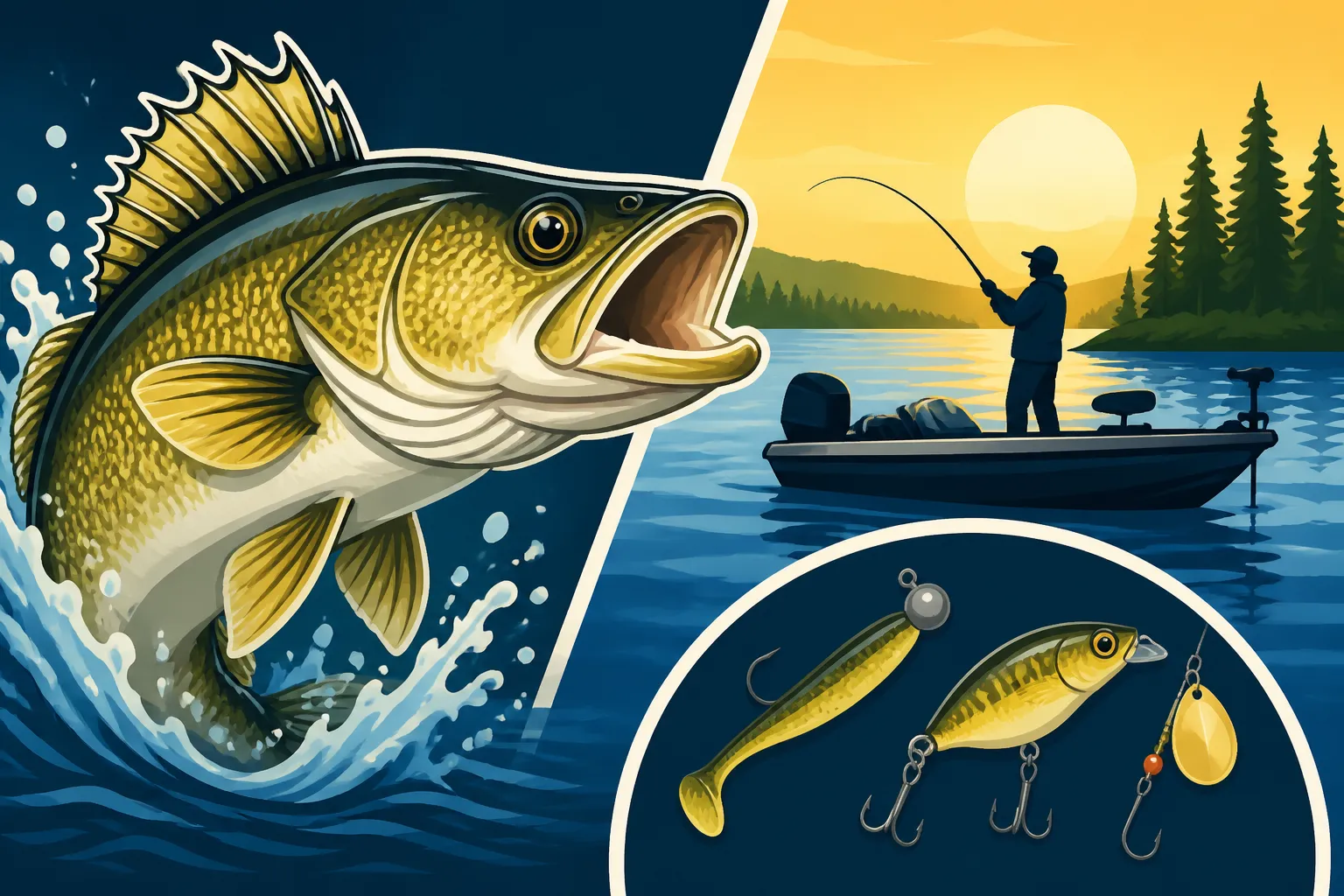
Big Detroit Lake walleye respond to a variety of presentations, but having a selection of proven lures and live baits is crucial. For artificials, jigs are a staple. From traditional lead head jigs to hair jigs and soft plastic swimbaits, having a range of weights and colors is a must. ¼ ounce and 3/8 ounce jigs are workhorses for most situations, but don't hesitate to go lighter in shallow water or heavier in deep water or strong winds. Bright colors for stained water and natural colors for clear water are good general rules. Popular soft plastics include paddle tails, minnow profiles, and twister tails.
Crankbaits are indispensable, especially for trolling or casting to cover water. Shallow-diving models like Rapala Shad Raps or Berkley Flicker Shads excel in early season and fall, while deeper divers like Storm Deep ThunderSticks or Bagley Small Fry Crawlers are perfect for targeting walleye on mid-summer humps and breaks. Don't forget spinner rigs like the classic ""Walleye Fishing Techniques: Complete Minnesota Guide"" or Lindy Rigs, often tipped with live bait, which are highly effective for slow-drifting or trolling.
Speaking of live bait, it's often the ace in the hole for Big Detroit walleye.
- Minnows: Golden shiners, fatheads, and rainbow shiners are all excellent choices, especially in spring and fall. Hook them through the lips or dorsal fin.
- Leeches: Arguably the most consistent summer walleye bait, leeches are irresistible to hungry walleye. Use them on a slip bobber or a Lindy Rig.
- Nightcrawlers: Fished on a crawler harness, spinner rig, or even a plain hook under a bobber, nightcrawlers are a universal walleye attractor.
Always check local bait shops in Detroit Lakes for the freshest and most effective bait for the current bite.
Navigating Big Detroit Lake for Walleye Success
Big Detroit Lake is a sizable body of water, and effectively navigating it can mean the difference between a limit of walleye and an empty livewell. Beyond just knowing where to fish, it's about knowing how to get there and maximize your time on the water.
Key Access Points and Boat Ramps
Getting your boat in the water quickly and efficiently is paramount, especially on busy weekends. Big Detroit Lake offers several public access points. The Detroit Lakes City Beach Public Access is a popular spot right in town, offering concrete ramps and ample parking. However, it can get very busy, especially during peak season. Another excellent option is the Lake Sallie Access, which connects directly to Big Detroit via a navigable channel. This access point can sometimes be less crowded and offers good facilities.
For those staying at resorts around the lake, many offer private boat launches, which can be a huge convenience. Before you head out, always double-check ramp conditions and parking availability, especially if you're pulling a larger boat. Remember to practice proper Aquatic Invasive Species (AIS) procedures; drain all water, remove weeds, and clean your boat thoroughly before and after launching to protect Minnesota's precious waters. Check out the guide on How to Decontaminate Your Boat (AIS) for a full rundown.
Utilizing Electronics and Mapping
Modern fishing electronics are game-changers, and on a lake with as much structure as Big Detroit, they are practically indispensable. A quality fish finder or sonar unit allows you to visualize the underwater world, spotting humps, break lines, weed edges, and, most importantly, fish and bait schools. Brands like Humminbird, Lowrance, and Garmin offer excellent units with features like side imaging and down imaging, which provide incredibly detailed views of the bottom and structure.
Lake mapping is another crucial component. High-definition lake maps, often available through apps like Navionics or pre-loaded on your fish finder, show you precise contours, depths, and even highlighted fishing spots. Before you even launch your boat, spend time studying the map of Big Detroit Lake, identifying potential walleye haunts like those prominent humps, deep points, and flats. Mark waypoints on your GPS for these key areas, and use your electronics to confirm their structure and identify any active fish. Don't just motor over a spot; use your sonar to interpret what's below, looking for subtle changes in bottom composition or suspended baitfish. Learning how to find fish while ice fishing or open water fishing using these tools will significantly boost your confidence and success.
Seasonal Walleye Activity on Big Detroit Lake
To help visualize the best times and tactics, here's a quick overview of Big Detroit Lake's walleye activity throughout the year.
| Season | Primary Location | Key Depths | Best Tactics | Preferred Bait/Lures |
|---|---|---|---|---|
| Spring | Shallow bays, warmer shorelines, points | 5-15 feet | Jigging (pitching), slip bobbers, shallow trolling | Minnows (fatheads, shiners), small crankbaits |
| Early Summer | Developing weed lines, main lake points, breaks | 10-25 feet | Trolling crankbaits, slip bobbers, jigging | Minnows, leeches, spinner rigs with crawlers, plastics |
| Mid-Summer | Main lake humps, deep breaks, mud flats | 20-40+ feet | Trolling (bottom bouncers, leadcore), Lindy Rigs | Leeches, nightcrawlers, deep diving crankbaits, jigging spoons |
| Fall | Shallow to mid-depth humps, main lake points, bays | 10-30 feet | Trolling, casting crankbaits, jigging | Larger minnows, nightcrawlers, lipless crankbaits, swimbaits |
| Winter (Ice) | Shallow flats (early/late ice), deep breaks, humps | 15-40 feet | Jigging (spoons, Raps), deadsticking, tip-ups | Minnows, wax worms, jigging spoons, rattle baits |
Remember, these are general guidelines, and walleye are often full of surprises! Being flexible and willing to experiment is always key.
Final Thoughts on Conquering Big Detroit Lake Walleye
Big Detroit Lake is a magnificent fishery, offering incredible opportunities for walleye anglers. While it can be intimidating with its size and diverse structure, armed with the right knowledge and tactics, you can unlock its secrets. Remember to focus on understanding seasonal patterns, matching your presentation to the available forage, and leveraging your electronics to pinpoint productive areas.
Whether you're new to the area or a seasoned veteran, there's always something new to learn on Big Detroit. Don't be afraid to try new spots or techniques. Sometimes, a subtle change in retrieve or a different colored jig can make all the difference. And if you're looking for an experienced hand to show you the ropes, checking out local guides through services like FishingBooker can provide a fantastic shortcut to success on this amazing lake. Good luck out there, and tight lines!
Disclaimer
Please remember that fishing regulations, including seasons, limits, and aquatic invasive species rules, can change. Always consult the most current Minnesota Department of Natural Resources (DNR) regulations before heading out on the water. This guide is for informational purposes only and should not replace official DNR publications.