How to Catch Black Crappie in Minnesota
There's nothing quite like the subtle tug of a black crappie on your line, especially when you know a whole school is waiting below. But let's be honest, finding and consistently catching these notoriously finicky panfish in Minnesota can sometimes feel like chasing ghosts. From navigating dense weed beds in summer to probing deep basin holes in winter, mastering the art of crappie fishing takes a blend of understanding their habits, using the right gear, and employing proven techniques. This comprehensive guide is here to demystify black crappie fishing in the Land of 10,000 Lakes, helping you fill your livewell and fry pan.
Understanding Black Crappie in Minnesota
Before we can consistently catch black crappie, we need to get into their heads a little. These aren't just any panfish; they have specific preferences and behaviors that, once understood, can drastically improve your success on the water.
Identifying Black Crappie
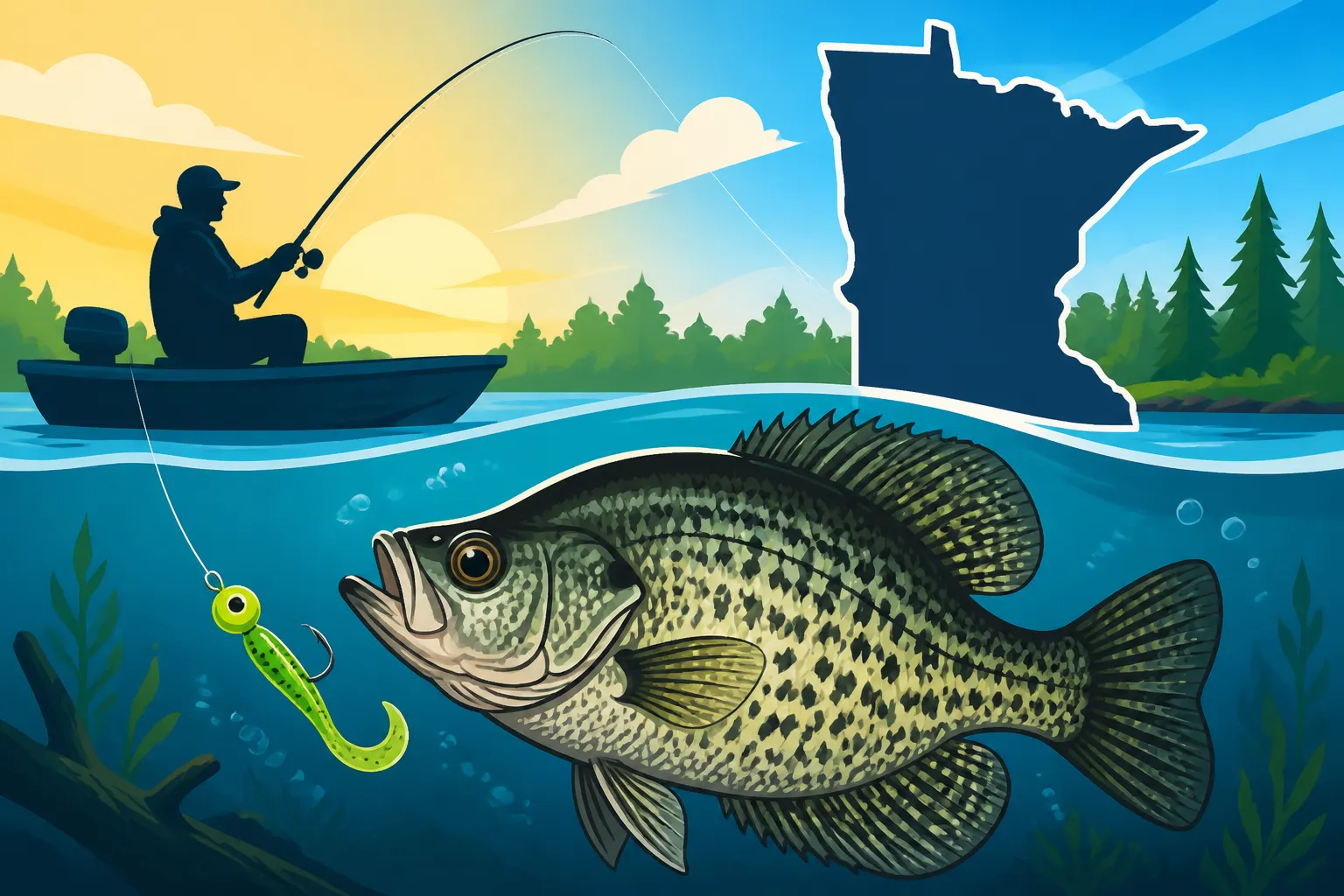
In Minnesota, you'll primarily encounter two species of crappie: black crappie and white crappie. While both are fantastic sportfish and excellent table fare, black crappie are generally more abundant and often preferred for their slightly thicker, flakier fillets. The key to telling them apart often lies in their markings and dorsal fin. Black crappie typically have a mottled, almost speckled pattern across their silvery-gold bodies, giving them a "peppered" look. Their dorsal fin, the one on their back, will usually have 7 or 8 spines, and it's quite rounded. White crappie, on the other hand, tend to have more distinct vertical bars, and their dorsal fin usually has 5 or 6 spines and is more elongated.
Black crappie are prolific in many of Minnesota's fertile lakes and reservoirs, growing to impressive sizes in healthy populations. While an average crappie might be 8-10 inches, hitting a 12-inch "slab" crappie is a real thrill, and they can even exceed 15 inches in prime conditions. Understanding these subtle differences is crucial, especially when different regulations might apply, though for crappie, the rules often lump them together.
Preferred Habitat and Forage
Black crappie are structure-oriented fish, meaning they love to hang out near anything that provides cover or ambush points. Think about submerged timber, brush piles, fallen trees, old dock pilings, and dense weed lines – especially those with a distinct edge. They are particularly fond of clear water with abundant vegetation. During different seasons, their preferred depth and exact location will shift, but the need for cover remains constant. In spring and early summer, you'll find them in shallower bays and protected coves. As summer progresses, they often retreat to deeper weed edges or suspend over submerged humps and rock piles.
When it comes to dinner, black crappie are opportunistic feeders. Their primary diet consists of smaller fish, particularly minnows, shiners, and juvenile panfish. But don't underestimate their love for insects, insect larvae, and small crustaceans like scuds and freshwater shrimp. This varied diet is why both live bait (like fathead minnows) and a wide array of artificial lures can be incredibly effective when targeting them. Understanding what they're likely eating in a particular body of water at a given time can be a game-changer for your bait selection.
Spawning Habits and Timing
One of the most exciting times to target black crappie in Minnesota is during their spawn, when they move into shallower water and become more accessible. Generally, crappie begin to spawn when water temperatures reach the upper 50s to low 60s Fahrenheit, which typically happens from late April through early June in Minnesota, depending on how quickly spring arrives and warms the lakes. You can often find them in shallow, protected bays with dark bottoms that absorb sunlight, warming the water faster. They'll create small, circular nests in sandy or gravelly bottom, often near emergent vegetation or woody cover.
During the spawn, male crappie become quite aggressive, guarding their nests, which makes them easier to catch. They'll hit just about anything that comes near their bed. However, exercising caution and practicing catch-and-release during this sensitive time can help ensure healthy crappie populations for years to come. Understanding when and where the crappie spawn takes place is a critical piece of the puzzle for spring success. If you're looking for more details on this, you'll find a deep dive in our guide to Crappie Spawn in Minnesota: When and Where.
Essential Gear for Minnesota Black Crappie
Having the right tools for the job makes all the difference, and black crappie fishing is no exception. You don't need a boatload of expensive gear, but a few key items will significantly boost your chances.
Rods, Reels, and Line Selection
For black crappie, finesse is the name of the game. That means light tackle is your best friend. A good starting point is a light or ultra-light action spinning rod, typically 6 to 7 feet long. This kind of rod offers the sensitivity needed to detect those subtle crappie bites and has enough flex to absorb the fight of a good-sized slab without tearing the hook out of their delicate mouths. Pair this with a small spinning reel, something in the 1000 or 2000 series, which balances well with the light rod. Brands like Pflueger and Shimano offer excellent options for smooth drag and reliable performance without breaking the bank.
When it comes to line, you want something light and manageable. Two to six-pound test monofilament or fluorocarbon line is usually ideal. Monofilament is a budget-friendly option with good knot strength and stretch, which can be forgiving. Fluorocarbon is less visible underwater and has less stretch, offering more sensitivity, but it can be a bit stiffer and more expensive. Some anglers even use light braided line (4-6 lb test) with a fluorocarbon leader for ultimate sensitivity and casting distance, especially when casting tiny jigs. The key is keeping it light; heavy line will spook crappie and hinder the natural presentation of small baits.
Best Baits and Lures for Crappie
This is where the fun begins! Black crappie aren't super picky, but they definitely have favorites.
Live bait often reigns supreme, especially when the bite is tough. Small minnows, particularly fathead minnows, are classic crappie candy. Hook them lightly through the lips or just behind the dorsal fin to keep them lively. Waxworms, crappie nibblers, or even a small piece of nightcrawler can also entice bites, especially for finicky fish.
Artificial lures can be incredibly effective and often more efficient once you've located a school. Here's a rundown of common choices:
- Jigs: Small marabou jigs, tube jigs, hair jigs, and soft plastic grubs are crappie killers. Sizes typically range from 1/32 to 1/8 ounce, though sometimes even smaller 1/64 ounce jigs are necessary.
- Soft Plastics: Tiny plastic bodies like Bobby Garland's Baby Shad, Berkley Gulp! Alive! Minnows, or various micro-plastics designed for panfish, are fantastic. Pair them with a small jig head.
- Small Crankbaits: Micro-crankbaits or tiny jerkbaits can work when crappie are actively chasing baitfish, especially in open water or along weed edges.
- Blade Baits: Small blade baits, vertically jigged, can also trigger aggressive strikes, especially in colder water.
For colors, natural shades like white, smoke, or chartreuse are consistent producers. However, don't be afraid to experiment with brighter colors like pink or orange, especially in stained water or on overcast days. If you're looking for specific recommendations, our guide on the Best Lures for Ice Fishing Crappie has some fantastic year-round suggestions.
Essential Accessories
Beyond your rod, reel, and bait, a few other accessories can make your crappie fishing trips much more enjoyable and successful. A good quality bobber is essential. While fixed bobbers work in very shallow water, a slip bobber rig is almost always preferred for crappie. It allows you to present your bait at a precise depth, even in deeper water, and casts much more easily. Pair it with a bobber stop and a small lead split shot to get your bait down.
Other useful items include a pair of small needle-nose pliers or fishing forceps for easy hook removal, especially with smaller hooks. A small pair of line clippers is always handy. A landing net with fine mesh can prevent losing a prized slab crappie right at the boat or shore, and also protects the fish if you plan to release it. Finally, if you're serious about finding crappie, a portable fish finder can be an invaluable tool. Basic models from brands like Humminbird or Lowrance can help you locate schools of fish and identify submerged structure that crappie love to call home.
Proven Black Crappie Fishing Techniques
Once you're geared up, it's time to talk strategy. Black crappie can be caught using a variety of methods, but some are undoubtedly more effective than others in different situations.
Slip Bobber Fishing: The Go-To Method
If there's one technique that defines crappie fishing in Minnesota, it has to be slip bobber fishing. This method is incredibly versatile, allowing you to present a bait at any desired depth, from just under the surface to twenty feet down, without hindering your cast. To set it up, you'll slide a small bobber stop onto your line, then a bead, followed by your slip bobber, and finally tie on a small jig or hook (often a size 6 or 8 light wire hook) with a split shot or two crimped a few inches above the hook.
The beauty of the slip bobber is its adjustability. You can quickly change your depth by sliding the bobber stop up or down your line. This is crucial for crappie, as they often suspend at specific depths or relate precisely to the top of submerged cover. When you cast, the bobber slides down the line until it hits the bobber stop, and your bait sinks to the set depth. This technique is fantastic for presenting live minnows, waxworms, or small plastic baits near brush piles, weed edges, or suspended over deep water structures. The bobber acts as a visual strike indicator, dancing or disappearing when a crappie takes the bait. This method is especially effective when crappie are finicky or holding tight to cover, as it presents the bait in a natural, enticing way.
Jigging and Casting Techniques
While slip bobbers are great for precise depth control and passive presentations, active jigging and casting can also be highly productive, especially when crappie are aggressive or scattered.
- Casting Small Jigs: This technique involves casting small jigs (1/32 to 1/8 ounce) tipped with soft plastics or a small minnow towards visible cover like docks, lily pads, or submerged logs. Let the jig sink for a few seconds, then retrieve it with a slow, steady retrieve, occasionally adding a twitch or pause. Experiment with different retrieve speeds and depths until you find where the fish are holding and what they want. This is a great way to cover water and find active fish, especially in spring and fall.
- Vertical Jigging: When you've located a school of crappie directly below your boat or ice hole using your fish finder, vertical jigging is incredibly efficient. Drop a small jig or spoon directly to their depth and use subtle lifts and drops of your rod tip to impart action. This is often the best technique for suspended crappie in deeper water or when fishing through the ice. Sometimes a completely still "deadstick" presentation, where the bait hangs motionless just above the fish, can be the ticket, especially in winter.
Remember, crappie bites can be incredibly subtle – sometimes it's just a slight weight, a slack in your line, or a tiny twitch of the rod tip. Pay close attention to your line and feel for anything out of the ordinary.
Ice Fishing for Black Crappie
Minnesota's hardwater season offers some of the best crappie fishing opportunities. Once the lakes freeze, black crappie often school up tightly in deeper basins, making them easier to target if you can find them.
- Finding Deep Schools: Look for deep holes, transitions, or the deepest parts of bays. A good map and a reliable fish finder like a Vexilar or Humminbird unit are indispensable for locating these wintering schools. Crappie will often suspend anywhere from a few feet off the bottom to halfway up the water column.
- Small Baits and Subtle Presentations: In winter, crappie metabolism slows, and they become less aggressive. Tiny tungsten jigs tipped with a single waxworm, a small plastic tail, or a eurolarvae are deadly. Spoons like a Northland Forage Minnow or a Custom Jigs & Spins Ratso can also be effective.
- Hole Hopping and Electronics: Don't be afraid to drill many holes and move around until you mark fish on your electronics. Once you find them, you can often pick off several crappie from a single hole before the school moves on or loses interest. A quiet approach is key; noise can easily spook winter crappie. You can find more comprehensive advice in our guide to Ice Fishing for Crappie & Panfish.
Finding the Best Black Crappie Spots in Minnesota
Knowing the fish and the techniques is vital, but you still need to know where to apply that knowledge. Finding crappie in Minnesota is all about understanding their seasonal movements and interpreting the underwater landscape.
Interpreting Lake Maps and Sonar
Before you even launch your boat or step onto the ice, spend some time studying a detailed lake map. Look for key features that scream "crappie habitat." This includes sharp breaks, deep weed lines, submerged humps, points, and areas marked with brush or timber. In many Minnesota lakes, especially those managed for panfish, you might even find cribs or fish shelters marked on maps – these are notorious crappie magnets. Navionics and LakeMaster charts are excellent resources for this.
Once on the water, your sonar unit (fish finder) becomes your best friend. Use it to scan for schools of fish, which will appear as distinct arches or blobs, often suspended rather than tight to the bottom. Pay attention to the depth at which you're marking fish. Your sonar will also help you identify important structure that doesn't show up on maps, like individual fallen trees or subtle changes in bottom composition. Don't just look for fish; look for the features that hold them. A good fish finder can help you quickly eliminate unproductive water and focus on high-percentage areas.
Seasonal Movements of Crappie
Black crappie are constantly on the move, adapting to water temperature, light conditions, and available forage.
- Spring (Pre-spawn & Spawn): As the ice melts and water temperatures climb, crappie move from their deep wintering holes into shallower, warmer bays. Look for them in 4-8 feet of water, especially in northern aspects of the lake that warm first, or in areas with dark bottom compositions. This is when they'll start staging for the spawn near emergent vegetation like cattails or reeds, and near submerged brush. After the spawn, they may linger in these areas for a short time before transitioning. If you want to really dial in your spring fishing, check out Spring Crappie Fishing in Minnesota.
- Summer: Once the water truly warms, crappie will usually move out of the very shallow, spawning grounds. They'll often relocate to deeper weed edges, especially those where weeds meet a distinct depth break. They'll also suspend over deep water humps, rock piles, or sunken island tops, often relating to baitfish schools. In clear lakes, they might be found in 15-25 feet of water during the day, moving shallower during low light periods like dawn, dusk, or overcast days. Fishing shady sides of docks or tree lines can also be effective during the brightest parts of the day.
- Fall: As water temperatures begin to drop, crappie often become more active, feeding heavily in preparation for winter. They'll transition back to shallower depths, often around the same weed edges and structure they frequented in late summer. As the water continues to cool, they'll start to congregate in deeper pockets and basins, similar to their winter haunts, but they'll still be actively feeding. Look for distinct schools moving through these areas.
- Winter: Once the ice covers the lake, black crappie school up in the deepest, most stable parts of the lake. These deep basin areas, often 20-40 feet deep or more, provide consistent temperatures and protection. They might also be found suspending over the deepest parts of submerged humps or steep breaks. The key is to use your electronics to locate these dense schools, which can be surprisingly mobile even under the ice.
Top Minnesota Crappie Lakes
Minnesota is blessed with thousands of lakes, and many of them hold fantastic black crappie populations. While it's hard to pinpoint the single best lake, certain characteristics and regions consistently produce. Generally, lakes with ample submerged timber, deep weed lines, and a good forage base tend to be excellent crappie waters.
In central Minnesota, you'll find numerous smaller, fertile lakes that boast healthy crappie numbers, often alongside good populations of other panfish. Larger lakes in northern Minnesota, while known for walleye, often have specific bays or sections with good crappie populations, especially those with plenty of submerged brush. Even some of the larger metro lakes within the Twin Cities area can provide surprisingly good crappie fishing, particularly around established cribs and public fishing piers, offering great opportunities for shore anglers.
Ultimately, the best crappie lake is often the one closest to you that you can learn well. Spend time exploring, use your maps and sonar, and pay attention to local fishing reports. You might be surprised to find some real slab crappie in your own backyard!
Here's a quick overview of how crappie behavior changes throughout the year:
| Season | Typical Location & Depth | Key Behavior | Recommended Techniques |
|---|---|---|---|
| Spring | Shallow bays (4-8 ft), dark bottoms, emergent weeds, brush | Pre-spawn staging, spawning | Slip bobber with minnows/plastics, casting small jigs |
| Summer | Deeper weed edges (8-20 ft), suspended over humps, deep timber | Post-spawn dispersion, chasing baitfish | Vertical jigging, casting jigs/small cranks, slip bobber on edges |
| Fall | Transition to deeper holes (10-25 ft), still relating to structure | Heavy feeding, schooling up | Casting jigs/plastics, vertical jigging, slip bobber |
| Winter | Deep basins (20-40+ ft), suspended, deep breaks | Concentrated in schools, lower metabolism | Small tungsten jigs with waxworms/plastics, deadsticking, electronics |
Disclaimer
Fishing regulations, seasons, and limits in Minnesota can change. Always consult the most current Minnesota Department of Natural Resources (DNR) fishing regulations guide before heading out on the water. This article is for informational purposes only and should not be considered a substitute for official regulations.