How to Catch Smallmouth Bass on a River
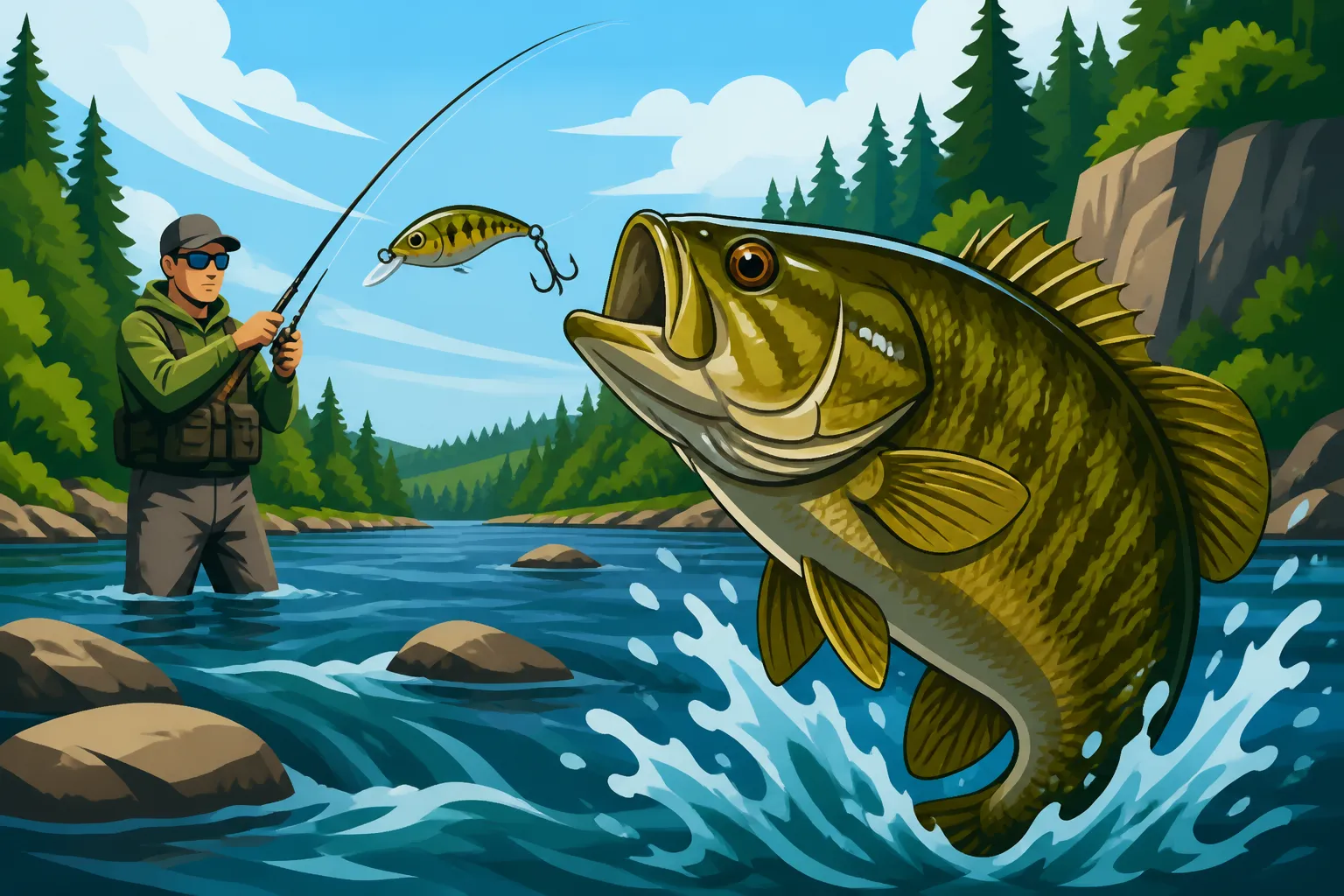
Chasing smallmouth bass on a river can feel like a completely different ballgame than fishing for them on a lake. The constant flow, the ever-changing current, and the unique hideouts these feisty fighters favor can be incredibly frustrating if you don't know where to start. This guide is here to demystify river smallmouth fishing in Minnesota, offering practical strategies and gear advice to help you hook into some truly memorable bronzebacks.
Understanding River Smallmouth Behavior
River smallmouth bass are adapted to their flowing environments, behaving differently than their lake-dwelling cousins. Their entire existence revolves around conserving energy while still being opportunistic predators. Understanding their habits is the first step to consistently finding and catching them.
The Dynamics of Current and Energy Conservation
Unlike the relatively still waters of lakes, rivers present a constant challenge: the current. Smallmouth bass in rivers are masters of using this current to their advantage, primarily to ambush prey without expending too much energy themselves. They're always looking for "current breaks" – areas where the water flow is significantly reduced, allowing them to rest while still being close to the food conveyor belt the main current provides. Think of it like a buffet line that comes directly to them.
These current breaks can be subtle. It might be the downstream side of a large boulder, a log, or even a small indentation in the riverbank. They'll also tuck into the slower water behind bridge pilings or beneath overhanging vegetation. When the current is particularly strong, smallmouth will often move closer to the bottom or into deeper pockets where the flow is naturally less intense. Recognizing these spots – where fast water meets slow water – is paramount, because that's often where the fish are staging, ready to dart out and grab a passing meal.
Structure: The Smallmouth's Sanctuary
River smallmouth bass are incredibly structure-oriented. This isn't just about cover from predators; it's about finding those crucial current breaks and ambush points we just talked about. In rivers, structure primarily means rocks, boulders, fallen timber (log jams, submerged trees), and even changes in bottom composition. The more complex the structure, the more likely it is to hold fish. A solitary boulder is good, but a pile of several rocks or a tangled log jam is even better, offering multiple resting and ambush spots.
Rocks and rocky bottom are classic smallmouth territory. They provide crayfish habitat, warmth from the sun, and those essential current breaks. Deeper pools with rock ledges or submerged boulder fields are particularly productive, especially during periods of high sun or when the water is colder. Fallen trees or log jams, especially those that create deep scour holes on the upstream side or extensive slack water on the downstream side, are also prime real estate. Always look for changes in the riverbed – transitions from sand to rock, or gravel to mud – as these often concentrate forage and, consequently, smallmouth.
What's on the Menu: Forage Favorites
River smallmouth bass are opportunistic predators with a diverse diet, but a few key forage items really stand out in Minnesota's rivers. Their primary food source often dictates where they position themselves and what lures will be most effective. Understanding their preferred meals helps you "match the hatch," so to speak, even if you're not seeing the actual bugs.
Crayfish are absolute top-tier forage for river smallmouth. These crustaceans are abundant in many rocky river stretches and are a favorite, high-protein meal. This is why many successful river smallmouth lures mimic crayfish in color (browns, greens, oranges) and action (crawling, darting). Next up are various types of minnows and baitfish, including shiners, dace, and chubs. Smallmouth will aggressively chase down schools of baitfish, especially in faster runs or in eddies where baitfish might be disoriented. Lastly, insects play a significant role, particularly hellgrammites, nymphs, and terrestrial insects that fall into the water. While flies are great for these, traditional lures can sometimes mimic their profile or behavior too. Knowing these preferences means you can select your baits with confidence, presenting something that looks irresistible to a hungry smallmouth. You can find a massive selection of these on Amazon, making it easy to experiment with different patterns.
Essential Gear for River Smallmouth Anglers
Having the right tackle for river smallmouth fishing can make all the difference between a frustrating day of snags and tangles and a productive outing. River fishing demands gear that can stand up to current, rough terrain, and hard-fighting fish.
Rods, Reels, and Line Choices
When it comes to rods, a medium to medium-heavy power spinning or casting rod, typically in the 6'6" to 7'2" range, is a fantastic all-around choice for river smallmouth. A fast action tip is usually preferred, as it provides the sensitivity needed to detect subtle bites in current and the backbone to drive hooks home and control fish in tight quarters. Shorter rods (around 6'6") are great for accurate casting in brushy areas or while wading, while longer rods (up to 7'2") offer better casting distance and line control from a boat.
For reels, a reliable spinning reel in the 2500-3000 size class or a baitcasting reel with a smooth drag and good casting distance is ideal. You'll be making a lot of casts and fighting fish that use the current to their advantage, so a robust retrieve and drag system are non-negotiable.
Line choice is crucial. Many anglers opt for braided line, often 10-20 lb test, for its incredible strength, sensitivity, and lack of stretch, which helps with hooksets at a distance or in current. However, braid's visibility can be a concern, so it’s wise to tie on a 2-4 foot leader of 8-12 lb fluorocarbon. Fluorocarbon is nearly invisible underwater, offers good abrasion resistance against rocks, and has just enough stretch to absorb shocks. If you prefer to fish mono, a good quality 8-10 lb test monofilament can also work, especially in clearer water, but you'll sacrifice some sensitivity.
Top Lures for River Smallmouth Bass
River smallmouth can be enticed by a wide array of lures, but some stand out as consistent producers. The key is to choose lures that mimic their natural forage and can be effectively presented in current.
| Lure Type | Best Use Case | Preferred Retrieve | Notes |
|---|---|---|---|
| Jigs | Deep pools, current seams, around rock piles, wood | Dragged, hopped, or twitched along the bottom | Mimic crayfish/minnows. Various weights (1/8-1/2 oz) for different currents. |
| Crankbaits | Covering water, shallow to medium depths, mimicking baitfish | Steady retrieve, stop-and-go | Square bills for shallow rocky areas, deeper divers for pools. |
| Soft Plastics | Versatile: Texas rig, Ned rig, drop shot, jig trailers | Slow drag, twitch, deadstick | Grubs, tubes, creature baits. Extremely effective for finicky fish. |
| Topwater Lures | Low light, calm water, around cover | Walk-the-dog, pop, chug | Poppers, walking baits. Exciting strikes, great in summer. |
| Spinnerbaits/Buzzbaits | Covering shallow water, stained water, active fish | Steady retrieve, varied speeds | Good for attracting aggressive fish, less prone to snagging in heavy cover. |
Small jigs, often paired with soft plastic trailers like tubes, grubs, or creature baits, are perhaps the most versatile. A tube jig, especially in green pumpkin or brown, is a killer imitation of a crayfish tumbling in the current. Ned rigs are also fantastic, offering a subtle presentation that can tempt even the most hesitant bass.
When bass are aggressive, hard baits like crankbaits shine. Squarebill crankbaits that deflect off rocks are incredibly effective in shallow, rocky runs. For deeper holes, a deeper diving crankbait that grinds the bottom can trigger savage strikes. Topwater lures, such as poppers or walking baits, are exhilarating during low light conditions or when fish are active near the surface, particularly in calm eddies or slack water areas. Don't forget spinnerbaits and buzzbaits for covering water quickly, especially in stained water or around sparse cover. For a deeper dive into lure selection, check out our guide on Best Lures & Baits for Minnesota by Species.
Wading Gear and Safety Considerations
If you plan to wade the river, which is often the most effective way to reach prime smallmouth habitat, proper gear and safety are paramount. Rivers can be deceptive, with strong currents, slippery rocks, and sudden drop-offs.
A good pair of chest waders is essential, ideally made of breathable material like Gore-Tex for comfort during warmer months, or neoprene for colder water. Pair these with sturdy wading boots that offer excellent ankle support and grip. Felt soles are traditional for grip on slippery rocks, but rubber soles with studs are becoming increasingly popular for their versatility on different terrains. A wading belt is non-negotiable; it helps create a seal around your waist, preventing your waders from filling completely with water if you stumble.
Safety should always be your top priority. Always wade with a partner if possible, and carry a wading staff for stability and to probe the bottom ahead of you. Know your limits and avoid wading in fast, deep water. Be aware of changing river levels, especially after heavy rains, which can increase current strength and turbidity. A PFD (Personal Flotation Device) is a wise choice, particularly in unfamiliar or deeper stretches. Many anglers also carry a small waterproof bag with essentials like a phone, first-aid kit, and a snack. Before heading out, familiarize yourself with Minnesota Fishing Regulations Changes for 2026, as rules can impact where and how you fish.
River Fishing Techniques That Really Work
Fishing rivers for smallmouth requires a nuanced approach compared to casting on open lakes. The current dictates much of the presentation, and understanding how to work with it, rather than against it, is key.
Mastering Casting Strategies in Current
Casting in a river is all about understanding how the current will affect your lure. There are three primary casting angles: upstream, downstream, and across. Each has its own advantages and challenges.
Casting Upstream: This is often the most effective method, especially with jigs or soft plastics. By casting upstream and slightly across, you allow your lure to sink and drift naturally with the current, mimicking a baitfish or crayfish being swept downstream. The key is to retrieve just fast enough to maintain a tight line and feel the bottom, but slow enough to let the current do most of the work. This "dead drift" presentation can be incredibly deadly, as it looks completely natural to a smallmouth bass holding in a current seam. As your lure drifts, keep your rod tip high and sweep it downstream with the current to maximize the drift length and minimize unnatural drag. It’s like presenting a perfect fly to a trout; the more natural, the better.
Casting Downstream: While less common for bottom-bouncing presentations, casting downstream can be effective with crankbaits or spinnerbaits. Cast downstream and across, then reel quickly to get the lure digging. The current will actually help impart action to your lure, making crankbaits wiggle more aggressively. This technique is great for covering water and triggering reaction strikes from aggressive fish. However, be prepared for a strong fight, as fish caught downstream will use the current to pull harder.
Casting Across (Perpendicular): This cast is useful for reaching specific targets on the opposite bank or presenting a lure across a current seam. Cast directly across the river, let your lure sink, and then begin a slow retrieve as it swings downstream. This "swing" presentation can be very effective, especially with jigs or swimming baits, as it covers a broad range of water and allows the lure to hang in the strike zone longer. The trick is to manage your line carefully to avoid too much belly in the line, which can make it hard to feel bites. Learning how to Jigging for Walleye: Jig & Minnow Basics applies surprisingly well to smallmouth in rivers too, just adjust your jig size for the current.
Wading for Success and Stealth
Wading allows you to physically get into the river and access spots that might be unreachable from the bank or a boat. However, it demands a high degree of stealth and careful planning. Your presence in the water can spook fish, so moving deliberately and quietly is essential.
Strategic Positioning: Always try to wade upstream if possible. This allows you to approach fish from behind, as smallmouth typically face upstream into the current, waiting for food. Wading upstream also prevents you from stirring up sediment downstream, which could alert fish to your presence. When approaching a promising spot, move slowly, keeping a low profile. Use natural cover like tall grass or rocks to obscure your silhouette. Once in position, make a few exploratory casts to gauge the depth and current before focusing on the prime spots. If the spot is particularly sensitive, consider kneeling or even sitting in the water to reduce your profile further.
Reading the Current While Wading: As you wade, constantly observe the current. Look for subtle changes in water speed and direction. Areas of slack water behind boulders, in eddies, or along the bank are prime holding spots. Cast your lure into the faster water upstream of these spots and let the current carry it naturally into the slower water. The transition zone, or "seam," between fast and slow water is often the most productive. Always be prepared for a bite as your lure enters this zone. Pay attention to your footing; riverbeds are notoriously uneven and slippery. Take short, shuffling steps, and use your wading staff for balance and stability.
Boat and Kayak Fishing Tactics
If wading isn't an option or you're fishing a larger river, boats and kayaks open up new possibilities. The challenge here is boat control in the current, but with the right tactics, you can effectively present lures to smallmouth.
Anchoring and Spot-Locking: For precise fishing, anchoring upstream of a promising spot is incredibly effective. Use a heavy anchor that can dig into the riverbed, or consider a grappling anchor that can grip rocks. If you have a boat with a Minn Kota Terrova or Ulterra trolling motor equipped with GPS "spot-lock" technology, you're at a huge advantage. This feature allows you to hold your position precisely over a spot, even in strong current, freeing you up to cast without constantly battling the river. This is invaluable for thoroughly working a productive rock pile, log jam, or deep hole.
Controlled Drifting: Sometimes, a controlled drift downstream is the best way to cover water and present lures to active fish. You can achieve this by using a drift sock or by intermittently using your trolling motor to slow your drift. As you drift, cast ahead of your boat into likely holding areas, allowing your lure to precede you downstream. This maintains a stealthy approach, as your boat doesn't pass over the fish before your lure does. It's a great way to cover long stretches of river, targeting multiple current breaks and pieces of structure as you go. For smaller rivers or for anglers wanting a more intimate experience, kayaks offer excellent maneuverability and stealth. They allow access to shallower water and tighter spaces that larger boats can't reach. Just remember to always prioritize safety when navigating river currents in a kayak or canoe, especially on faster sections.
Finding the Best River Spots for Smallmouth
Successful river smallmouth fishing often boils down to learning how to "read the water." This isn't just a fancy phrase; it's a skill developed by understanding how current, depth, and structure interact to create prime habitat.
Reading the Water: Riffles, Runs, and Pools
Rivers are rarely uniform. They consist of different sections, each with unique characteristics that appeal to smallmouth bass at various times. Learning to identify these sections and understand their potential is crucial.
Riffles: These are shallow, fast-moving sections of the river, often characterized by turbulent water flowing over rocks and gravel. While smallmouth don't usually hold in the fastest part of a riffle, the transition zones below a riffle are gold. The fast water dislodges food, and smallmouth will position themselves in the calmer water just downstream, waiting for an easy meal. Think of the downstream edge of a riffle as a feeding station. They're often shallow enough for wading and provide excellent ambush points. A small crankbait or a topwater lure worked through these transition zones can be incredibly effective.
Runs: These are typically deeper, moderately flowing stretches of river, often connecting riffles to pools. Runs are essentially long, continuous current seams. Look for subtle current breaks within a run, such as isolated boulders, fallen trees, or depressions in the bottom. Smallmouth will often hold tight to these features, darting out to intercept passing forage. These areas are excellent for drifting jigs or soft plastics, allowing your lure to tumble naturally along the bottom. Pay close attention to any visible changes in the current speed or direction, as these indicate prime holding water.
Pools: These are the deepest, slowest-moving sections of a river. They often occur downstream of significant obstacles or bends. While pools might seem less dynamic, they are crucial for smallmouth, especially during periods of high sun, cold water, or heavy current elsewhere. Smallmouth will retreat to the deep, calm water of pools for refuge. Look for submerged structure like ledges, rock piles, or log jams within the pool. These areas can hold large concentrations of fish. Jigging, drop-shotting, or slowly retrieving deeper diving crankbaits are effective tactics for working pools, particularly around any visible or suspected structure. Understanding the different sections of a river and how smallmouth relate to them is like having a secret map to where the fish are hiding. This applies to many fish, including when you're learning how to Catch Smallmouth Bass on a River.
Targeting Specific Structure and Current Breaks
Once you understand the general river sections, the next step is to hone in on the precise spots where smallmouth bass are most likely to be holding. It’s all about finding those specific current breaks and ambush points that allow them to conserve energy and ambush prey.
Seams and Eddies: A "seam" is where fast-moving water meets slower water. This could be the edge of a strong current line against a slack water eddy, or the line where water flows around a submerged rock. Smallmouth love to sit in the slower water of the seam, facing upstream, darting into the faster current to grab food. Cast your lure into the faster water upstream of the seam and let it drift into the slower water. Eddies, which are circular currents of slower water often found downstream of large obstructions or on the inside bends of a river, are also classic smallmouth hangouts. They offer a perfect resting spot with a continuous flow of food circling by. Target the edges of these eddies, especially where they meet the main current.
Rock Piles, Ledges, and Fallen Timber: Any significant change in the riverbed or bank that provides cover and a current break is a potential smallmouth hotspot. Rock piles and rocky ledges offer endless nooks and crannies for crayfish and baitfish, and provide smallmouth with excellent ambush cover. Fallen trees and log jams are equally important, creating complex current breaks and deep scour holes. When fishing these areas, cast your lure as close as possible without snagging. Often, the biggest fish will be tucked tight against the structure, daring you to present your lure in their personal space. Be prepared for aggressive strikes and strong fights, as these fish will try to pull you into the cover immediately. Using jigs and soft plastics that can be worked slowly and precisely through these snags is often the most effective approach. For durable wading boots and other gear needed for navigating river structures, check out options on Amazon.
Seasonal Movements on the River
Just like in lakes, smallmouth bass in rivers adjust their behavior and location based on the seasons. Understanding these seasonal shifts will dramatically increase your success rate.
Spring: As water temperatures rise after ice-out, smallmouth bass become more active. Early spring sees them moving into shallower, warming areas, often staging in slightly deeper pools adjacent to spawning flats or rocky runs. As the water warms further, they'll move onto rocky spawning beds, often in slower-moving sections or wide pools with gravel bottoms. During this time, they are very aggressive and protective. Post-spawn, they might be lethargic for a short period before resuming active feeding in shallow to moderate depths. Shallow diving crankbaits and jigs are excellent choices in spring.
Summer: This is prime time for river smallmouth. With warm water and abundant forage, they spread out across the river. You'll find them actively feeding in riffles, runs, and current seams, taking advantage of the constant food supply. Early mornings and late evenings are great for topwater action in calmer areas. During the heat of the day, they might retreat to deeper pools or seek shade under overhanging trees, but they'll still be accessible to well-placed jigs or crankbaits. Strong currents during summer keep the water oxygenated and the fish active. Consider learning more about Seasonal Fishing Patterns in Minnesota to tie it all together.
Fall: As water temperatures begin to drop, smallmouth bass enter a "feeding frenzy" phase, bulking up for winter. They will actively chase down baitfish and crayfish. They'll often move into deeper, slower-moving runs and pools, especially those with significant rocky structure, as winter approaches. Focus your efforts on these deeper areas, using larger profile baits like jigs with big trailers, deep-diving crankbaits, or even swimbaits. The fish will become less active as water temperatures drop further, eventually settling into deep wintering holes where they remain relatively dormant until spring.
Table of River Smallmouth Lure Choices by Season
| Season | Lure Type | Ideal Conditions | Target Depth / Area | Key Characteristics |
|---|---|---|---|---|
| Spring | Shallow Crankbaits, Jigs, Jerkbaits | Warming water, pre-spawn & post-spawn | Shallow runs, pool edges, spawning flats | Mimic baitfish, crayfish; moderate retrieves |
| Summer | Topwater Lures, Squarebill Crankbaits, Spinnerbaits, Tube Jigs | Active feeding, varied light conditions | Riffles, current seams, shaded cover | Aggressive presentations, surface action, bouncing off structure |
| Fall | Deep Diving Crankbaits, Heavy Jigs, Swimbaits, Blades | Cooling water, active feeding | Deeper pools, rocky runs, wintering holes | Larger profiles, slower retrieves, bottom contact |
Disclaimer
Fishing regulations can change frequently. Always consult the most current Minnesota Department of Natural Resources (DNR) fishing regulations before heading out on the water. This guide is for informational purposes only and does not supersede official regulations.