Best Gear for Ice Fishing Muskie in Minnesota
Trying to target Muskie through the ice in Minnesota? Oh boy, you're signing up for a serious adventure, and let me tell you, it's not for the faint of heart or the ill-prepared. These apex predators demand respect, and your typical walleye or crappie gear simply isn't going to cut it. This guide is all about equipping you with the right arsenal, from rods and reels to specialized lures and safety equipment, so you can confidently chase the "fish of 10,000 casts" even when the lake is covered in a thick layer of ice.
The Unique Challenge of Ice Fishing for Muskie
Ice fishing for Muskie is a whole different beast compared to open water, and if you go in thinking your standard ice setup will do, you're in for a rude awakening. The conditions are brutal, the fish are massive, and their power is unmatched. You need to understand what you're up against before you even start thinking about gear.
Understanding Muskie Winter Habits
Muskie don't just disappear under the ice; they adapt. While their metabolism slows down, they still need to eat, often focusing on larger, slower-moving prey. In winter, they tend to move to deeper haunts, often relating to significant structure like deep points, rock piles, sudden drop-offs, or the edges of basins where schools of ciscoes or whitefish congregate. They might not be as active as in summer, but when they decide to strike, it's with incredible force. Knowing this behavioral shift is crucial because it dictates the type of gear you need – gear that can handle the depth, the cold, and the sheer power of a winter Muskie. Forget the fast, frantic retrieve; winter Muskie are often looking for an easy meal presented right in their face.
Why Standard Ice Gear Won't Cut It
Many anglers head out with medium-heavy setups designed for aggressive walleye or respectable northern pike, only to find themselves completely outmatched when a true Muskie decides to bite. A small ice rod might snap, a lightweight reel might strip its gears, and standard monofilament line will be no match for those razor-sharp teeth. Imagine fighting a 40-inch Muskie on a rod meant for an 18-inch walleye – it's a recipe for heartbreak and a lost fish, not to mention a potentially dangerous situation for both you and the fish. Muskie are not just big; they're incredibly strong, with powerful head shakes and explosive runs, even in cold water. Their jaws are also incredibly bony and tough, making solid hooksets a challenge, especially with inadequate tackle.
Robust Rod and Reel Combos
When targeting Muskie through the ice, your rod and reel aren't just tools; they're your primary connection to one of the most powerful freshwater fish out there. You need equipment that can absorb bone-jarring strikes, handle blistering runs, and ultimately, bring that trophy fish up a narrow ice hole.
Selecting a Heavy-Duty Ice Rod
Forget those dainty little ice rods you use for panfish. For Muskie, you need something that could double as a tree branch. Look for heavy to extra-heavy power ice rods, typically ranging from 36 to 48 inches in length. The extra length helps distribute the load, absorb shock, and provide better leverage when a big Muskie decides to run under the ice. These rods will have significantly stiffer blanks and more robust guides to handle heavy lines and large baits. Brands like St. Croix or Thorne Bros. often offer specialized Muskie ice rods designed specifically for this kind of brutal fishing. The handles should be comfortable and long enough to provide a good grip, even with gloves on, allowing for two-handed control during a prolonged fight.
When you're picking out a rod, pay attention to the blank material. Graphite and composite blends offer a good balance of sensitivity and brute strength. A fast or extra-fast action tip can be helpful for detecting subtle bites and delivering solid hooksets, but the backbone of the rod needs to be parabolic enough to absorb the shock of a Muskie's headshakes without pulling the hook. Remember, you're not just reeling in a fish; you're often guiding it up a narrow column of ice, and that takes serious backbone.
The Importance of a Strong Ice Reel
A heavy-duty rod is only as good as the reel you pair it with. For ice fishing Muskie, you'll want a sturdy spinning reel in the 4000 to 6000 series size, or even a robust baitcasting reel if you prefer that style and are comfortable with it in cold temperatures. The key features to look for are a smooth, powerful drag system and a solid gear ratio. A high-quality drag is absolutely essential to prevent line breaks during powerful runs and to wear down the fish effectively. You don't want a sticky or inconsistent drag when a 50-inch Muskie takes off.
Many anglers prefer spinning reels for their simplicity and cold-weather performance, but a baitcasting reel can offer superior cranking power and line capacity, especially if you're using very heavy lines. Whichever style you choose, ensure it has a strong all-metal body and handle, as plastic components can become brittle in sub-zero temperatures. Brands like Penn, Shimano, or Daiwa offer reliable models that can stand up to the challenge. Don't skimp here; a cheap reel will fail you when it matters most, leading to frustration and a lost fish. You're investing in a chance at a true trophy, and a quality reel is part of that investment.
Lines, Leaders, and Terminal Tackle for Tanker Muskie
Once you've got your rod and reel sorted, it's time to think about the connection to the fish. Muskie have incredible strength and a mouth full of sharp teeth, so your line, leader, and terminal tackle need to be absolutely bulletproof. This isn't the place for guesswork; you need gear designed for abuse.
High-Strength Braided Line
For ice fishing Muskie, braided line is the undisputed champion. It offers incredible strength-to-diameter ratio, no stretch for maximum sensitivity and solid hooksets, and excellent abrasion resistance against the rough edges of an ice hole. You'll want to spool up with at least 50-80 pound test braid. Some dedicated Muskie anglers even go as high as 100-pound test for maximum insurance. The lack of stretch in braid means you can feel even the most subtle pick-ups in deep water, and when you set the hook, that power is transferred directly to the fish.
While braid is fantastic, it's important to note that it can absorb water and freeze to itself or to your rod guides in extreme cold. To combat this, some anglers will use a line conditioner or choose braids specifically designed for cold weather. However, the benefits of braid far outweigh this minor inconvenience when you're battling a true leviathan. You can find a wide selection of suitable braided lines at reputable retailers like Bass Pro Shops. Just make sure to properly spool it, as knots can be weaker in braid if not tied correctly.
Indispensable Fluorocarbon and Steel Leaders
Directly tying your braid to a Muskie lure is a recipe for disaster. Those sharp teeth will sever your line in an instant. This is where leaders come in, and you essentially have two main options: heavy fluorocarbon or steel.
-
Heavy Fluorocarbon Leaders: Many Muskie anglers prefer fluorocarbon leaders for their near-invisibility in the water and decent abrasion resistance. For ice fishing Muskie, you'll want to use fluorocarbon in the 80-130 pound test range. The stiffness of heavier fluorocarbon also helps prevent fouling with larger baits. While not entirely chew-proof, it can withstand multiple attacks before needing replacement, and its low visibility can be a real advantage in clear water conditions or when targeting finicky fish. You can tie these directly to your main braid with a strong connection knot, like a FG knot, or use heavy-duty swivels.
-
Steel Leaders: For absolute tooth-proof assurance, a good quality steel leader is the way to go. These come in various styles, including solid wire, multi-strand wire, and even titanium. Multi-strand steel leaders (like those from Malin or Tyger Leader) are generally more flexible and easier to work with in the cold than solid wire. Titanium leaders are exceptionally durable, kink-resistant, and lighter, though they come at a higher price point. Aim for leaders in the 80-100 pound test range. While steel leaders can be more visible, the trade-off for not getting bitten off is often worth it, especially when Muskie are in an aggressive mood. Always carry a variety of pre-rigged leaders to quickly swap out damaged ones.
Treble Hooks and Quick-Strike Rigs
Muskie have hard, bony mouths, and getting a solid hookset can be tough. Your hooks need to be razor-sharp and incredibly strong. Replace any flimsy stock hooks on your lures with heavy-duty trebles, typically 3/0 to 5/0, specifically designed for Muskie fishing. These hooks have thicker wire and are less prone to bending or breaking.
When fishing dead bait on tip-ups, a quick-strike rig is essential. This rig typically uses two or three trebles placed strategically along the baitfish's body, ensuring that when a Muskie grabs the bait, you can set the hook almost immediately. This minimizes the chance of the Muskie swallowing the bait deeply, which is better for the fish's survival and makes for an easier release. Make sure your quick-strike rigs are constructed with strong components – heavy-gauge wire, durable swivels, and solid snaps – as the entire force of the fish will be concentrated on these points. Always keep a hook sharpener handy; a dull hook will cost you fish.
Lures and Baits to Entice Big Muskie
Unlike open water fishing where Muskie might chase baits across vast expanses, ice fishing requires you to bring the action to them. Your lures and baits need to be substantial, appealing to their winter metabolism, and capable of being worked effectively in a confined ice hole.
Giant Jigging Baits and Their Presentation
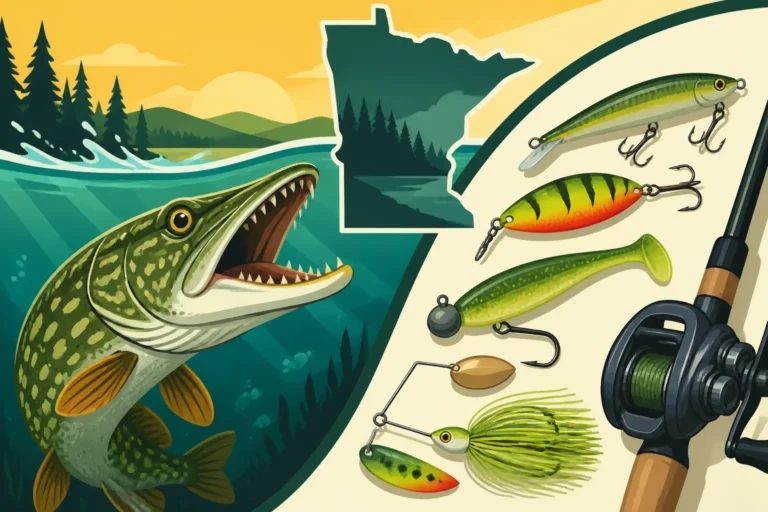
When jigging for Muskie, think big. Small baits won't cut it. You're looking at jigging baits ranging from 6 to 12 inches or even larger. Think heavy spoons, large lipless crankbaits, and big soft plastics on heavy jig heads. The goal is to displace a lot of water and create a significant profile that mimics a large baitfish. Common choices include oversized Mepps Syclops spoons, Bondy Baits, or even larger versions of traditional walleye jigging raps.
The presentation is key. Muskie in winter are often lethargic. You'll want to employ slow, deliberate lifts and drops, punctuated by long pauses. Don't be afraid to let your bait sit still for 10-20 seconds or even longer, allowing the fish to approach and investigate. Sometimes, a subtle quiver of the rod tip is all it takes to trigger a strike. Work different depths in the water column, especially near the bottom where these fish often cruise. A good strategy is to "pound" the bottom occasionally to stir up sediment, attracting attention, then lift the bait slowly. Remember that Muskie often hit on the pause, so be ready for the strike after you stop moving your bait.
The Effectiveness of Dead Bait and Tip-Ups
One of the most effective and popular methods for ice fishing Muskie in Minnesota is using dead bait on tip-ups. This is a passive but incredibly potent strategy. Large dead baitfish like ciscos, suckers, or even substantial frozen herring or smelt are perfect. The natural oils and scent released by dead bait can draw Muskie in from a distance, and their natural profile is exactly what a winter Muskie is looking for – an easy, high-calorie meal.
You'll need sturdy, well-built tip-ups that can withstand freezing temperatures and the violent pull of a Muskie. Brands like Beaver Dam Tip-Ups are renowned for their durability and smooth operation, even in harsh Minnesota winters. Set your dead bait on a quick-strike rig, suspending it anywhere from a foot off the bottom to several feet up, depending on where you're seeing baitfish or marking Muskie on your electronics. It's common practice to use multiple tip-ups, spread out across different depths and structural elements, to cover more water. Remember to regularly check your bait for freshness and to ensure it hasn't become frozen or stiff, which would hinder its natural presentation. Keep your bail trip sensitive enough for a Muskie to pull the line without too much resistance, but strong enough to prevent false flags from wind.
Essential Tools for Access and Detection
Getting to the fish and then finding them efficiently under the ice are critical steps in Muskie ice fishing. This means you need tools that are powerful enough to cut through thick ice and sophisticated enough to reveal where these elusive fish are lurking.
Wide-Diameter Ice Augers
You simply cannot land a respectable Muskie through an 8-inch hole. These fish are broad-shouldered and long. You absolutely need an ice auger that can cut a hole with a diameter of at least 10 inches, and many dedicated Muskie anglers prefer 12-inch holes for maximum maneuverability and safety when landing a big fish.
Electric augers like the StrikeMaster Lithium 40V or ION Alpha series are increasingly popular for their quiet operation, lack of fumes, and impressive cutting power, even through thick ice. They're also generally lighter and require less maintenance than gas augers. However, heavy-duty gas augers, such as those from Jiffy or Eskimo, still offer relentless power for those who demand it, especially if you're planning to cut many holes or operate in extremely cold conditions for extended periods without recharging batteries. Always ensure your auger blades are sharp; dull blades make an already tough job even harder and less efficient. Having a spare set of blades is also a smart move, as hitting a rock or sand can quickly ruin your cutting edge.
Advanced Fish Finders for Muskie Location
Muskie are often solitary and notoriously difficult to locate. A high-quality fish finder or flasher isn't just a luxury; it's a necessity. Traditional flashers like the Vexilar FLX-28 or Marcum LX-7 are excellent for real-time, beneath-the-hole interpretation, showing you your bait, the bottom, and any fish that enter the cone angle. Their ability to display target separation in real-time is crucial for distinguishing a Muskie from smaller baitfish.
However, many serious Muskie ice anglers are now turning to forward-facing sonar technologies like Garmin LiveScope or Humminbird Mega Live. These units allow you to scan a much wider area around your hole, identifying suspended Muskie or those cruising near structure at a distance. This capability dramatically increases your efficiency, as you can see fish approaching your bait or identify holes where no fish are present, saving valuable time. While these systems are a significant investment, the advantage they provide in finding and tracking Muskie can be game-changing. Knowing exactly when a Muskie is inspecting your bait allows you to adjust your presentation to trigger a strike.
Comfort and Safety on the Ice
Spending long hours on the ice in pursuit of Muskie can be incredibly rewarding, but it's also physically demanding and can be dangerous if you're not properly prepared. Comfort and safety should never be an afterthought, especially when you're dealing with big fish and potentially brutal Minnesota weather.
Spacious Ice Shelters and Reliable Heaters
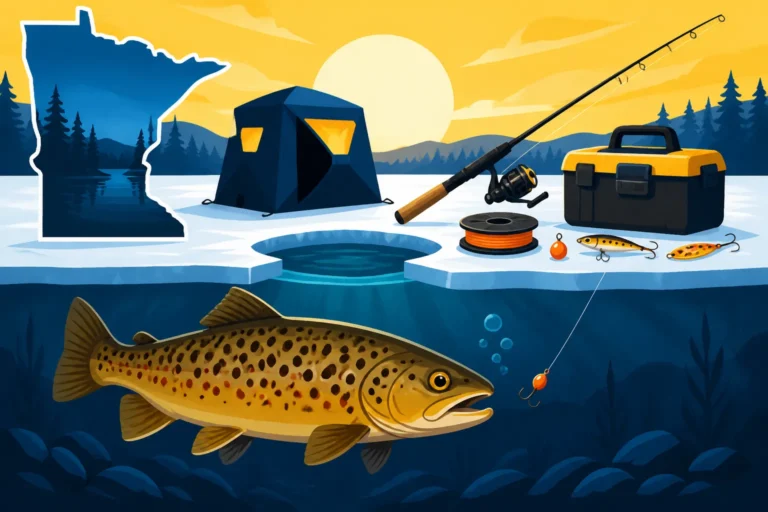
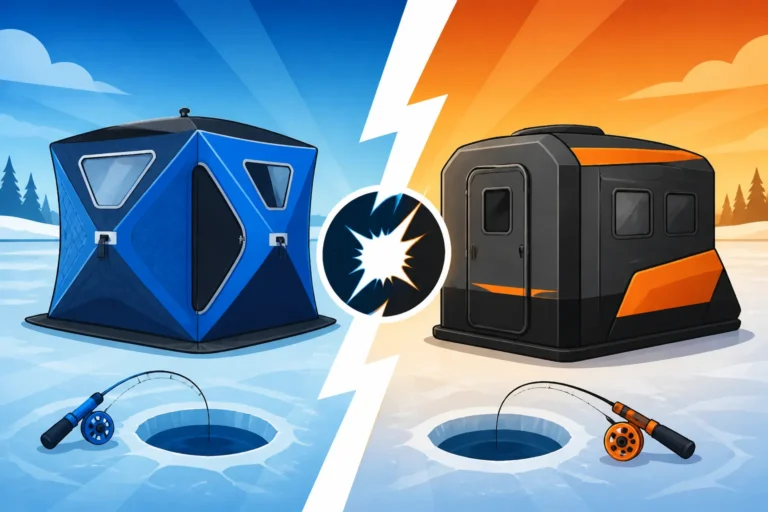
When you're waiting for that elusive Muskie flag to fly or trying to entice a leviathan with a jig, you'll appreciate having a warm, comfortable base. A spacious ice shelter is a must, allowing you to move freely, manage your gear, and, most importantly, stay out of the biting wind and cold. Flip-over shelters like those from Clam or Otter are popular for their portability and quick setup, while hub-style shelters offer more interior space, especially for multiple anglers. Choose a shelter with dark interior fabric to help block light, which can be beneficial for sight-fishing in shallower water or for darker house spearing if you’re doing that.
A reliable portable heater is non-negotiable. Propane heaters like those from Mr. Heater are standard for keeping shelters toasty, even on the coldest days. Ensure you have ample propane tanks, and always maintain proper ventilation to prevent carbon monoxide buildup. Staying warm not only makes the experience more enjoyable but also helps you stay focused and alert, which is crucial when that Muskie finally decides to hit. Nothing saps your morale faster than shivering in a cold shelter.
Critical Safety Gear for Muskie Anglers
Ice fishing, especially for large species like Muskie, comes with inherent risks. Your safety gear needs to be top-notch. First and foremost, always wear ice cleats or "creepers" on your boots to prevent slips and falls on slick ice. Ice picks worn around your neck are vital for self-rescue if you were to fall through the ice. A spud bar is essential for testing ice thickness as you move, particularly early or late in the season. Never assume ice is safe; always check.
When landing a large Muskie, a sturdy gaff or a large landing net with a long handle and a rubberized mesh (to protect the fish's slime coat) is critical. Trying to hand-land a thrashing Muskie through a narrow ice hole is a quick way to get cut by hooks or even the fish itself. A pair of heavy-duty pliers or jaw spreaders and long-nosed unhooking tools are also crucial for safely removing hooks from a toothy Muskie, minimizing harm to both you and the fish. If you plan to release the Muskie, which many anglers do with these magnificent creatures, having these tools makes the process quick and efficient, ensuring the fish has the best chance of survival. Always have a first aid kit handy, fully charged cell phone, and let someone know your plans and expected return time, especially if you're venturing out alone.
Here’s a quick overview of some essential Muskie ice fishing gear:
| Gear Category | Recommended Item | Key Features & Considerations |
|---|---|---|
| Rod | Heavy to Extra-Heavy Power Ice Rod | 36-48 inches, stiff blank, robust guides, comfortable handle. |
| Reel | 4000-6000 Series Spinning or Heavy-Duty Baitcaster | Smooth, powerful drag, strong metal body, good cranking power. |
| Main Line | 50-100 lb Braided Line | No stretch, high strength-to-diameter, abrasion resistant, use conditioner. |
| Leaders | 80-130 lb Fluorocarbon or 80-100 lb Steel | Tooth-proof, abrasion resistant, low visibility (fluoro) or maximum safety (steel). |
| Hooks | Heavy-Duty Trebles (3/0 – 5/0), Quick-Strike Rigs | Razor-sharp, strong wire, designed for immediate hooksets with dead bait. |
| Lures | Giant Jigging Spoons, Lipless Cranks, Large Soft Plastics | 6-12+ inches, heavy, displace water, slow presentation. |
| Baits | Large Dead Bait (Suckers, Ciscos, Herring) | Natural profile, strong scent, presented on quick-strike rigs via tip-ups. |
| Auger | 10-12 inch Diameter Electric or Gas Auger | Wide hole for landing big fish, powerful, sharp blades. |
| Fish Finder | Flasher (Vexilar, Marcum) or Forward-Facing Sonar (Garmin LiveScope) | Real-time target separation, wide scanning for fish location. |
| Shelter | Spacious Flip-Over or Hub-Style Ice Shelter | Protection from elements, room to move, insulated. |
| Heater | Portable Propane Heater (Mr. Heater) | Keeps shelter warm, ample fuel, ventilation for safety. |
| Safety Gear | Ice Cleats, Ice Picks, Spud Bar, Gaff/Large Net, Pliers, First Aid | Essential for personal safety, safe fish handling, and release. |
Muskie ice fishing is an endeavor that combines patience, skill, and, perhaps most critically, the right gear. By investing in heavy-duty rods and reels, bulletproof lines and leaders, appropriate baits, and essential safety equipment, you're not just preparing for a fishing trip; you're gearing up for a potential battle with one of Minnesota's most revered freshwater giants. Remember, catching a Muskie through the ice is a memory that will last a lifetime, so make sure your gear is up to the task! If you're looking for more general tips, check out our guide on Ice Fishing in Minnesota: Complete Beginner-to-Pro Guide. You can also dive deeper into specific tactics with our article on How to Catch Muskie Through the Ice in Minnesota. Understanding the Muskie's life cycle is also helpful; we cover that in our section on Muskie Fishing in Minnesota: The Fish of 10,000 Casts. For the bigger picture on all the gear you might need for hardwater adventures, consider our comprehensive guide on Best Ice Fishing Gear for Minnesota (2027 Guide) and learn about the different augers available in Best Ice Augers for Minnesota: Electric vs Gas. And for more details on those key electronics, check out Best Ice Fishing Flashers: Vexilar vs Humminbird vs Garmin.
Disclaimer
Fishing regulations can change frequently. Always consult the latest Minnesota Department of Natural Resources (DNR) fishing regulations booklet before heading out on the ice. This guide is for informational purposes only and does not supersede state laws or regulations. Be safe and practice ethical angling.