Best Portable Ice House for One Person
There's nothing quite like the raw, invigorating experience of ice fishing, but let's be honest, trying to juggle all your gear, stay warm, and find a spot that offers some shelter from the biting Minnesota wind can quickly turn a peaceful outing into a frustrating ordeal, especially when you're heading out solo. This guide is all about simplifying that solo adventure, helping you find the absolute best portable ice house designed specifically for one person, so you can focus on the bite, not the battle with the elements.
Why a One-Person Portable Ice House is a Game Changer for Solo Anglers
For years, many of us rugged Minnesota anglers just bundled up, drilled a hole, and prayed the fish were biting fast enough to distract us from the cold. But modern portable ice houses have revolutionized how we approach solo ice fishing, transforming what was once a chilly endurance test into a genuinely comfortable and productive experience. When you're out on the ice alone, efficiency and comfort aren't luxuries; they're absolute necessities.
Freedom and Flexibility on the Ice
One of the biggest advantages of a one-person portable ice house is the sheer freedom it offers. You're not tied down to a heavy, unwieldy structure that requires multiple people to move or set up. This means if the fish aren't biting in one spot, you can pack up and relocate to another prime location in minutes, significantly increasing your chances of success. Imagine seeing a buddy on a different part of the lake pulling up walleye after walleye; with a solo portable shelter, you can be over there joining the action before your coffee even gets cold. This kind of mobility is invaluable on sprawling lakes like Mille Lacs or Lake of the Woods, where fish patterns can shift dramatically throughout the day.
This flexibility also extends to how you approach your fishing strategy. Perhaps you want to target crappies in the morning in shallower weeds, then move out to deeper structure for walleye in the afternoon. A lightweight, easily movable shelter makes these transitions seamless, allowing you to maximize your time on the ice doing what you love, rather than wrestling with gear. For deeper dives into strategy, you might want to check out our guide on how to Catch Walleye Through the Ice in Minnesota, which often involves moving to find active fish.
Quick Setup and Take Down for Maximum Fishing Time
Time is precious, especially on a short winter day. A one-person portable ice house is designed with rapid deployment in mind. Many models can be set up in under a minute, meaning you spend less time fumbling with poles and fabric and more time dropping a line. This is a huge benefit when temperatures are plummeting or a sudden snow squall rolls in. Think about those early morning starts when your fingers are already numb; a quick-to-deploy shelter is a godsend.
The same goes for packing up. When the day is done, or you need to move, collapsing a one-person shelter is typically just as fast as setting it up. This means you’re not the last one off the ice, wrestling with a stubborn frame in the dark. The simplicity makes the entire experience more enjoyable, reducing the barrier to getting out there, even if just for a few hours. This ease of use also ties into general advice found in our comprehensive Ice Fishing in Minnesota: Complete Beginner-to-Pro Guide, which emphasizes smart gear choices for efficiency.
Key Features to Look for in a Solo Ice House
Choosing the right one-person portable ice house isn't just about grabbing the first one you see. There's a whole host of features that can make or break your solo ice fishing experience. From staying warm to having enough room to comfortably fish, paying attention to these details will ensure you invest in a shelter that truly meets your needs.
Durability and Materials for Harsh Winters
Minnesota winters are no joke, and your ice house needs to be built to withstand punishing winds, heavy snow, and sub-zero temperatures. Look for shelters made with heavy-duty fabric, typically denier nylon or polyester, with higher denier counts (like 600D or 900D) indicating greater thickness and resistance to tears and abrasions. Reinforced stitching at stress points is also crucial, especially around zippers and pole pockets, as these are common failure areas.
Consider the frame material as well. Sturdy aluminum poles or robust fiberglass rods will hold up better against strong gusts than cheaper, flimsier options. A durable base, particularly on flip-over models, will protect your gear and stand up to repeated dragging across the ice. You don't want to be halfway through a promising day on Lake Winnibigoshish and have your shelter collapse on you because of a cheap zipper or a snapped pole.
Insulation and Heat Retention
Staying warm is paramount for an enjoyable day on the ice. Uninsulated shelters are lighter and cheaper, but they can be downright miserable in cold, windy conditions, requiring more fuel for your heater. Insulated shelters, often featuring a layered fabric design, dramatically improve heat retention, reducing condensation and making the interior feel much cozier. They might be a bit heavier and pricier, but the comfort they provide is often worth every penny.
Good insulation also helps reduce the amount of fuel you consume, as your heater won't have to work as hard to maintain a comfortable temperature. This is a practical consideration for those long days or multi-day trips. Many anglers swear by fully insulated shelters, especially if they plan on fishing during the coldest parts of January and February.
Size, Weight, and Portability
When you're fishing solo, every pound counts, especially if you're pulling your gear by hand or using a smaller ATV. You need a shelter that’s light enough to be easily moved, but still spacious enough to comfortably accommodate you and your essential gear. Check the packed dimensions carefully to ensure it fits in your vehicle's trunk or on your sled.
For flip-over shelters, consider the overall footprint when packed down, and for hub-style shelters, look at the length of the collapsed poles. A balance must be struck between a compact packed size and a comfortable fishing footprint. You don't want to feel claustrophobic inside, but you also don't want to exhaust yourself just getting it to your spot. This is also where you might find benefits looking at brands that prioritize ultralight designs available through retailers like Bass Pro Shops or even a wide selection of choices on Amazon.
Ease of Setup and Pack Down
As mentioned earlier, quick setup and take down are critical for solo anglers. For flip-over models, ensure the sled and frame mechanism operates smoothly without snagging. For hub-style shelters, look for pole systems that are easy to extend and collapse, with durable hub mechanisms that won't freeze up. Some shelters feature color-coded poles or quick-release clips that simplify the process.
Practice setting up your shelter a few times at home before your first trip. Nothing is worse than struggling with a new shelter in the dark, with freezing hands, trying to figure out how it works. A shelter that can be deployed quickly and effortlessly means less frustration and more actual fishing time, especially important when you're moving between different fishing spots.
Ventilation and Safety
While staying warm is important, proper ventilation is crucial for safety, especially if you're using a propane heater inside. Carbon monoxide poisoning is a serious risk. Look for shelters with multiple zippered vents that allow for adequate airflow without letting in too much cold. Some shelters even come with dedicated stove jacks for more permanent heating solutions, but for portable one-person models, good cross-ventilation is key.
Always carry a battery-operated carbon monoxide detector in your ice house, regardless of the ventilation system. It’s a small investment that could save your life. Safety should always be your top priority, especially when fishing alone on the ice.
Fishing Space and Features
Even in a one-person shelter, you need enough room to comfortably manage your rods, tackle, and other gear. Consider the height – can you stand up or at least sit up comfortably without hitting your head? How much floor space is there around your fishing holes? Some shelters feature built-in seating, storage pockets, and even clear windows for natural light.
Thoughtful features can greatly enhance your experience. Rod holders, mesh storage pockets for gloves or tackle, and even reflective material for visibility on the ice are all bonuses. If you're using a fish finder like a Vexilar, ensure there's a convenient spot to place it. These small details might seem minor, but they add up to a much more organized and enjoyable fishing environment.
Popular Types of One-Person Portable Ice Houses
When you're outfitting yourself for solo ice fishing adventures in Minnesota, you'll generally encounter two main types of portable ice houses: flip-over shelters and hub-style shelters. Both have their dedicated fan bases, and each offers distinct advantages for the single angler. Understanding these differences is key to picking the perfect one for your style of fishing.
Flip-Over Shelters
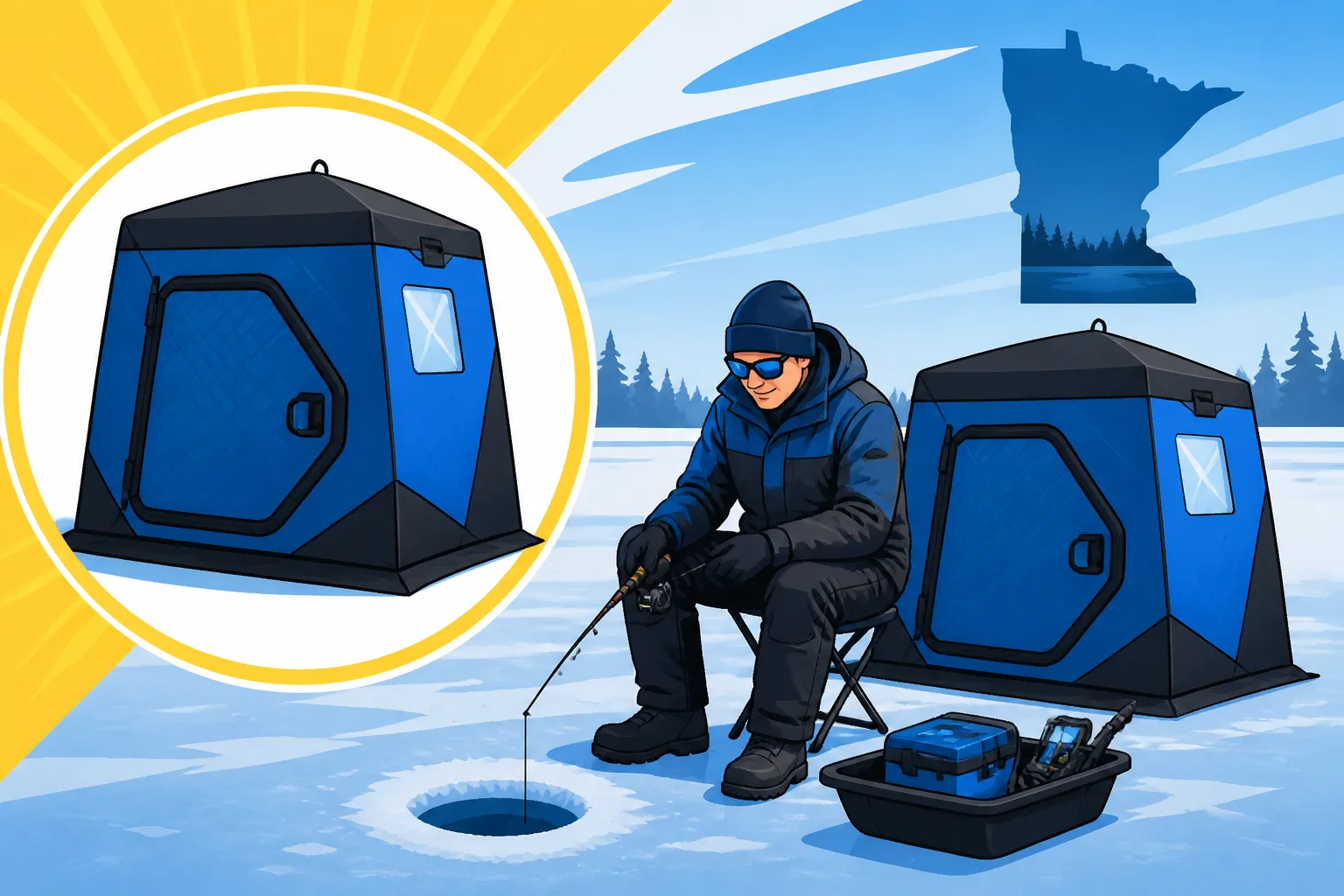
Flip-over shelters, also often called "sleigh" or "sled-style" shelters, are typically built on a sturdy plastic sled base. The fabric house is attached to a frame that "flips over" and extends to create the shelter. When collapsed, the fabric folds down into the sled, which then doubles as a convenient way to transport your gear. This integrated design is a huge selling point for solo anglers.
Pros for Solo Anglers:
- Integrated Sled: The biggest advantage is that the shelter itself is also your sled. You can load all your ice fishing gear – auger, rods, tackle, heater, and even your lunch – directly into the sled, eliminating the need for a separate conveyance. This makes for incredibly quick deployment, as your gear is already in place.
- Fast Setup: Once you've pulled your sled to your spot, you literally just "flip" the frame over, extend a few poles, and you're ready to fish. Many models can be set up in under a minute, which is fantastic when the wind is howling.
- Wind Resistance: The low profile and sturdy frame of a flip-over shelter often make it more stable in strong winds compared to some hub styles. They hug the ice, providing a very secure feeling.
- Mobility: While they can be heavier than some hub shelters, the integrated sled makes them easy to drag by hand, or attach to an ATV or snowmobile. If the fish aren't biting, you can quickly flip it back down and move to a new spot.
Cons for Solo Anglers:
- Weight: They tend to be heavier than hub shelters of comparable size, which can be a consideration if you have to hike a long distance across the ice without a motorized vehicle.
- Bulk: Even when collapsed, the sled can be somewhat bulky, taking up significant space in a truck bed or garage.
- Limited Space: While one-person models are perfectly adequate for one angler, they generally offer less open floor space than hub shelters, as the sled itself takes up a portion of the fishing area.
Hub-Style Shelters
Hub-style shelters are more like traditional tents, but designed for the ice. They feature a central hub system with flexible poles that extend outward to create the structure. When collapsed, they fold down into a relatively compact bag, making them very portable.
Pros for Solo Anglers:
- Lightweight and Compact: Hub shelters are generally much lighter and pack down smaller than flip-overs, making them ideal for anglers who walk onto the ice or have limited storage space. You can often carry them in a backpack or small sled.
- Spacious Interior: For their footprint, hub shelters often offer more usable interior space, particularly overhead room, allowing you to stand up fully in many models, even single-person versions. This can be a huge comfort factor on long days.
- Affordability: Generally, hub-style shelters are more budget-friendly than flip-overs, offering a great entry point into portable ice fishing.
Cons for Solo Anglers:
- Setup Time: While still relatively fast, setting up a hub shelter usually takes a bit longer than a flip-over, involving extending all the poles and anchoring it to the ice with ice anchors.
- Less Stable in Wind (Potentially): If not properly anchored, hub shelters can be more susceptible to strong winds dueating to their higher profile. It’s crucial to use all anchor points provided.
- Separate Sled Needed: You'll need a separate sled to transport your gear, as the hub shelter itself doesn't integrate one. This means an extra piece of equipment to manage.
- Anchoring: Requires drilling anchor points into the ice for stability, which can be challenging in extremely cold conditions or on very thick ice.
Key Considerations for Each Type
When weighing your options between a flip-over and a hub-style, think about your typical fishing routine. If you're an angler who values speed, mobility, and has a vehicle to transport a slightly bulkier sled, a flip-over might be your best bet. Brands like Clam, Otter, and Eskimo all offer excellent one-person flip-over models that have proven their mettle on frozen Minnesota lakes. Our guide on Best Ice Fishing Shelters: Clam vs Otter (Flip vs Hub) offers a more detailed comparison if you're leaning towards these popular brands.
On the other hand, if you prefer to walk onto the ice, value maximum interior space for less weight, or are working with a tighter budget, a hub-style shelter could be ideal. These shelters, often found at great prices on Amazon, are perfect for those who like to stay nimble and carry only the essentials. Regardless of type, ensure you have strong ice anchors for any shelter – these are non-negotiable for safety and stability on the ice. For even more detailed insights into general gear, our Best Ice Fishing Gear for Minnesota (2027 Guide) might also offer some helpful perspective.
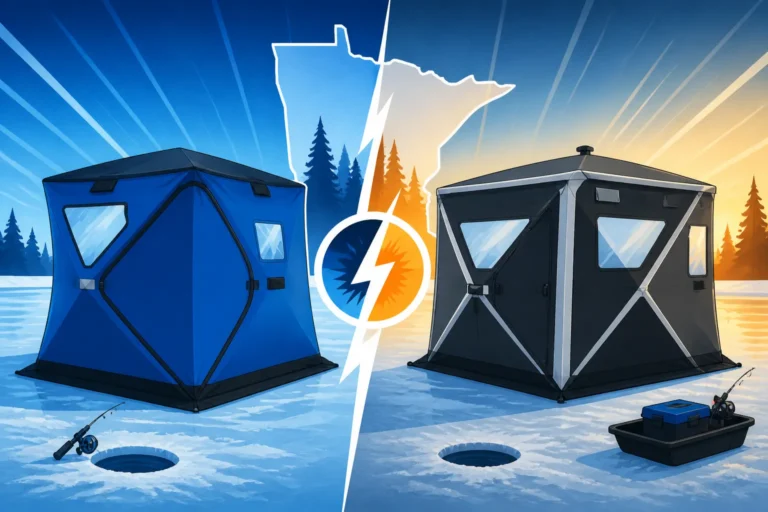
Here's a quick comparison to help you visualize the trade-offs:
| Feature | Flip-Over Shelter | Hub-Style Shelter |
|---|---|---|
| Setup Speed | Very Fast (often < 1 minute) | Fast (typically 2-5 minutes) |
| Portability | Integrated sled, good for pulling/towing | Lightweight, compact carry bag, great for walking |
| Weight | Generally heavier | Generally lighter |
| Packed Size | Bulkier sled | Very compact (tent-like bag) |
| Interior Space | Comfortable for one, but sled takes up floor space | Often more open floor and headroom for its footprint |
| Wind Stability | Excellent (low profile, sturdy frame) | Good, but relies heavily on proper anchoring |
| Cost | Mid to High range | Low to Mid range |
| Gear Transport | Sled doubles as gear hauler | Requires separate sled/bag for gear transport |
Top Picks and Recommendations for Solo Anglers
Navigating the multitude of options for a one-person portable ice house can feel overwhelming. To help you narrow it down, I’ve broken down some of the best choices based on common priorities for solo Minnesota anglers, highlighting features that make them stand out.
Best for Lightweight Mobility
For the angler who prioritizes covering a lot of ice on foot, or perhaps has a smaller vehicle with limited cargo space, a truly lightweight and compact shelter is essential. These shelters often lean towards the hub-style design due to their inherent packability.
The Clam C-500 Hub Shelter is a fantastic choice in this category. It's a single-person hub that's incredibly light, often weighing in around 15-20 pounds, and folds down into a relatively small carry bag. Despite its light weight, it provides surprising interior room, allowing you to stand up or at least stretch out comfortably. Its quick-set hub design means you can have it up and anchored in just a few minutes, making it perfect for run-and-gun tactics on smaller lakes or when targeting actively moving schools of perch. You can often find this model, and read user reviews, on outdoor retail sites like Bass Pro Shops.
Another contender is the Eskimo QuickFish 2. While technically a "2-person" shelter, its compact packed size and light weight (around 20-25 lbs) make it an excellent choice for a solo angler who wants a little extra elbow room without sacrificing portability. The pop-up design is intuitive and fast, and Eskimo's quality fabric and hubs are known for their durability. Having that extra space means you can comfortably fit a larger tackle box, a portable heater, and maybe even a small folding chair, enhancing comfort for longer sessions on Lake Vermilion.
Best for Maximum Comfort and Integrated Gear Management
If your solo trips involve longer stays, or you simply crave maximum comfort and convenience without needing to haul a separate sled, a well-designed one-person flip-over shelter is your best friend. These shelters excel at integrating your fishing gear into a single, mobile unit.
The Otter XTH Lodge Ice Shelter is a prime example of premium comfort in a single-person package. Otter is renowned for its heavy-duty sleds and robust frames, and the XTH Lodge doesn't disappoint. It offers excellent insulation, keeping you toasty even on the coldest days. The sled provides ample storage for all your gear, and the padded seating is a welcome luxury. While it's heavier than a hub, its supreme durability and ease of flipping up and down make it incredibly efficient for the angler who moves but wants all their essentials right there. This is a shelter you can rely on year after year, offering a mobile fortress against the elements, perfect for those long days chasing trophy northern pike.
Similarly, the Clam Legend XL Thermal provides a fantastic blend of space, insulation, and mobility for the solo angler. It offers a slightly larger footprint than some other one-person flip-overs, giving you more room to spread out. The full thermal skin is excellent for heat retention and reducing condensation, making it comfortable on bitterly cold mornings. Like other flip-overs, its integrated sled simplifies transport and setup, making it easy to pull by hand or behind a snowmobile, especially when you're loaded down with an auger and an assortment of best ice fishing rods for walleye and panfish.
Best Budget-Friendly Option
Getting into ice fishing shouldn't break the bank, and there are excellent one-person portable ice houses that offer great value without sacrificing too much on essential features. These are typically hub-style shelters, as their simpler construction allows for a lower price point.
The Ozark Trail 2-Person Pop-Up Ice Fishing Shelter is a popular choice for budget-conscious anglers. While advertised for two, its compact packed size and very attractive price point make it an ideal "one-and-a-half" person shelter for a solo angler who wants a bit more room. It's often available for under $100 on platforms like Amazon, making it an accessible option for beginners or those who only go out occasionally. While it might not have the heavy-duty fabric or advanced insulation of premium models, it provides essential wind protection and warmth when paired with a good heater. It's a great way to experience the benefits of a portable shelter without a significant investment.
Another solid entry-level option is the XtremepowerUS Portable Pop Up Ice Fishing Shelter. Similar to the Ozark Trail, it’s designed with affordability in mind, offering a quick-setup hub design that gives a solo angler shelter from the elements. Look for deals on these types of shelters, particularly online, as they can represent fantastic value. Remember that with a budget option, you might need to be a bit more mindful of bringing extra layers or a more powerful heater if you plan to fish in extreme cold.
Essential Accessories for Your Solo Shelter
Having the best one-person portable ice house is a huge step, but a few key accessories can truly elevate your comfort, safety, and fishing efficiency. Think of these as the critical upgrades that turn a good shelter into an exceptional base camp for your solo adventures.
Heating Solutions for Comfort
Even with an insulated shelter, a reliable heater is non-negotiable for staying warm in Minnesota's frigid temperatures. For single-person shelters, a compact propane heater is almost always the way to go.
The Mr. Heater Buddy series (like the Little Buddy or Portable Buddy) are absolute classics for a reason. They're safe, efficient, and provide ample heat for a small space. The Little Buddy is perfect for tight quarters, while the Portable Buddy offers a bit more BTU output for slightly larger shelters or colder days. Always ensure you have proper ventilation when using any propane heater, and as mentioned earlier, a carbon monoxide detector is a must-have safety item. These heaters are readily available at outdoor retailers like Bass Pro Shops and on Amazon. Carrying an extra 1lb propane tank or two is always a good idea, as running out of heat on a sub-zero day is no fun.
Lighting and Organization
Fishing in low-light conditions, or just trying to tie a knot with numb fingers, can be tough. Good lighting is essential. A simple battery-operated LED lantern or light strip can make a world of difference inside your shelter. Look for models with adjustable brightness and a hook for hanging from the shelter's ceiling. Headlamps are great for tasks, but a good ambient light source makes the entire space more inviting and functional.
For organization, consider simple solutions like mesh cargo nets that can hang from the ceiling or wall pockets that stick on. These are invaluable for keeping small items like extra gloves, snacks, your phone, or extra tackle off the floor and easily accessible. Keeping your space tidy not only prevents tripping hazards but also helps you stay efficient when the bite is on. A small, collapsible table can also be a game-changer for organizing your tackle and bait, preventing your jigging lures from getting lost in the snow.
Maintaining Your Portable Ice House for Longevity
You’ve invested in a great portable ice house for your solo adventures, and with a little care, it will serve you well for many seasons. Proper maintenance isn’t just about cleanliness; it’s about protecting your investment and ensuring it’s ready for action whenever the ice calls.
Cleaning and Drying Your Shelter After Each Trip
This is perhaps the most critical step for longevity. After every trip, especially on those slushy days, take the time to thoroughly clean your ice house. Remove all gear, sweep out any ice, snow, mud, and fish scales. For stubborn grime, a damp cloth with a mild soap solution can work wonders.
The absolute golden rule: always fully dry your ice house before storing it. Storing a damp or wet shelter is a recipe for mold, mildew, and unpleasant odors, which can not only damage the fabric but also make your next trip quite disgusting. Set it up in your garage, basement, or even outside on a warm, sunny day until it's bone dry. Pay special attention to corners, seams, and where the fabric meets the frame, as moisture tends to collect in these areas. This simple step will prevent rot and extend the life of your shelter significantly, ensuring it's always fresh for the next adventure.
Storage Tips for Off-Season Protection
Once your shelter is clean and completely dry, proper off-season storage is key. If it’s a hub-style, make sure it’s folded neatly into its carry bag. For flip-over shelters, ensure the fabric is folded down securely into the sled, and the frame is properly collapsed.
Store your ice house in a cool, dry place away from direct sunlight. UV rays can degrade fabric over time, making it brittle and susceptible to tears. A garage, shed, or even a dry corner of your basement is ideal. Avoid storing it directly on a concrete floor, as moisture can wick up. Elevating it on a pallet or some wood blocks can help. If your shelter came with a cover, use it to protect against dust and pests. Before your first trip of the next season, it's a good idea to set it up once in the yard to check for any issues, ensuring zippers are free, poles extend correctly, and the fabric is in good shape. This proactive check can save you a lot of grief on a cold Minnesota morning when the walleye opener is finally here.
Disclaimer
Please remember that ice fishing can be dangerous. Always check ice thickness before venturing out, dress appropriately for the weather, and inform someone of your plans. Regulations regarding ice shelters and fishing seasons can change; always consult the latest Minnesota DNR guidelines for current rules and conditions, including important information like Ice Shelter Removal Deadlines in Minnesota. Fish safely and responsibly!